Trade Sales Volume Index: February 2026 Shows Retail Resilience
 Trade
Trade
The Trade Sales Volume Index for February 2026, released by the Turkish Statistical Institute (TÜİK), highlights a significant divergence between consumer spending and wholesale activity. While total trade volume grew by 4.0% annually, the data reveals a cooling trend on a monthly basis as high interest rates begin to weigh on big-ticket purchases.
Annual Performance: Retail Consumption Remains the Primary Engine
When compared to February 2025, the breakdown of the trade sectors (base year 2021=100) shows that retail demand is still driving the economy despite inflationary pressures:
-
Retail Trade Volume: Surged by a massive 15.6% annually. This indicates that household consumption remains robust, potentially driven by “front-loaded” buying—where consumers purchase goods now to avoid future price hikes.
-
Wholesale Trade: Remained largely stagnant with a slight 0.1% decrease. This suggests that while consumers are still buying, businesses are becoming more cautious with bulk orders and inventory management.
-
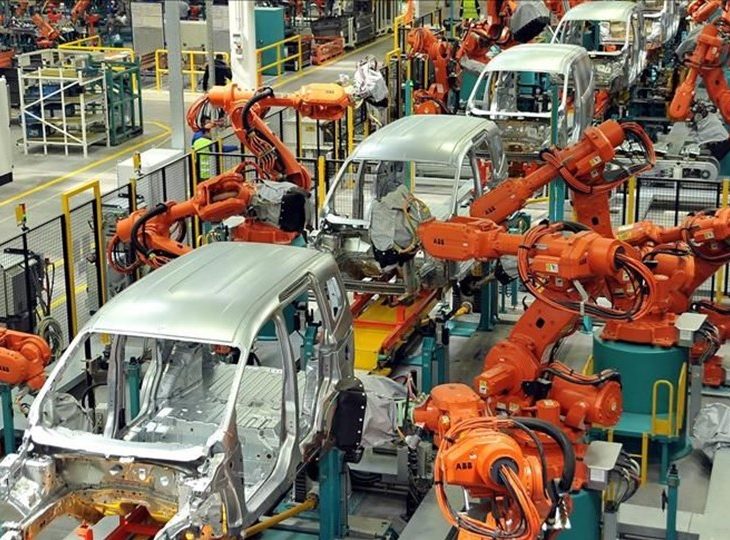
Motor Vehicles & Motorcycles: Decreased by 1.5% annually. This sector is highly sensitive to credit conditions; with interest rates at 37%, the cost of vehicle financing has significantly dampened sales.
Monthly Performance: A Subtle Cooling Trend
The monthly data (February 2026 vs. January 2026) suggests a general slowdown in the pace of trade activity:
-
Total Trade Volume: Decreased by 0.6%.
-
Motor Vehicles & Motorcycles: Saw the sharpest drop, falling 5.5% monthly. This confirms that the automotive sector is bearing the brunt of the current monetary tightening.
-
Retail Trade: Experienced a marginal dip of 0.2%, showing that consumer spending is starting to plateau.
-
Wholesale Trade: Was the only sector to see growth on a monthly basis, with a minor 0.2% increase.
Trade Sales Volume Index: The Impact of Monetary Tightening
These figures provide a clear snapshot of an economy in transition. The 15.6% annual growth in retail is a strong figure, but the 0.2% monthly decline suggests that the Central Bank’s efforts to cool down domestic demand are starting to take effect.
The significant contraction in the motor vehicle sector (-5.5% monthly) is a direct result of the high-interest-rate environment. As financing becomes more expensive, consumers are shifting away from luxury and credit-dependent goods, focusing instead on immediate retail needs. Economists will be watching the March and April data closely to see if the retail sector follows the automotive industry into a deeper slowdown.
Source: TUIK