



‘Too Risky’ for Iran to Target Turkey Over U.S. Assets, Analysts Say
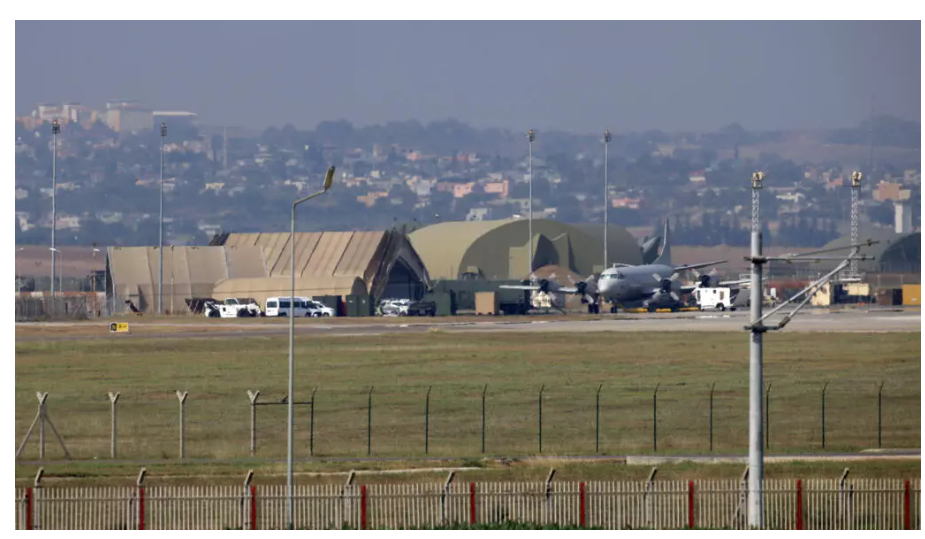 incirlik
False Iranian Strike Claim on Incirlik Air Base Debunked
Yet, the circulation of the clip may have added dowward pressure on Turkish assets, which warranty the questionm whether Tehran wiould ever target Turkey.
Despite Iran’s threats to strike U.S. assets across the region, analysts say it is highly unlikely Tehran would target Turkey, a NATO member hosting key U.S. and alliance facilities. Experts argue that attacking Turkey would carry far greater strategic and diplomatic costs for Iran compared with strikes on Gulf states.
Why Turkey Has Not Been Targeted
Since the conflict escalated over the weekend, Iran has launched missiles and drones across the Middle East, striking Israel and targeting areas in Iraq, Jordan and Gulf states believed to host U.S. assets.
Yet Turkey — where U.S. troops are stationed at several sensitive military facilities — has not been targeted.
Two installations stand out:
-
Incirlik Air Base, near Adana in southern Turkey, a long-standing NATO facility used by U.S. forces.
-
Kürecik Radar Base in central Turkey, which hosts a NATO early-warning radar system capable of detecting ballistic missile launches, including from Iran.
Although Ankara has repeatedly denied that radar data has ever been used to assist Israel, the installation has historically been a source of tension for Tehran.
“A High-Cost Strategic Gamble”
Gönül Tol of the Washington-based Middle East Institute said that while Iranian officials have previously referenced Kürecik to signal dissatisfaction, targeting Turkey would represent a far riskier move.
“At this point, attacking a NATO country like Turkey would be an even riskier gamble for Iran,” she said.
Arif Keskin, an Iran specialist at Ankara University, echoed that view.
He told AFP that striking Turkey would not resemble Iran’s calibrated “messaging operations” against Gulf states.
“A direct military move against Turkey would risk triggering a symmetrical response from Ankara. This could push the conflict beyond manageable limits.”
He added that attacking a NATO member could activate the alliance’s collective defense mechanisms, dramatically raising the strategic cost for Tehran.
Ankara Rejects Rumors of Strikes
Speculation circulated online earlier this week claiming that a U.S. military base in Turkey had been hit. Turkish authorities swiftly denied the reports, stating there were no foreign-owned bases in the country and no attacks on Turkish territory.
Turkish police also detained three journalists over footage filmed near Incirlik, citing national security concerns — underscoring the sensitivity surrounding these installations.
Strategic and Diplomatic Calculations
Serhan Afacan, director of the Ankara-based Center for Iranian Studies (IRAM), said Iran likely calculated that Gulf states would avoid direct retaliation — a calculation that would not apply to Turkey.
“Iran has neither the strategic incentive nor the intention to target anywhere in Turkey. The risks would be extremely high for Tehran, both politically and militarily,” he said.
Beyond military risks, analysts point to diplomatic considerations.
Iran continues to view Turkey as one of the few potential intermediaries capable of facilitating de-escalation.
“Iran continues to value Turkey’s potential role in diplomatic mediation. Targeting Turkey would undermine that channel at a moment when dialogue remains crucial,” Afacan added.
Turkey’s Balancing Act
Turkey has pursued back-channel diplomacy in an effort to prevent further escalation. President Recep Tayyip Erdoğan said he was “deeply disturbed” by the initial attacks while also condemning retaliatory strikes, and pledged to intensify diplomatic efforts.
For Tehran, Turkey remains:
-
A geographically strategic neighbor
-
A potential crisis-management conduit
-
One of the few regional actors maintaining dialogue with multiple sides
According to Keskin, an attack on Turkey would narrow Iran’s diplomatic maneuvering space and risk pushing Ankara firmly into an opposing camp — a move that could prove costly given Turkey’s NATO membership and regional weight.
Not Goodwill — Strategic Calculation
Experts emphasize that Iran’s restraint toward Turkey should not be interpreted as goodwill.
Rather, it reflects layered strategic calculations weighing:
-
NATO’s collective defense risk
-
Potential Turkish military retaliation
-
Diplomatic isolation
-
Loss of mediation channels
In the current volatile environment, analysts conclude, the strategic cost of targeting Turkey would likely outweigh any symbolic gain for Tehran.
Source: France24