



TMMOB Warns Turkey Faces Structural Industrial Crisis
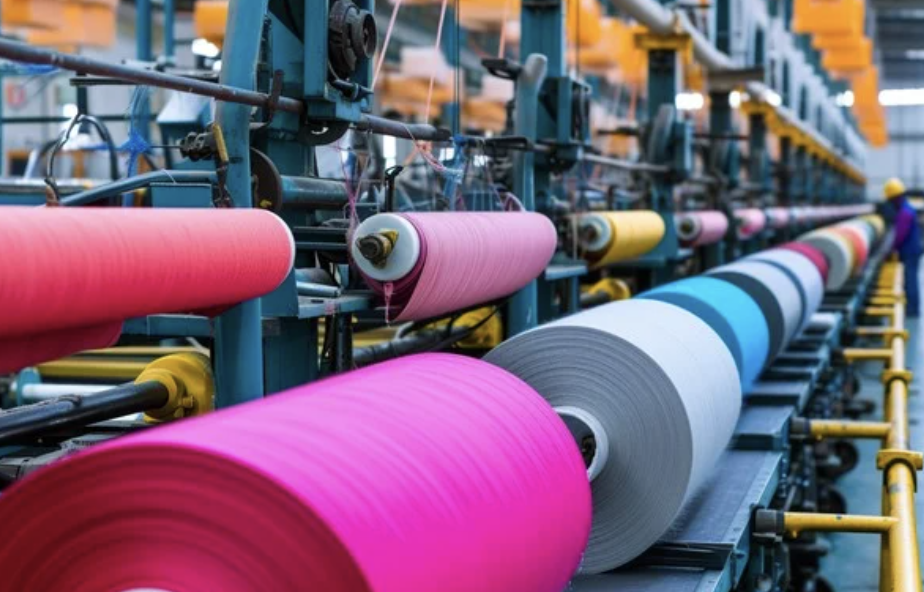 Textile Industry in Turkey
As the global economy enters a new industrial era, major economic blocs such as the United States, China, and the European Union are pivoting toward state-led industrial policies, technology subsidies, and domestic production mandates. Turkey, however, continues to follow a largely market-driven, import-dependent, and fragmented industrial model. According to the Turkish Union of Chambers of Engineers and Architects (TMMOB), this long-standing preference has now evolved into a deep structural crisis.
These concerns are outlined in the Industry Congress 2025 Final Declaration, prepared by TMMOB, which argues that Turkey’s current industrial trajectory leaves the country increasingly vulnerable amid global economic fragmentation and technological competition. The report emphasizes that policy choices made over decades have created systemic weaknesses rather than sustainable industrial capacity.
Manufacturing’s Shrinking Role in the Economy
One of the central findings of the declaration is the persistent decline in the share of manufacturing within Turkey’s national income. Instead of production-led growth, economic expansion has increasingly relied on construction activity, domestic consumption, and financial expansion. While this model may generate short-term growth, TMMOB warns that it produces low value added, heightens exposure to external shocks, and entrenches an unproductive economic structure.
The report stresses that Turkey is entering a period of global disruption, marked by high levels of dependence and limited strategic autonomy. In an environment defined by supply chain realignments and industrial protectionism, such structural fragilities pose significant risks to long-term economic stability.
Defense Industry Gains Fall Short of Broader Industrial Transformation
Despite notable investments in the defense industry, the declaration notes that dependence on imported critical components remains substantial. Moreover, technological capabilities developed in defense projects have not sufficiently diffused into civilian manufacturing sectors. TMMOB argues that without embedding defense production within a planned, public-oriented industrial framework, it cannot generate sustainable development outcomes.
Export data further underscores these limitations. The bulk of Turkey’s exports still consist of low and medium-low-technology products, while the share of high-technology goods remains confined to the 3–4 percent range. This composition forces firms to compete primarily on the basis of low labor costs rather than technological sophistication, resulting in limited productivity gains and sustained wage pressure.
According to the declaration, Turkey remains positioned as an assembler rather than a designer in global value chains, limiting its ability to capture higher-value-added segments of production.
Import Dependency and Structural Vulnerability
Across sectors ranging from electronics and machinery to chemicals and energy, domestic production remains heavily reliant on imported intermediate goods. This dependency means that exchange rate volatility quickly translates into industrial stress, contributing to persistent current account deficits and weakening economic planning capacity.
TMMOB notes that such vulnerabilities undermine industrial resilience and make long-term investment decisions increasingly uncertain, particularly in a global environment characterized by geopolitical and economic shocks.
Engineering Workforce Under Pressure
The declaration links industrial decline directly to the state’s withdrawal from production and planning. Extensive privatizations—including SEKA, Sümerbank, Etibank, PETKİM, TEKEL, TÜPRAŞ, Erdemir, and others—are cited as turning points that eroded domestic intermediate goods production and weakened technological accumulation.
Public investment has increasingly shifted away from manufacturing toward construction and infrastructure projects. As a result, TMMOB argues that the state has lost its role as a guiding and productive force within industry.
The consequences extend to labor and human capital. According to a 2025 study by the Chamber of Mechanical Engineers, real wages for engineers are declining, insecure employment is becoming widespread, and youth unemployment among engineers is rising. Brain drain has accelerated, while women engineers continue to face structural inequality. The report warns that this trend represents not only a social crisis but also a serious erosion of Turkey’s technological capacity.
A Public-Led Exit Strategy
TMMOB’s proposed solution centers on abandoning market-centric industrial policy in favor of a planned, public-oriented strategy. The declaration calls for five-year development plans to be made binding and for trade unions, professional chambers, and universities to be actively involved in industrial policymaking.
Strengthening public ownership in strategic sectors, halting privatizations, and restructuring public enterprises around social benefit and technological development are presented as core priorities. The report also advocates open science and open innovation policies, as well as a redefined university–industry–state collaboration framework aligned with societal needs.
Industrialization, TMMOB argues, must generate secure employment, respect ecological limits, and treat the green transition as an opportunity for domestic technology development rather than an external constraint.