



Threat of Instability Next Door Looms Large for Türkiye
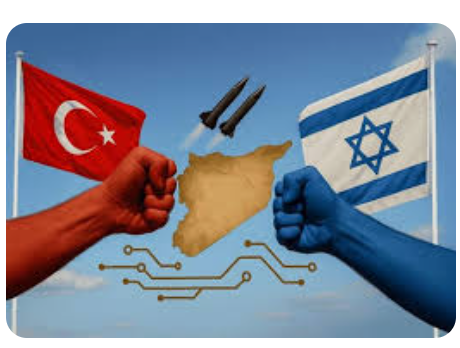 tr israel
Summary: Is Israel a threat to Turkey?
As U.S.-Israeli strikes on Iran escalate into a broader regional confrontation, analysts warn that instability in Iran could carry serious security, migration and geopolitical risks for Türkiye. Turkish officials have intensified diplomatic efforts to prevent wider war, while experts stress that Iran’s territorial integrity is closely linked to Türkiye’s own national security.
Escalation After Failed Diplomacy
In recent months, tensions between Washington and Tehran had intensified, with Türkiye at one point offering to mediate. Talks were eventually held in Geneva. Shortly afterward, however, coordinated U.S. and Israeli airstrikes targeted Iranian military and government-linked facilities.
The strikes reportedly killed several senior Iranian officials, including Supreme Leader Ali Khamenei, triggering retaliatory missile and drone attacks by Iran against Israel and U.S. installations in the Gulf.
U.S. President Donald Trump described the operation as a “large-scale combat action,” accusing Iran of developing missile capabilities that could threaten Europe. Israeli Prime Minister Benjamin Netanyahu said the aim was to create conditions for Iranians to “determine their own future.”
The escalation has heightened security concerns across the region — and in Türkiye.
Iran’s Territorial Integrity and Türkiye’s Security
Furkan Kaya, an associate professor at Yeditepe University, argues that prolonged instability in Iran would directly threaten Türkiye’s national security.
“Instability in Iran and a prolonged war environment pose a highly dangerous situation for Türkiye’s national security interests,” Kaya told Daily Sabah.
He stressed that Türkiye’s priority is the preservation of Iran’s territorial integrity, regardless of policy disagreements between Ankara and Tehran.
“Iran’s territorial integrity is vital to safeguarding Türkiye’s own territorial integrity,” he said.
‘Too Risky’ for Iran to Target Turkey Over U.S. Assets, Analysts Say
Risks of Destabilization
Kaya pointed to reports that nearly 2,500 suspected Daesh members had been transferred from Syria to northern Iraq under U.S. coordination, to areas linked to actors associated with the PKK terrorist organization.
He suggested that such detainees could, in theory, be mobilized in destabilizing scenarios if Iran were politically weakened and public trust eroded.
For such a situation to emerge, Kaya argued, Iran would first need to face serious internal destabilization.
He noted public statements by certain U.S. evangelical and pro-Zionist groups, as well as remarks by Israeli officials, calling on Iranians to rise up against their government.
Kaya cautioned that previous examples in Iraq and Libya show that regime change driven by external powers rarely produces stability.
Civilian Toll and Regional Fallout
Iran’s Red Crescent reported that casualties from the strikes have risen significantly, with hundreds killed across multiple residential areas, according to Iranian media.
Iran’s Education Ministry also reported significant civilian casualties among teachers and students.
As fighting intensifies, concerns are mounting about regional spillover, including disruptions to trade, energy flows and migration.
Migration Pressure and Border Security
Analysts warn that prolonged instability could generate new migration waves toward Türkiye.
Turkish authorities have reportedly tightened border security measures to prepare for potential inflows.
President Recep Tayyip Erdoğan and Foreign Minister Hakan Fidan have engaged in active shuttle diplomacy, holding calls with counterparts in Iran, Iraq, Saudi Arabia, Qatar, Syria, Egypt and Indonesia in an effort to prevent further escalation.
Despite these efforts, clashes have continued and their duration remains uncertain.
Could Türkiye Be Targeted?
Kaya suggested that if Israel’s broader strategy involved reshaping regional balances, northern Iran could become strategically significant given its proximity to Türkiye’s southern border.
He also argued that while Israel may engage in rhetorical confrontations with Türkiye, a direct military confrontation would be “reckless.”
Instead, he suggested that indirect destabilization efforts would be more likely.
National Defense and Intelligence Operations
Kaya said Türkiye’s investments in its domestic defense industry over the past two decades — across air, land and sea capabilities — have strengthened its preparedness for adverse scenarios.
He also highlighted recent counterintelligence operations by Türkiye’s National Intelligence Organization (MIT) targeting alleged Mossad-linked networks inside the country.
Last month, Turkish authorities arrested two individuals accused of espionage for Israel’s intelligence agency. A court ordered their detention on charges related to obtaining confidential information for political or military espionage.
According to Kaya, such operations are critical for national security amid heightened regional tensions.
Strategic Balancing
While Türkiye condemns both the initial strikes and retaliatory attacks, it has maintained a balanced diplomatic stance.
Ankara’s approach reflects a dual objective:
-
Prevent wider regional war
-
Safeguard national security and territorial stability
As the conflict evolves, analysts say the duration of hostilities and the degree of Iranian destabilization will determine whether Türkiye faces secondary effects such as migration pressure, economic disruption or heightened security risks.
For now, Türkiye remains on alert — diplomatically engaged, militarily prepared, and closely monitoring developments across its eastern frontier.
Source: Daily Sabah
PA Turkey intends to inform Turkey watchers with diverse views and opinions. Articles on our website may not necessarily represent the view of our editorial board or constitute endorsement.
Follow our English YouTube channel (REAL TURKEY):
https://www.youtube.com/channel/UCKpFJB4GFiNkhmpVZQ_d9Rg
Twitter: @AtillaEng
Facebook: Real Turkey Channel: https://www.facebook.com/realturkeychannel/