The Trillion-Dollar Crater: Mapping the Global Economic Destruction of the Iran War
 iran savaşı maliyet
LONDON / ANKARA — As of April 10, 2026, the fragile ceasefire between Iran, Israel, and the U.S.-led coalition remains under constant violation. While diplomats struggle to silence the batteries, economists have begun the grim task of totaling the damages. The verdict is staggering: according to a new study by Dr. Elif Kaya, the total economic cost of the conflict has reached $1 trillion, representing roughly 1% of annual global output.
What began as a regional flare-up has evolved into a global phenomenon now termed “Warflation.” From the boardroom of the IMF to the gas stations of Anatolia, the world is paying a high price for a conflict that shows no signs of a permanent resolution.
1. The Macroeconomic Shockwaves
The Center for Strategic and International Studies (CSIS) estimates that direct costs—encompassing military spending and infrastructure destruction—have already hit $250 billion. However, the “hidden” costs are far higher. J.P. Morgan reports that the conflict has depressed global GDP growth by 0.6 percentage points in the first half of 2026 alone.
Regionally, the devastation is total. The UNDP reports that Arab nations have suffered a GDP contraction between $120 billion and $194 billion. Infrastructure damage across the Mashreq is estimated at $350 billion, specifically targeting the energy and trade arteries that keep the global economy solvent.
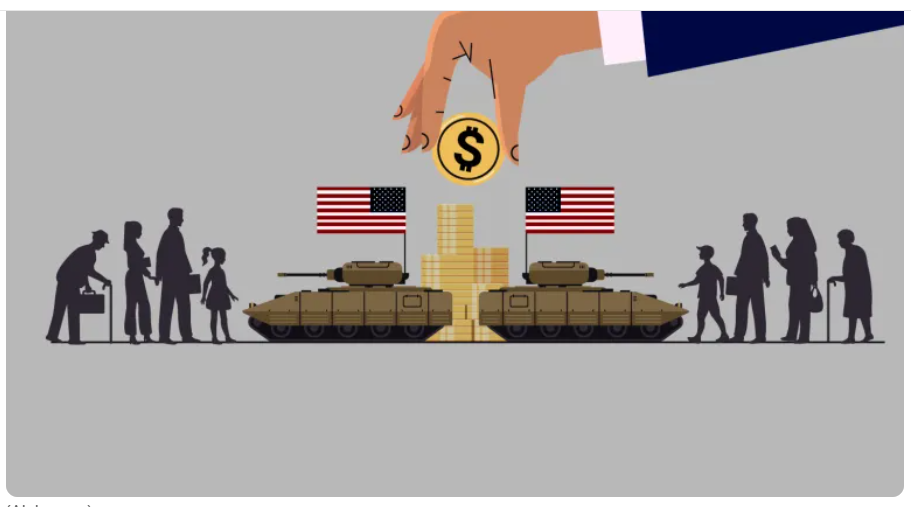
For the United States, the price of intervention is mounting. As of late March, direct costs reached $25 billion, with daily operations burning through $500 million to $1 billion. Meanwhile, Israel’s defense budget has been burdened with an additional $30.3 billion (112 billion NIS), of which the U.S. directly subsidizes 20.4%.
COMMENTARY: Iran War is not over, Stagflation is unavoidable
2. The Energy and Commodity Surge
The primary driver of global pain remains the Strait of Hormuz. Following Iran’s partial blockade and the subsequent targeting of energy facilities—which caused $7 billion in direct damage to Iranian infrastructure—global oil prices have carried a permanent risk premium of $20 to $30. By early April 2026, crude oil surged past $112 per barrel.
The fallout extends beyond the pump:
-
Food Security: Global urea (fertilizer) prices have jumped 50%, as the war disrupted 40% of the world’s nitrogen fertilizer exports.
-
Financial Markets: The Tokyo Nikkei 225 has emerged as the hardest-hit major index, plummeting 11% since the start of hostilities.
-
Aviation: Nearly 70% of regional flights have been cancelled, paralyzed by a combination of closed airspace and skyrocketing insurance premiums.
3. Turkey: The Frontline of Economic Contagion
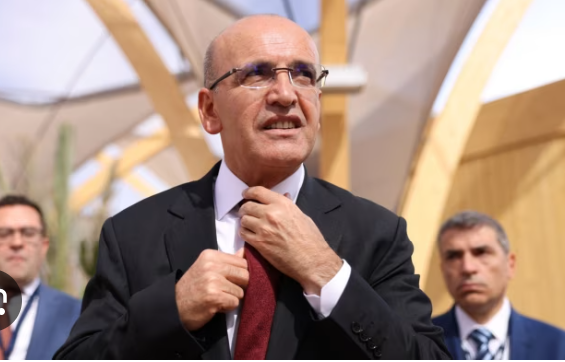
For Turkey, the war has been an unmitigated fiscal disaster. Economy Tsar Mehmet Şimşek recently admitted that budget deficits and inflation targets must be revised “upward,” while the current account deficit will deteriorate “significantly.”
The numbers paint a harrowing picture. As of April 10, the total cost to the Turkish economy has reached $56 billion.
-
The Foreign Exchange Drain: Turkey’s gross reserves fell from a peak of $218 billion in January to $178 billion by mid-March—a massive $40 billion drop in just sixty days.
-
The Oil Tax: Every $10 increase in oil prices adds roughly $4.5 billion to $5 billion to Turkey’s deficit. With Brent sustaining a $30+ premium, the mechanical hit to the deficit is nearly $15 billion.
-
Energy Subsidies: To prevent social unrest, the government has tripled natural gas subsidies from 300 billion lira to approximately 950 billion lira ($21 billion).
Consequently, the World Bank has slashed Turkey’s 2026 growth forecast to 2.8% (down from 3.7%), while S&P Global raised inflation projections to 28.9%. In response, the Central Bank (CBRT) halted its rate-cutting cycle at 37%, with markets bracing for a hike to 40% on April 22 to defend the lira.
4. The Geopolitical Shift
Dr. Elif Kaya’s study argues that the war has accelerated the “moral and economic bankruptcy” of Western hegemony. While the U.S. has suffered a massive loss of prestige by shielding Israeli regional ambitions, Turkey has attempted to position itself as a “stability actor.” The diplomacy of the Turkey-Egypt-Qatar-Pakistan quartet was instrumental in reaching the current (albeit fragile) ceasefire.
However, diplomacy cannot fix the supply chain. Oxford Economics warns that a prolonged conflict could slow global growth to a crawl of 1.4%, with oil potentially hitting $150 per barrel. To prevent a total collapse of energy-importing developing nations, the IMF is currently readying a support package between $20 billion and $50 billion.
Conclusion: A Permanent Scar
The Iran war of 2026 is no longer a local dispute; it is a trillion-dollar drain on human progress. As industrial capacity hits record lows and fuel costs surge by over 50%, the “Netanyahu premium” is being paid by every consumer on the planet. Whether the world can recover from this “accelerated pillage” of global resources depends entirely on whether the ceasefire holds—or if the $1 trillion loss is merely the down payment on a larger catastrophe.
Sources: Turkiye Gazette, PA newsdesk