The “Third Front”: Kurdish Insurgency and Tehran’s Sweeping Internal Crackdown
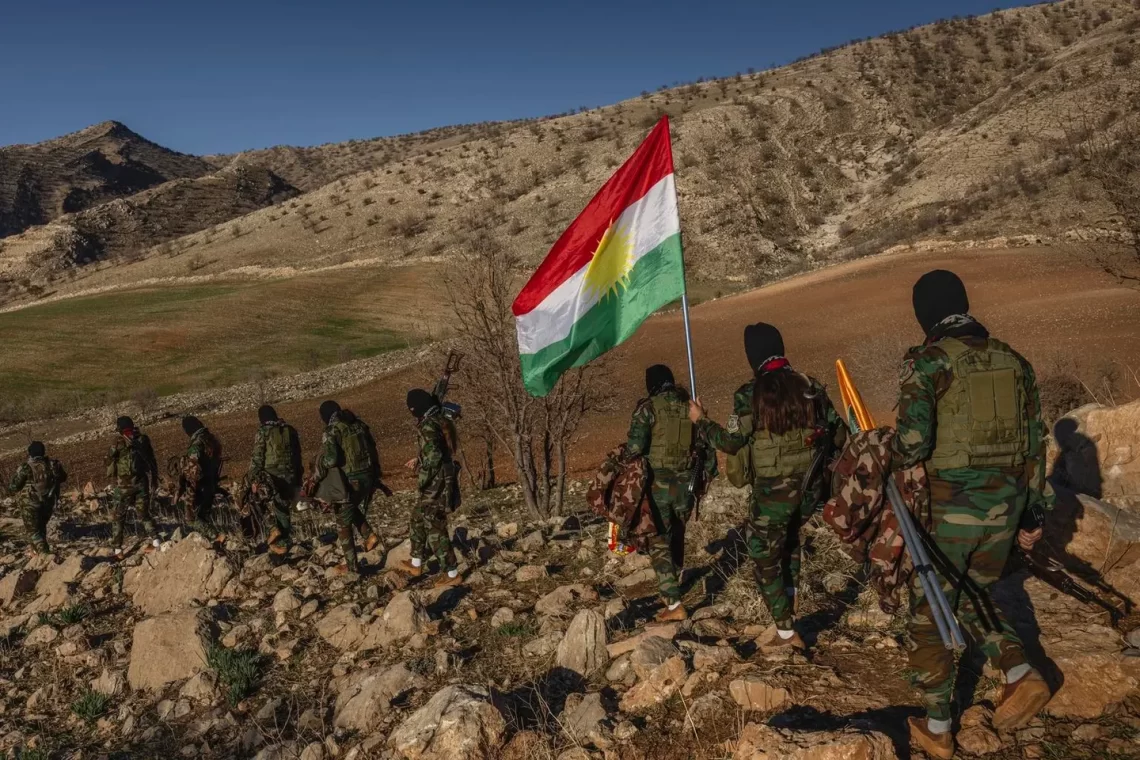 Kurdish-Forces-Iran
As the Iran-US-Israel conflict enters its second month, a coordinated Kurdish insurgency in Northwest Iran has triggered a massive security crackdown by Tehran. We analyze the “Third Front” and Ankara’s growing anxiety over regional stability.
While the global gaze remains fixed on the naval blockades in the Persian Gulf and the high-altitude missile duels between Israel and Iran, a more intimate and potentially more fragmenting conflict is erupting in the mountains of Northwest Iran. For over four weeks, a “Third Front” has been quietly coalescing—one that pits a newly assertive Kurdish opposition against a depleted and increasingly paranoid Islamic Revolutionary Guard Corps (IRGC).
Türkiye and Syria Caught Between Alliances in Escalating Iran Conflict
The Internal Siege: Tehran’s “Iron Fist” Strategy
The Iranian central government, reeling from external strikes on its nuclear and energy hubs, has responded to internal dissent with an aggressive, nationwide security campaign. In just the last week, the Ministry of Intelligence and the IRGC announced the killing of five “separatist militants” and the arrest of nearly 200 individuals across multiple provinces, including West Azerbaijan, Khuzestan, and Ardabil.
The arrests are not limited to armed combatants. Tehran is casting a wide net, targeting what it describes as “espionage and sabotage networks” linked to the US and Israel.
-
In Ilam province: 51 people were detained for organizing unrest and documenting missile impact sites.
-
Technological Crackdown: Authorities reported seizing Starlink satellite communication devices, which are being used to bypass the regime’s internet blackouts and maintain links with opposition media outlets like Iran International.
-
Espionage Allegations: In West Azerbaijan, officials claimed to have disrupted a “separatist organization” in Mahabad that was allegedly preparing an armed assault under direct instructions from Israeli intelligence.
The “Kurdish Corridor”: A Coordinated Insurgency
The most significant military challenge is emerging from the Zagros Mountains. Reports from the Kurdistan Free Life Party (PJAK) and the Democratic Party of Iranian Kurdistan (PDKI) indicate that the last seven days have seen the most intense fighting in years.
Kurdish militants have transitioned from defensive posturing to “hit-and-run” operations targeting IRGC supply lines. This tactical shift is a direct result of a “security vacuum” created by the redeployment of elite IRGC units to protect Tehran and the Bushehr nuclear plant. Analysts are now monitoring a “cross-border synchronization” where Kurdish groups in Iran are coordinating with the KRG in Iraq and the SDF in Syria, utilizing Western equipment that has reportedly “leaked” into the Iranian theater.
Turkey Walks a Tightrope as Iran War Escalates Across Region
Ankara’s Growing Anxiety
The revival of Kurdish separatism has placed Turkey in a precarious diplomatic position. President Recep Tayyip Erdoğan has repeatedly stressed Turkey’s support for Iran’s territorial integrity, fearing that a successful Kurdish movement in Iran will inevitably bleed across the border, reigniting PKK activity in Turkey.
Turkish intelligence (MIT) has reportedly cautioned Kurdish leaders in Northern Iraq against involvement, citing rumors that Israeli intelligence is actively recruiting militants for a “Third Front.” For Ankara, a weakened Iran is a geopolitical benefit, but a fragmented Iran that paves the way for an independent Kurdish entity is an unacceptable risk. The 2023 security agreements between Tehran and Baghdad have effectively collapsed, leaving Turkey to manage its borders with increasing unilateral force.
The Dilemma of Retaliation
Despite the uptick in skirmishes, the Kurdish leadership remains cautious about a full-scale ground offensive. Washington’s support remains “equivocal,” and Tehran has shown it is still capable of brutal retaliation. On March 4, a ballistic missile strike on a PAK base in Iraqi Kurdistan served as a lethal warning of Tehran’s reach.
“The Kurds see uncertainty ahead,” says Middle East analyst Seth J. Frantzman. “They have seen how Western commitments to Kurdish groups in Syria or Iraq have had mixed results. They are naturally cautious about putting it all on the line without a long-term guarantee.”
However, by signaling an imminent offensive without a viable, internationally backed plan, the Kurds have exposed themselves to intensified Iranian bombardment. Currently, Iran maintains the initiative, using its superior drone and missile capabilities to hit “terrorist training camps” near Mariwan and Sanandaj.
The Toll of War: Beyond the Battlefield
In addition to the armed conflict, civil disobedience is paralyzing the northwest. Last Wednesday, widespread merchant strikes shuttered the bazaars of Mahabad and Saqqez. Residents are protesting both the regime’s wartime conscription efforts and the severe shortages of basic goods caused by the Strait of Hormuz blockade. In smaller villages, the raising of Kurdish flags over local government buildings serves as a potent symbol of Tehran’s thinning administrative control.
As March 2026 comes to a close, the “Third Front” remains the most volatile variable in the regional war. If Tehran cannot contain the Kurdish insurgency, the territorial integrity of the Islamic Republic may begin to unravel from the northwest down, even if its external enemies never set foot on Iranian soil.