The Great Pivot: How Mehmet Şimşek is Preparing Turkey for a High-Stakes Election Economy
 secim ekonomisi
In a comprehensive briefing for the Ankara Sayfası program on the Mesele Ekonomi portal, veteran economic journalist Erdal Sağlam provided a deep-dive analysis into the shifting sands of Turkish economic policy. As the nation grapples with a complex mix of domestic inflation pressures and global geopolitical shocks—ranging from erratic Brent oil prices to landmark U.S. Supreme Court rulings—Sağlam outlines a government strategy that is quietly transitioning from painful stabilization to a calculated pre-election expansion.
Photo: Erdal Saglam

The Survival of Mehmet Şimşek and the Cabinet Reshuffle
The headline of Sağlam’s analysis is the political longevity of Treasury and Finance Minister Mehmet Şimşek. Despite persistent rumors within the corridors of Ankara regarding a broader cabinet reshuffle—potentially involving at least five ministerial changes—Şimşek appears to be “untouchable.” Sağlam notes that his sources within the banking and bureaucratic sectors confirm that Şimşek has already begun briefing international investors on a new phase: “Controlled Fiscal Easing.”
Rather than being replaced for his hawkish stance, Şimşek is being tasked with managing the very relaxation of the program he built. The logic is political survival; the ruling AKP understands that while the “NAS” policies of the past led to a currency abyss, a purely austere approach would lead to certain defeat at the ballot box in 2027.
A New Breed of Election Economics
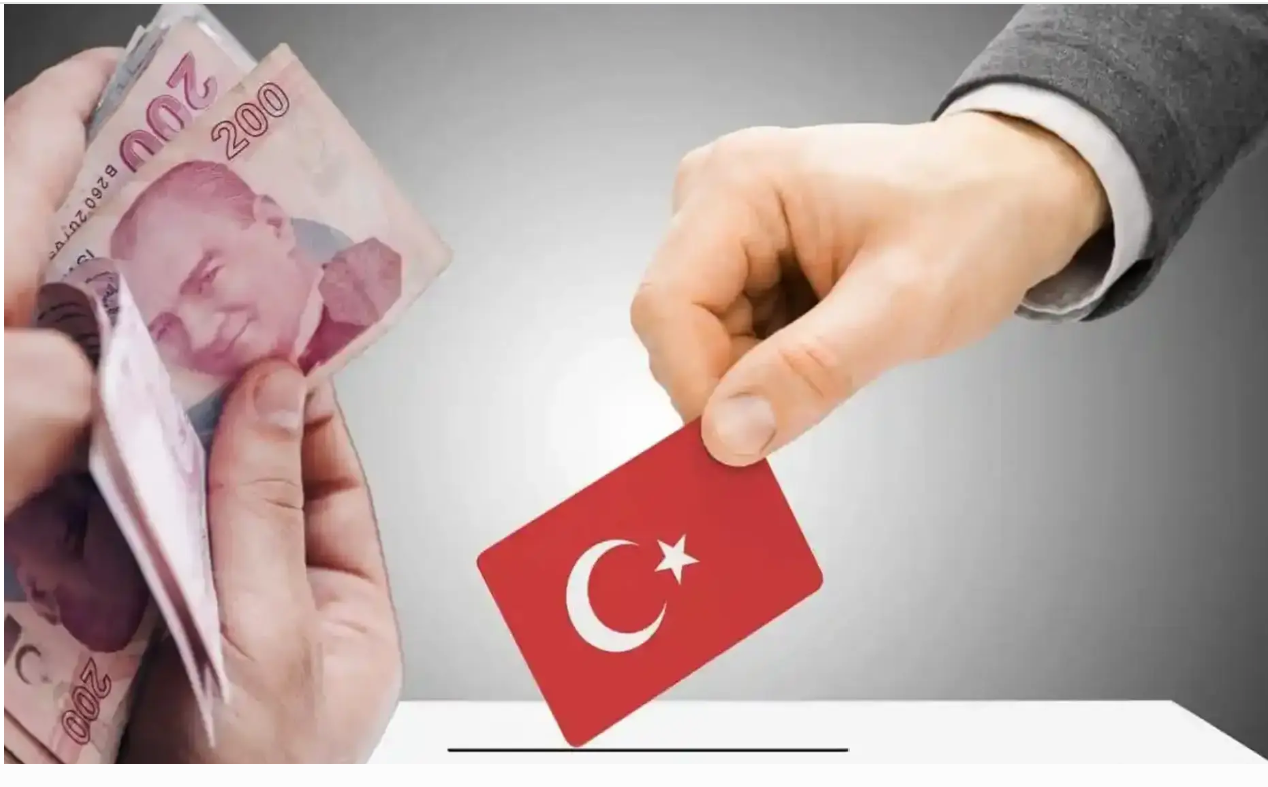
Sağlam draws a sharp distinction between the chaotic “NAS” era and the upcoming 2027 election strategy. This time, the “Selection Economy” will not be driven by reckless credit expansion through state banks, which previously triggered massive reserve depletion and currency volatility. Instead, the focus is shifting to fiscal policy and the central budget.
According to Sağlam, the administration is preparing for a massive “catch-up” period for the nation’s most distressed economic groups: retirees and minimum wage earners. By early 2027, the government plans to implement significant wage hikes and social transfers. The goal is a “controlled demand shock” intended to revitalize the service sector and small-to-medium enterprises (SMEs), which are currently reeling under high borrowing costs. By shifting the burden to the budget rather than the printing press, the government hopes to maintain a facade of “program continuity” while simultaneously winning back a disgruntled electorate.
The Global Headwinds: Oil, Trump, and the Fed
The analysis transitions to the external environment, which Sağlam describes as “unusually turbulent.” The recent U.S. Supreme Court ruling against the Trump administration’s broad tariff authority is identified as a major turning point. Beyond the immediate $175 billion in potential tariff refunds, the ruling signifies a re-assertion of institutional checks in the U.S., which could temper some of the “policy shocks” that have historically rattled global emerging markets.
However, the immediate threat is more visceral: energy prices. With Brent oil climbing toward $71 per barrel, the Central Bank of the Republic of Türkiye (CBRT) finds itself in a precarious position. The bank’s previous forecasts were predicated on $60 oil. As energy costs push February inflation expectations higher—with some independent data suggesting a monthly print above 3%—the window for the much-anticipated March interest rate cut is rapidly closing. Sağlam argues that unless there is a swift de-escalation in Middle Eastern tensions, the CBRT will likely be forced to keep rates steady, further prolonging the “wait-and-see” period for investors.
Industrial Stagnation vs. Consumer Credit
On the domestic front, the “real economy” is sending mixed signals. February’s Capacity Utilization Rate (KKO) fell to 74%, well below the historical average of 76%. This suggests that Turkish industry is not yet in a recovery phase. However, consumer demand remains surprisingly resilient, prompting the government to take a harder line on credit card limits.
Sağlam reveals that while the government recently postponed credit card limit restrictions for three months, the reprieve is temporary. Negotiations between the Banking Association and economic bureaucrats suggest a two-stage tightening: first, a reduction in total limits relative to income, and second, more stringent requirements for future limit increases. In a notable exception, the government has given banks a “green light” to compete in the mortgage market, hoping that housing construction can serve as an engine for growth without fueling the same level of inflationary fire as general-purpose consumer loans.
The 2026 Roadmap: The Path to 25%
Looking ahead, Sağlam outlines the government’s “Red Line” for 2026. The target is to drive inflation down to 25% by September 2026. If the administration can hit this psychological marker, they will frame it as a historic victory over the “inflation monster,” providing the political capital needed to pivot fully into the election spending spree of 2027.
However, the risk of a “policy accident” remains high. Sağlam warns that this strategy of “giving with one hand and taking with the other” has historically ended in a cycle of currency depreciation and renewed poverty. While 2027 may offer a brief “breath of fresh air” for the middle and lower classes through high wage hikes, the subsequent fiscal deficit—likely returning to 5% of GDP—will eventually necessitate a painful correction.
Conclusion: A High-Stakes Gamble
Erdal Sağlam’s analysis portrays a government that has learned from the “NAS” disaster but is unwilling to abandon the lure of populist spending. By keeping Mehmet Şimşek at the helm to provide “Western-facing credibility” while simultaneously planning a budget-led expansion, President Erdoğan is attempting a delicate balancing act. Whether the global markets and the volatile energy sector will allow for such a “controlled” maneuver remains the multi-billion dollar question for Turkey in the coming year.