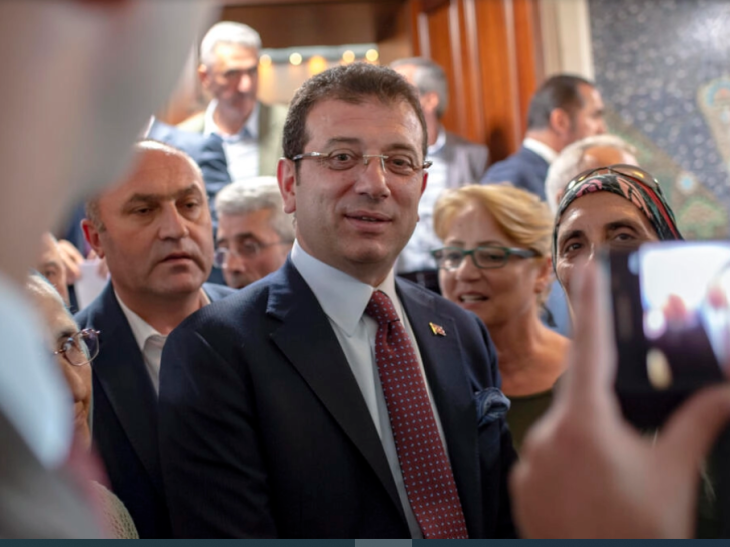
The Economist: Erdoğan Using Geopolitical Leverage to Deflect Criticism Over İmamoğlu Case
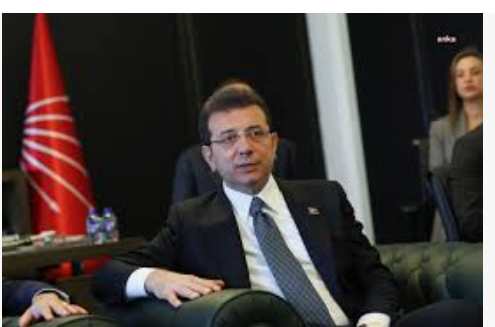 ekrem imamoglu
A new analysis by The Economist argues that President Recep Tayyip Erdoğan is leveraging Türkiye’s growing geopolitical importance to shield his government from Western criticism over democratic backsliding and the ongoing trial of Istanbul Mayor Ekrem İmamoğlu. The magazine suggests that as geopolitical tensions in the Middle East intensify, Western governments have become more dependent on Ankara, making them less willing to openly criticize domestic political developments in Türkiye.
The Economist: Geopolitics as a Protective Shield
In its analysis, The Economist claims that President Recep Tayyip Erdoğan has increasingly used Türkiye’s strategic geopolitical position as a diplomatic shield against international criticism.
According to the report, Ankara’s importance to Western allies—particularly during rising regional tensions—has made foreign governments more cautious about confronting the Turkish leadership over domestic issues.
The magazine argues that this dynamic has helped limit external pressure regarding democratic backsliding and high-profile legal cases, including the prosecution of Istanbul Mayor Ekrem İmamoğlu.
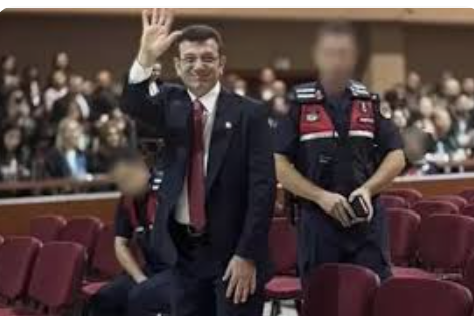
What the First Week of the İmamoğlu Trial Reveals About Türkiye’s Political Climate
The Scale of the İmamoğlu Trial
The article highlights the scale of the case involving İmamoğlu, widely viewed by Türkiye’s opposition as a potential challenger in the next presidential election.
According to the report, İmamoğlu appeared before a court in a large prison complex courtroom as part of a trial involving more than 400 defendants.
Some of the defendants have reportedly been held in detention for over 11 months, while the indictment against İmamoğlu exceeds 3,700 pages and carries potential prison sentences totaling up to 2,532 years.
The article also cites comments from CHP lawmaker and lawyer Sezgin Tanrıkulu, who claimed the goal of the case was to keep İmamoğlu imprisoned until after the 2028 presidential election.
The report further notes that the prosecutor who initiated the investigation was later appointed justice minister by President Erdoğan.
Foreign Policy as a Political Tool
According to The Economist, Erdoğan has increasingly relied on foreign policy initiatives to strengthen his political position at home.
The analysis argues that issues such as high inflation—reported at 31.5%—and democratic concerns receive less attention when foreign policy successes dominate the public narrative.
The magazine cites Senem Aydın-Düzgit, director of the Istanbul Policy Center, who said foreign policy has become one of the few areas where the government can still present a compelling success story to the public.
Erdoğan’s diplomatic roles in the Black Sea region, Syria, and mediation efforts between Russia and Ukraine are cited as examples of how Türkiye’s international influence can help soften Western criticism.
Impact of the U.S.–Iran Conflict
The article also suggests that the ongoing war involving the United States and Iran has further strengthened Türkiye’s strategic value for Western governments.
While Ankara has opposed the war from the outset—warning that it could disrupt trade and trigger humanitarian crises—the conflict has reinforced Türkiye’s importance as a regional actor.
The analysis notes that the European Union increasingly views Türkiye as a buffer against instability in the Middle East, particularly in the context of migration risks.
European Commission President Ursula von der Leyen is cited as praising Türkiye’s preparedness to manage potential migration pressures resulting from regional conflicts.
The report also claims that Türkiye is considering establishing refugee camps near the Iranian border to prevent a potential influx similar to the Syrian refugee crisis.
Syria, Trump, and the Halkbank Issue
The article also addresses Türkiye’s relations with both Syria and the United States.
According to the analysis, following the collapse of the Syrian government in 2024, the new administration led by Ahmed al-Sharaa became one of Türkiye’s key security partners.
The report claims the new Syrian leadership has cooperated with Ankara in efforts to push PKK/YPG forces out of certain areas.
The magazine also points to Erdoğan’s relationship with U.S. President Donald Trump, suggesting that the political rapport between the two leaders has produced tangible outcomes.
It claims the U.S. government reached a settlement with Halkbank on March 9 that spared the Turkish lender from potentially massive fines.
The analysis further alleges that Washington abandoned a plan to support an armed Kurdish uprising inside Iran following pressure from Türkiye.
Western Dependence on Türkiye
The article concludes with a broader argument that Western reliance on Türkiye is likely to grow as regional tensions intensify.
Quoting Karabekir Akkoyunlu of SOAS University in London, the report argues that the war involving Iran has increased Western governments’ willingness to maintain close relations with Ankara.
“As the war in Iran unfolds, Western leaders are more eager than ever to keep Türkiye on their side,” Akkoyunlu said.
According to the analysis, this dynamic could mean that developments inside Türkiye—including the fate of political figures such as İmamoğlu—receive less scrutiny internationally.
The report concludes that the more indispensable Türkiye becomes to Western strategic interests, the greater the political space Erdoğan may have to pursue his domestic agenda.
Source: The Economist, analysis cited by Karar
Author: Newsroom rewrite
PA Turkey intends to inform Turkey watchers with diverse views and opinions. Articles in our website may not necessarily represent the view of our editorial board or count as endorsement.
Follow our English YouTube channel (REAL TURKEY):
https://www.youtube.com/channel/UCKpFJB4GFiNkhmpVZQ_d9Rg
Twitter: @AtillaEng
Facebook: Real Turkey Channel:
https://www.facebook.com/realturkeychannel/
Related articles
What the First Week of the İmamoğlu Trial Reveals About Türkiye’s Political Climate

İmamoğlu Defends Himself in Silivri: “We’re Not Being Tried, We’re Being Punished”
CHP Congress Indictment Accepted: İmamoğlu Among 12 Accused of Ballot Fraud