The cost of Ramadan menu subject of FT article
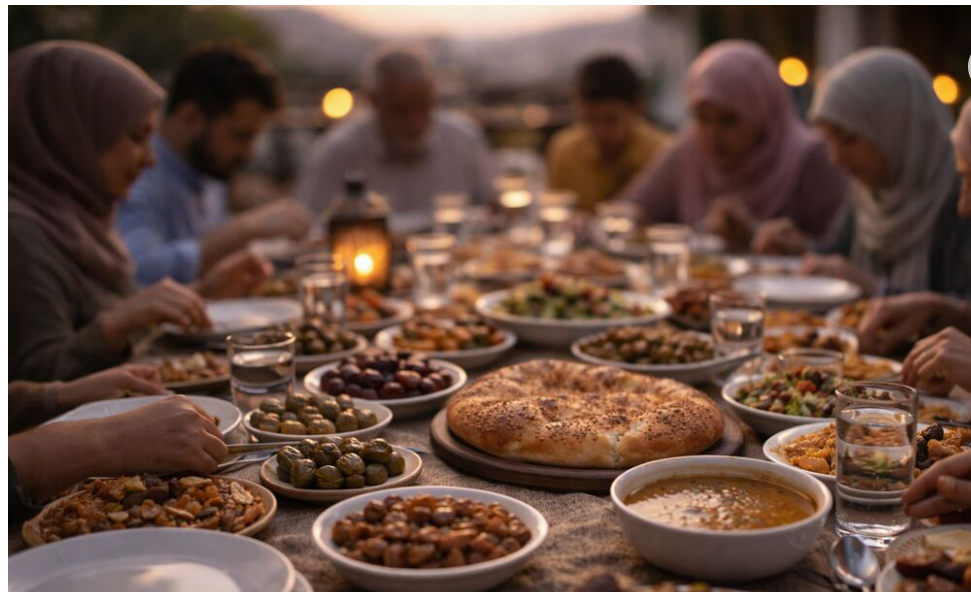 ramazan sofrası
Soaring food prices ahead of Ramadan have put Türkiye’s cost-of-living crisis back in the spotlight, drawing international attention and prompting a government crackdown on “exorbitant” pricing. As staples from meat to dates post sharp year-on-year increases, opposition lawmakers say even basic pre-dawn meals are becoming a luxury for pensioners and low-income households.
An article in the Financial Times highlighted Türkiye’s pre-Ramadan inflation surge, noting that the government has suspended chicken exports and launched nationwide inspections to curb what officials describe as excessive price hikes.
But beyond the policy response, retail data and opposition figures suggest the scale of price increases in food products has significantly outpaced wage growth.
Dates Compete With Meat in Price Surge
Prices at markets and supermarkets have accelerated in the weeks leading up to Ramadan, traditionally a period of heightened food demand.
Opposition lawmaker Süleyman Bülbül of the Republican People’s Party (CHP) said prices for many Ramadan staples have roughly doubled compared with last year.
According to his price survey:
-
Ramadan flatbread (pide) is up 25%
-
Medina dates have surged 88%
-
Olives are up 41%
-
Cheese has risen 36%
-
Eggs have climbed 33%
-
Cooking gas is up 30%
-
Sausage prices increased 34%
-
Diced beef rose nearly 55%
-
Ground beef increased 46%
In contrast, the minimum pension increased by around 18%, civil servant salaries by roughly 18–19%, and the minimum wage by 27%.
“Sahur meals of olives, cheese and eggs have become a luxury for retirees,” Bülbül said.
Ramadan Food Baskets Double in Price
The price of pre-packaged Ramadan food baskets — a popular charitable and corporate tradition — has drawn particular attention.
In 2018, the cheapest Ramadan basket cost 49.90 lira. This year, comparable entry-level packages are priced around 550 lira, marking a cumulative increase of roughly 1,000% over eight years.
Retail comparisons show both overt price hikes and what critics describe as “shrinkflation” — fewer products for higher prices.
At CarrefourSA:
-
The “Classic” Ramadan basket, containing 12 items, rose 108% year-on-year to 790 lira.
-
The “Super” basket increased 119% to 1,423 lira while losing one item.
-
The “Mega” basket climbed 117% to 1,732 lira despite containing fewer products.
Migros’ 12-item Ramadan package rose 35% to 499 lira, while its 21-item package increased 27% to 799 lira.
ŞOK Market’s 13-item basket rose 29% to 550 lira.
While official data from Turkish Statistical Institute show annual food inflation at 28.3%, the inflation rate for the smallest Ramadan basket was calculated at 35%, with some packages recording price increases exceeding 100%.
Corporate Demand Weakens
Industry representatives say demand for Ramadan baskets has declined.
Mustafa Karlı, head of the Istanbul Food Wholesalers Association (İGTOD), said economic strain has led some companies to scale back bulk purchases traditionally distributed to employees and communities.
Mehmet Reis, chairman of Reis Gıda, noted that while legumes have risen 27% over the past year — below general inflation — overall basket demand has fallen.
“In previous years, a businessperson might distribute 10,000 food packages. Now many limit distribution to close circles and senior executives,” Reis said, adding that gift vouchers are increasingly replacing physical food parcels.
He warned that vouchers often lead to spending outside essential food items, reducing demand for staple goods.
Government Crackdown Intensifies
In response to mounting public discontent, authorities have launched inspections targeting alleged stockpiling and unjustified price increases.
Trade Minister Ömer Bolat said inspectors are “on the ground” to prevent hoarding and protect consumers during Ramadan.
The government has also temporarily suspended chicken exports after poultry prices reportedly rose by up to 15%. Fines for excessive pricing can reach 1.8 million lira ($41,000).
President Recep Tayyip Erdoğan’s administration faces growing economic criticism, with surveys suggesting that a majority of citizens believe the economy is poorly managed.
Inflation Still Weighs on Confidence
Annual inflation stands at around 31%, down from a peak of 86% three and a half years ago but still well above official targets.
Finance Minister Mehmet Şimşek attributed a recent 7% monthly food price jump to adverse weather conditions, saying the impact on underlying inflation trends would be limited.
However, the International Monetary Fund has warned that inflation remains significantly above target and that volatile food prices pose a key risk.
Household surveys indicate that many Turks expect inflation to exceed official projections for the coming years.
Price Controversies Fuel Public Anger
Public frustration has been amplified by viral claims of excessive restaurant bills. One widely circulated allegation involved a diner claiming to have paid 22,850 lira ($522) for meatballs and salad.
Deputy Trade Minister Mahmut Gürcan said investigations showed additional food and beverages had been ordered, though the episode underscored widespread anxiety over pricing transparency.
PA Turkey intends to inform Turkey watchers with diverse views and opinions. Articles on our website may not necessarily represent the view of our editorial board or count as endorsement.
Follow our English YouTube channel (REAL TURKEY):
https://www.youtube.com/channel/UCKpFJB4GFiNkhmpVZQ_d9Rg
Twitter: @AtillaEng
Facebook: Real Turkey Channel: https://www.facebook.com/realturkeychannel/
Related articles

Turkey Targets Hedge Funds Amid Manipulation Claims: Government Signals Tougher Regulation
Türkiye finalizes initial phase of state-run companies reform
Interior Minister Yerlikaya crusading against organized crime, influencers