Tether’s Secret Swiss Vault: Inside the 23 Billion Dollar Gold Bet Shaking Global Finance
 Tether-gold-vault
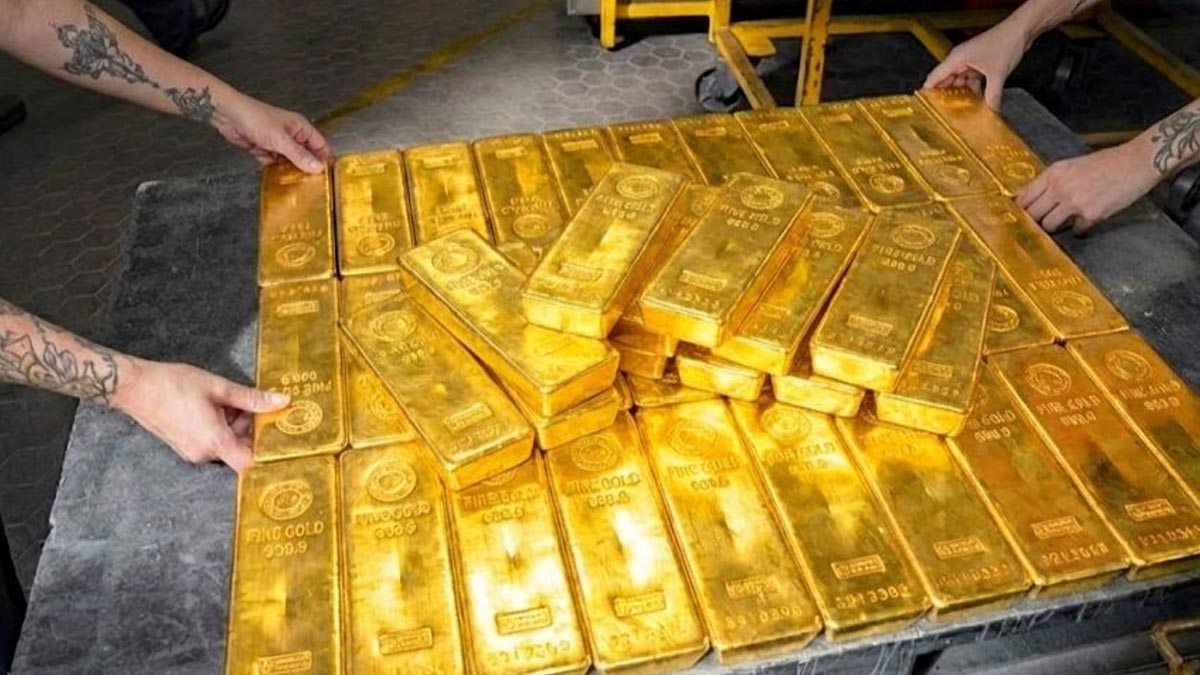
Tether, best known as the issuer of the world’s largest stablecoin, is no longer operating solely in the digital realm. In a move that has surprised both crypto markets and traditional finance, the company has quietly built one of the largest privately held gold reserves on the planet. Deep inside the Swiss Alps, in a Cold War–era nuclear bunker, Tether now safeguards approximately 140 tons of physical gold, valued at nearly $23 billion.
The revelation underscores a strategic pivot: Tether is positioning itself not just as a crypto infrastructure company, but also as a hybrid financial powerhouse that bridges digital assets and hard commodities. According to CEO Paolo Ardoino, the underground facility is protected by multiple layers of reinforced steel doors and extreme security measures, prompting him to describe it as “James Bond movie kind of crazy.”
A Cold War Bunker Turned Financial Fortress
The vault, originally constructed during the Cold War as a nuclear shelter, has been repurposed into a modern gold storage hub. Each week, tons of gold are transported into the facility under strict security protocols. This is not symbolic diversification; it is a sustained accumulation strategy. Ardoino confirmed that Tether continues to purchase one to two tons of gold per week, a pace that places the firm among the most aggressive buyers in the global gold market.
What makes this particularly notable is scale. Outside of governments and central banks, few institutions hold gold reserves of this magnitude. With the exception of Poland—whose central bank added over 100 tons last year—Tether’s annual gold purchases exceed those of almost any single sovereign buyer.
Competing With Central Banks and Global Banks
Tether’s ambitions extend beyond storage. The company is actively building a gold trading operation designed to rival established financial giants such as JPMorgan and HSBC. To support this effort, Tether has recruited two senior gold traders directly from HSBC, signaling serious intent to compete at the highest levels of the precious metals market.
Ardoino has openly framed Tether’s role in central-bank terms, stating, “Soon we will be one of the biggest ‘gold central banks’ in the world.” This comparison is more than rhetoric. By combining physical reserves, active trading, and tokenized gold products, Tether is creating a vertically integrated gold ecosystem—something few private entities have achieved at scale.
The Rise of Digital Gold and XAUT
At the center of Tether’s strategy lies its belief that trust in government debt and fiat currencies—particularly the US dollar—is eroding. As geopolitical tensions rise and sovereign debt levels expand, Tether sees gold as a neutral, time-tested store of value.
This philosophy is already embedded in Tether Gold (XAUT), a token fully backed by physical gold held in Swiss vaults. Each token represents direct ownership of allocated gold, blending blockchain efficiency with traditional asset security. To date, approximately 16 tons of gold, worth around $2.6 billion, have been tokenized through XAUT.
Tether’s leadership believes that rival geopolitical blocs may increasingly explore gold-backed or commodity-backed currencies as alternatives to dollar dominance. In that scenario, tokenized gold could become a crucial bridge between old and new financial systems.
Impact on the Global Gold Market
Analysts argue that Tether’s buying spree is already influencing prices. Gold recently surged past $5,100 per ounce, marking a historic high. Market observers at Jefferies Financial Group have identified Tether as a “significant new buyer,” while the World Gold Council notes that although Tether is not the sole driver, its demand has contributed meaningfully to the current rally.
This development highlights a broader trend: non-traditional actors—particularly crypto-native firms—are becoming influential participants in legacy commodity markets. Gold, once dominated by central banks and jewelry demand, is now increasingly shaped by digital finance strategies.
A New Financial Archetype
Tether’s Swiss bunker is more than a dramatic setting; it represents a shift in how value is stored and defended in the 21st century. By anchoring digital tokens to physical gold and scaling reserves at a central-bank level, Tether is redefining what a crypto company can be.
Whether this strategy ultimately challenges the dominance of fiat currencies or simply strengthens Tether’s balance sheet, one conclusion is clear: the boundary between traditional finance and digital assets is dissolving faster than ever.