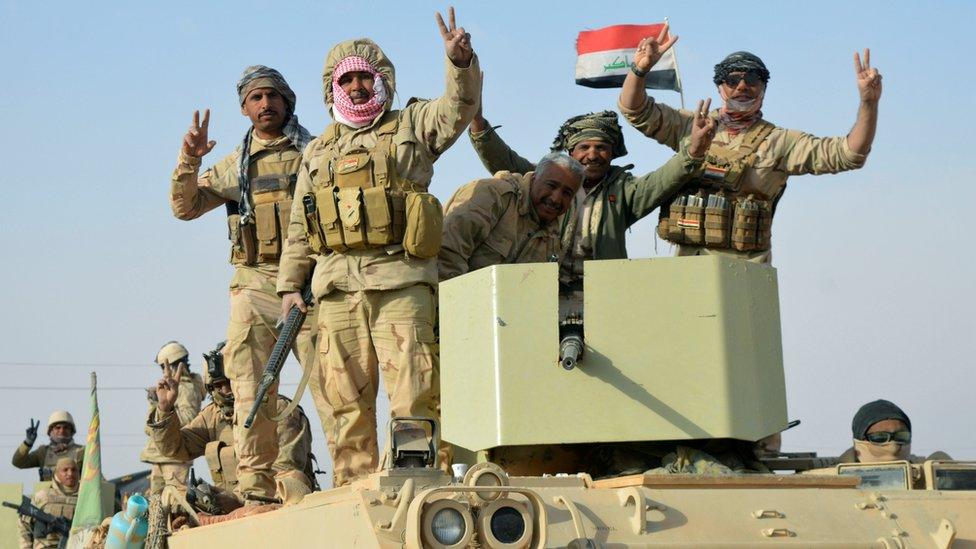
Syria enters a post-conflict phase marked by ceasefire arrangements and the consolidation of Damascus’ authority, Iraqi officials and analysts are assessing the potential spillover risks along their shared frontier. While Baghdad insists its 618-kilometer border with Syria is secure, experts warn that evolving political and security dynamics inside Syria — particularly concerning ISIS detainees and fragmented control in northeastern areas — could create new and less visible threats for Iraq.
A Long Border, A Persistent Concern
Iraq shares a 618-kilometer border with Syria, nearly half of which — about 285 kilometers — runs through Nineveh province. The region’s rugged terrain, overlapping security jurisdictions, and history of ISIS infiltration have long made it one of Iraq’s most sensitive security zones.
As Syria moves toward political consolidation following ceasefire agreements and the reassertion of Damascus’ authority over areas previously controlled by the Kurdish-led Syrian Democratic Forces, Iraqi officials face a central question: does Syria’s relative calm signal reduced risk, or the beginning of a more complex security phase?
Border Control: Reinforced but Not Absolute
Security expert Mukhallad al-Darb cautions against viewing border control in binary terms.
“There is no such thing as complete security in any country, especially when it comes to borders,” he said, stressing that intelligence coordination and operational readiness matter more than physical barriers alone.
Iraq has reinforced its western frontier with three defensive belts supported by trenches, barbed wire, thermal cameras, and armored units. Iraqi authorities say these measures have brought the border close to full control.
Yet vulnerabilities remain. Areas near Sinjar Mountain and Faysh Khabur — zones influenced by the Kurdistan Region and, in some cases, contested political authority — are seen as potential soft spots. Federal forces are not uniformly deployed across these sectors, creating fragmented security oversight.
Al-Darb said Iraqi forces remain on high alert, with troop reinforcements continuing and coordination maintained with Damascus to prevent instability from spilling over.
The ISIS Detainee Challenge
While border fortifications dominate official messaging, some analysts argue the more significant threat lies inside Syria — specifically in detention facilities holding thousands of ISIS fighters.
Political analyst Saif al-Saadi warned that Iraq’s security is directly affected by developments inside Syria, particularly regarding ISIS detainees.
According to the U.S. State Department, nearly 9,000 ISIS fighters are held in prisons across northeastern Syria, including facilities in Hasakah, Qamishli, Raqqa, and the Ghuwayran prison complex. Many detainees are foreign nationals from more than 40 countries, most of which have declined to repatriate them.
Al-Saadi described the situation as a “ticking time bomb,” noting parallels with Iraq’s own post-2017 experience managing displacement camps such as Jadaa and Al-Amal near Mosul. He called for stronger intelligence cooperation and closer coordination with Washington to prevent ISIS from exploiting potential instability.
Beyond prisons, the Al-Hol camp — housing an estimated 55,000 to 60,000 individuals, mostly women and children linked to ISIS fighters — remains a focal point of concern. Analysts warn that prolonged limbo in such environments can fuel extremist narratives.
Political Shifts and Security Implications
Security analyst Saif Raad Talib linked Iraqi concerns to broader political shifts inside Syria, including changes that have reduced the operational role of the SDF in some areas.
He identified Nineveh’s 285-kilometer border segment as a “critical frontier,” citing difficult terrain and divided authority between federal Iraqi forces, Kurdistan Region security structures, and areas influenced by the Kurdistan Workers’ Party (PKK).
Talib also pointed to reported tensions near detention sites in Raqqa province as potential flashpoints.
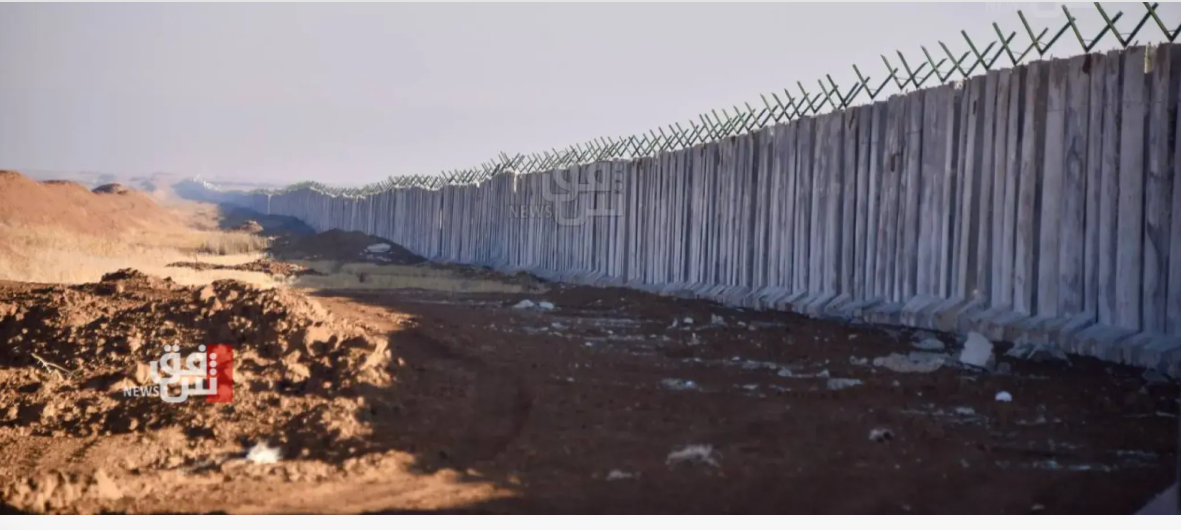
In contrast, Iraq’s western province of Al-Anbar presents a different security model. There, a nearly completed concrete wall, thermal surveillance systems, drones, and fixed military defense lines — operated by the army and the Popular Mobilization Forces — have significantly reduced infiltration risks, according to Iraqi officials.
Political Voices Urge Vigilance
Concerns extend beyond security analysts. Mohammed al-Baldawi, a lawmaker affiliated with the Sadiqoon parliamentary bloc — the political wing of Asaib Ahl al-Haq — warned of “unhealthy regional dynamics” unfolding amid ongoing conflicts.
He cited clashes between Syrian government forces and Kurdish elements, as well as reports of prison openings and detainee releases, as developments that demand heightened vigilance in Iraq.
Separately, Iraqi cleric Muqtada al-Sadr cautioned against approaching Syrian developments “naively,” reflecting broader political sensitivity in Baghdad.
Official Reassurance from Baghdad
Despite these warnings, Iraqi authorities maintain that the border is secure.
Sabah al-Numan, spokesperson for the Iraqi commander-in-chief, said the Iraq–Syria frontier is fully controlled by the Border Guard Command. He described border security as a top government priority.
Construction of the concrete border wall is approximately 80 percent complete, with plans to extend it along the entire frontier. Officials also cite fixed defense lines, aerial surveillance, sufficient manpower, and coordination with Kurdistan Region border guards.
“Stability in Syria remains a critical factor for Iraq’s own security and for regional balance more broadly,” al-Numan said.
Between Stability and Uncertainty
Recent announcements by the Popular Mobilization Forces regarding reinforcements of the 10th and 25th brigades along the border, alongside continued activity by the Global Coalition and regional actors in Mosul, underscore a broader reality in Baghdad: the threat environment has evolved rather than disappeared.
For Iraq, the security challenge increasingly lies not in open battlefield confrontations, but in managing gray zones — detention facilities, fragmented authority, foreign fighter limbo, and dormant ISIS networks capable of exploiting political transitions.
As Syria consolidates its post-war order, Iraqi officials face a delicate balancing act: ensuring that Syria’s relative calm does not give way to quieter, more unpredictable security tests along Iraq’s western gate.
Source: Shafaq News
PA Turkey intends to inform Turkey watchers with diverse views and opinions. Articles in our website may not necessarily represent the view of our editorial board or count as endorsement.
Follow our English YouTube channel (REAL TURKEY):
https://www.youtube.com/channel/UCKpFJB4GFiNkhmpVZQ_d9Rg
Twitter: @AtillaEng
Facebook: Real Turkey Channel: https://www.facebook.com/realturkeychannel/



 syria iraq border