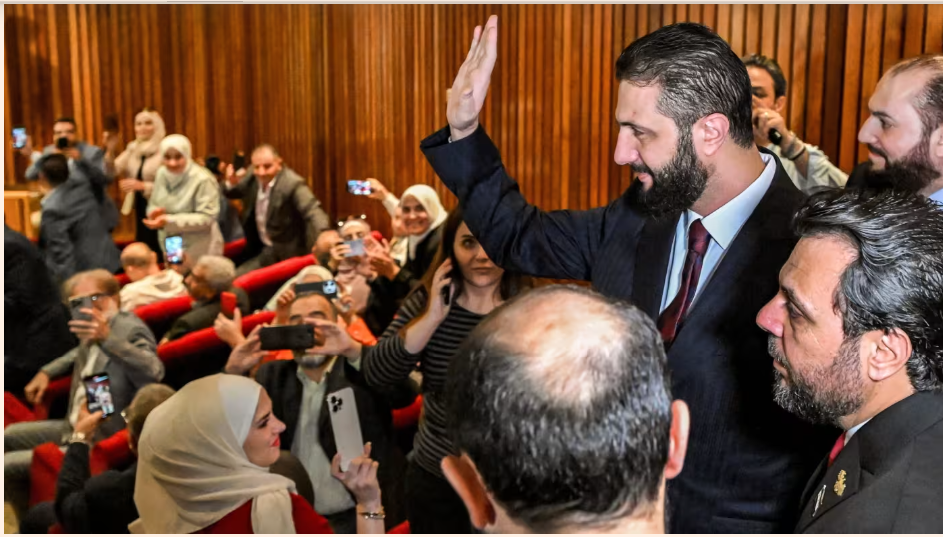
UPDATE: Syrian President Issues Decree Guaranteeing Kurdish Rights as SDF Withdraws East of the Euphrates
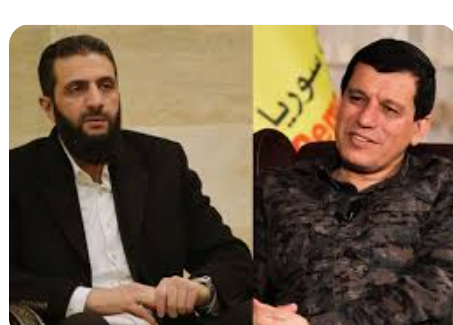 el sara mazlum abdi
Syrian Arab Army units swiftly took the strategic Tabqa Military Airbase and entered al-Tabqa city in Raqqa province on Saturday, after SDF fighters withdrew east across the Euphrates. The push followed SDF pullbacks from Aleppo areas under a U.S.-brokered deal, but Damascus accused the group of attacks that killed soldiers. U.S. and French leaders urged an immediate halt, praising a new decree granting Kurds citizenship and language rights while stressing anti-ISIS cooperation over escalation. The gains in Arab-majority areas test Syria’s fragile transition amid risks of renewed instability.
Raqqa is East of Euphrates, meaning Syrian National Army is now encircling Kurdish strongholds from South.
Summary:
Syrian President Ahmad al-Sharaa has issued a sweeping decree formally recognizing the rights of Syria’s Kurdish community, including citizenship, language rights, and cultural protections. The move coincides with an announcement by the Syrian Democratic Forces (SDF) that they will withdraw from eastern Aleppo and redeploy east of the Euphrates River, in line with commitments under a March 10 integration agreement.
Decree Recognizes Kurds as Integral Part of Syrian Nation
Syrian President Ahmad al-Sharaa on Friday evening issued a special decree affirming that Kurdish Syrians are an integral and equal component of the Syrian nation, according to the state-run Syrian Arab News Agency (SANA).
The decree states that Kurdish citizens are a “basic and authentic” part of the Syrian people and that their cultural and linguistic identity is inseparable from Syria’s unified and diverse national identity.
It commits the Syrian state to protecting cultural and linguistic diversity and to safeguarding the Kurdish community’s right to preserve its heritage, traditions, and arts, while developing the Kurdish language within the framework of Syrian sovereignty and territorial integrity.
Kurdish Language Granted Official Recognition
Under the decree, Kurdish is formally recognized as a national language. Teaching Kurdish will be permitted in public and private schools in areas with a significant Kurdish population, either as an optional subject or through cultural and educational programs.
The decree also repeals all exceptional laws and administrative measures stemming from the controversial 1962 census in Hasakah province, which had left tens of thousands of Kurds stateless.
Syrian citizenship will be granted to all residents of Kurdish origin living in Syria, including those previously registered as stateless, ensuring full equality in rights and obligations.
Nowruz Declared National Holiday
In a symbolic step, the decree designates March 21, the Nowruz Festival, as a paid official holiday nationwide. The holiday is described as a national celebration of spring, renewal, and social cohesion.
State media and educational institutions are instructed to adopt an inclusive national discourse, explicitly prohibiting discrimination or exclusion based on ethnicity or language. Incitement to ethnic hatred or sectarian strife will be punishable under existing law, the decree says.
Al-Sharaa Addresses Kurds Directly
In a recorded message posted on X, al-Sharaa addressed the Kurdish community directly, stressing equality among all Syrians regardless of ethnicity.
“There is no superiority of Arab over Kurd, Turk, or anyone else, except through righteousness and integrity, regardless of origin,” he said.
“Our Kurdish people, descendants of Saladin, do not believe claims that we seek to harm you. By God, whoever harms you is our adversary until the Day of Judgment. Your life is our life,” al-Sharaa added. “We seek only the well-being of the country and its people, development, reconstruction, and national unity.”
He urged forcibly displaced Syrians to return home safely, “without condition or restriction other than laying down arms,” and called on Kurds to participate actively in rebuilding the country. The address concluded with al-Sharaa displaying his signature on the decree.
SDF Announces Withdrawal from Eastern Aleppo
Separately, the Syrian Democratic Forces (SDF) announced that they would withdraw from eastern Aleppo and redeploy east of the Euphrates River.
SDF commander Mazloum Abdi said in a statement posted on social media that the decision followed appeals from “friendly countries and mediators,” as well as the group’s commitment to implementing the March 10 agreement on integration with the Syrian state.
“In line with our goodwill to complete the integration process and our commitment to implementing the terms of the March 10 agreement, we have decided to withdraw our forces from the current contact zones east of Aleppo, which have been under attack for the past two days,” Abdi said.
The withdrawal was scheduled to begin at 07:00 on Saturday, with SDF forces redeploying to areas east of the Euphrates.
Analysis: A Step Forward, But Not the Endgame
The reciprocal gestures — al-Sharaa’s decree and the SDF’s redeployment — significantly improve the prospects for implementing the March 10 protocol governing the integration of Syria’s Kurdish political and military structures, known under various names including YPG/PYD and the Rojava Administration.
A unified Syria with clearer governance arrangements could unlock much-needed foreign investment and encourage the return of refugees currently living abroad.
However, recent developments represent only a partial resolution.
Key Kurdish demands remain unresolved, including:
-
Broader local administrative autonomy
-
Guarantees that Syrian army units will not be permanently stationed in Kurdish population centers east of the Euphrates
-
A fair mechanism for sharing revenues from oil fields currently under Kurdish control
Despite Kurdish restraint and near-unconditional support for reintegration, analysts caution that unresolved differences could still escalate.
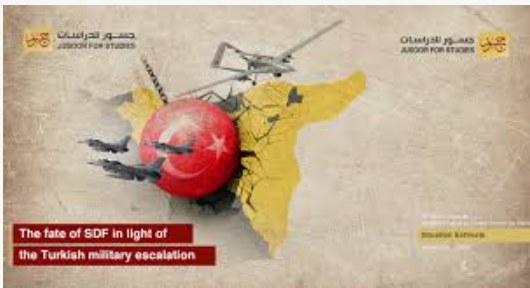
Some observers note that President al-Sharaa may yet seek to impose a settlement through military means, potentially deploying Syrian forces into the Rojava region with strong Turkish military backing and cross-border pressure, should negotiations stall.
For now, the process remains fragile — a job begun, but not yet finished.
Source: SANA, official statements, SDF communications, PA Turkey staff
PA Turkey intends to inform Turkey watchers with diverse views and opinions. Articles on our website may not necessarily represent the view of our editorial board or count as endorsement.
Follow our English YouTube channel (REAL TURKEY):
https://www.youtube.com/channel/UCKpFJB4GFiNkhmpVZQ_d9Rg
Twitter: @AtillaEng
Facebook: Real Turkey Channel: https://www.facebook.com/realturkeychannel/
Related articles
Trump Lifts Sanctions on Syria, Marking Diplomatic Victory for Ankara and Damascus
Sharaa Issues Final Ultimatum to SDF: “Integrate or Face Total War”
Contradictions Emerge as Turkey Talks Peace but Prepares for Escalation in Syria