Syria Extends Ceasefire With SDF as Integration Talks Stall
 suriye ateskes
Summary:
The Syrian government has extended its ceasefire with the US-backed Syrian Democratic Forces (SDF) by 15 days, citing ongoing efforts to transfer ISIL-linked detainees out of northeast Syria. While the move has temporarily eased fighting, deep disagreements over the integration of SDF forces into state institutions, territorial control, and disarmament continue to fuel tensions, leaving the political process fragile.
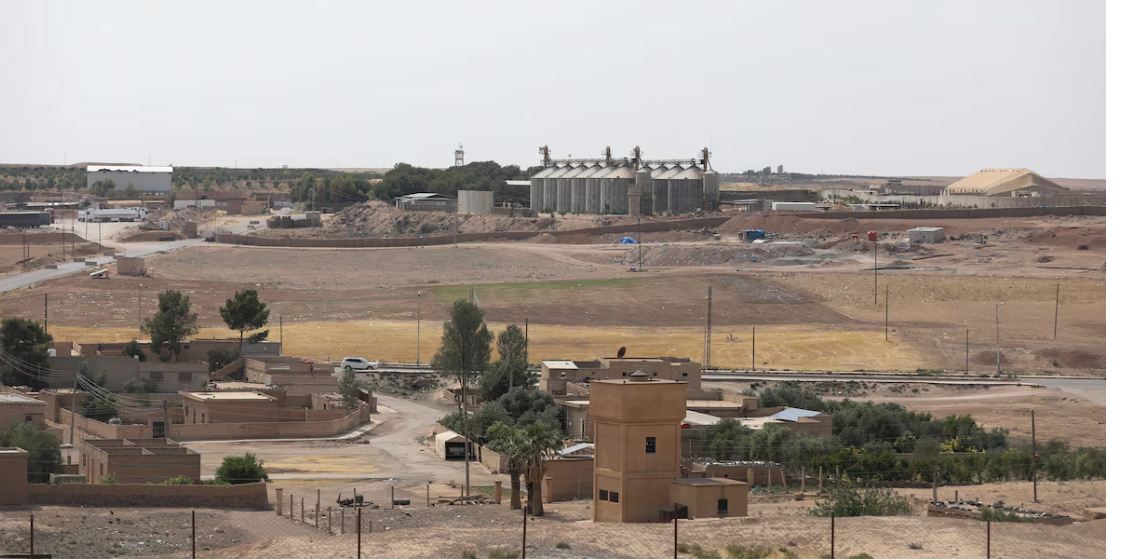
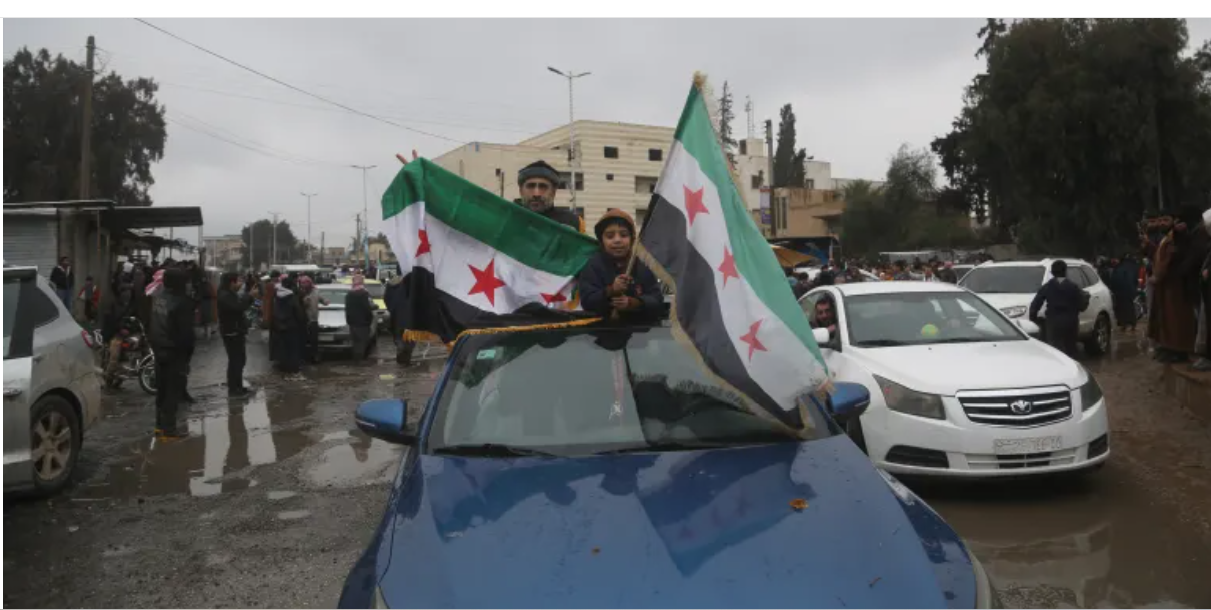
Syria’s Defense Ministry announced that a ceasefire with the Syrian Democratic Forces (SDF) has been extended by 15 days, temporarily halting military operations amid mounting international and regional pressure to prevent further escalation in the country’s northeast.
In a statement published on the social media platform X, the ministry said the Syrian Arab Army would suspend all military operations until 11:00 p.m. on January 24, 2026. The extension follows a truce declared earlier this week after government forces rapidly advanced into territory previously held by the SDF.
According to the ministry, the decision to prolong the ceasefire is linked to the United States’ ongoing transfer of ISIL-linked detainees from SDF-controlled prisons in Syria to facilities in neighboring Iraq.
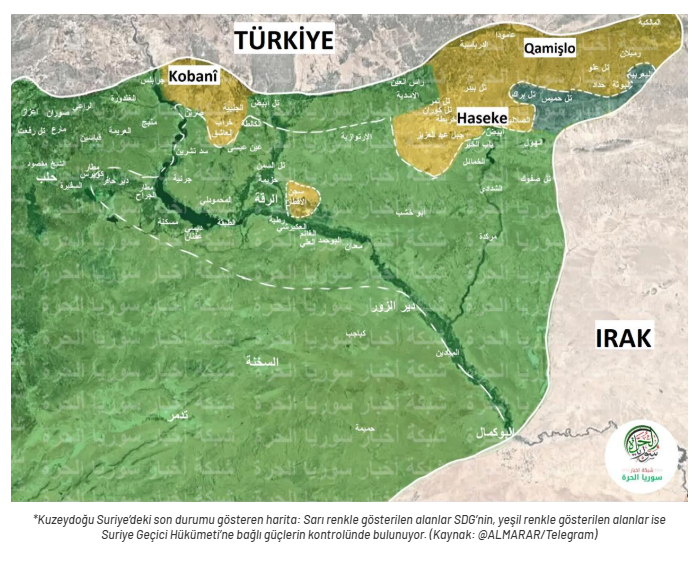
Map Legend: Green areas are now the only territory left under Kurds’ control
Syrian Army Accuses SDF of Abuses
Separately, Syria’s Military Operations Directorate accused the SDF of widespread human rights violations in areas under its control, including arbitrary detentions, forced displacement, and the use of torture against civilians who oppose its rule.
In a statement carried by state news agency SANA, the Syrian army alleged that the SDF was transferring PKK-linked fighters from the Qandil mountains into Hasakah province as reinforcements, and warned the group against what it described as “provocative actions” and the dissemination of fabricated footage aimed at undermining the Syrian state.
The military also announced plans to open humanitarian corridors for civilians in SDF-controlled parts of Hasakah, saying aid deliveries would be coordinated with relevant ministries in the coming hours. The statement stressed that “all operational options remain under consideration” and reaffirmed the army’s commitment to preserving Syria’s territorial unity and countering what it called cross-border terrorist projects.
SDF Confirms Truce, Warns of Unresolved Issues
The SDF confirmed the ceasefire extension, saying in its own statement that the agreement “contributes to de-escalation, the protection of civilians, and the creation of conditions necessary for stability.”
However, reporting from Damascus, Al Jazeera correspondent Ayman Oghanna said the truce had generated only cautious relief, warning that the core dispute between the SDF and the Syrian government remains unresolved.
“The ceasefire is welcome, but the fundamental issue is integration,” Oghanna said. “How SDF fighters and civil institutions are to be absorbed into Syrian government structures has not been settled.”
Integration Deal Falters
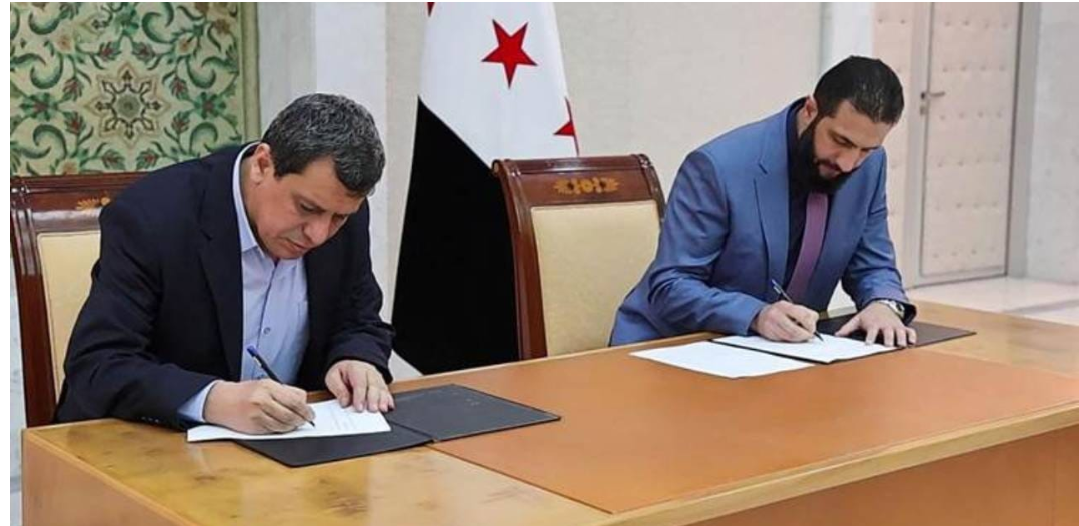
Syrian President Ahmed al-Sharaa signed an agreement with the SDF in March last year, following the fall of longtime leader Bashar al-Assad, committing both sides to integrating the Kurdish-led force into state institutions. The deal was initially seen as a cornerstone of post-war stabilization.
But implementation quickly stalled amid disagreements over command structures, political autonomy, and security arrangements, triggering a new wave of deadly clashes across several regions in recent weeks.
Earlier this week, Damascus announced a four-day truce to halt the fighting after government forces pushed toward the last clusters of Kurdish-held cities in northeastern Syria. The ceasefire, declared on Tuesday, gave the SDF until Saturday night to submit a concrete plan for integrating its forces into the Syrian army.
Strategic Assets Shift to Government Control
The Syrian army’s advance has already shifted control over key strategic assets, including oil fields, hydroelectric dams, and detention facilities holding ISIL fighters and affiliated civilians. Among them is the al-Aqtan prison in Raqqa province, which Syrian government forces recently took over.
US President Donald Trump’s administration has urged both sides to uphold the ceasefire, warning that renewed fighting could destabilize the region and complicate counter-ISIL efforts.
On Wednesday, Washington announced it had begun transferring ISIL-linked detainees from Syria to Iraq. The US military said up to 7,000 detainees could eventually be moved to Iraqi-controlled facilities.
“We are closely coordinating with regional partners, including the Iraqi government, and we sincerely appreciate their role in ensuring the enduring defeat of ISIS,” said Admiral Brad Cooper, the commander of US forces in the Middle East.
Humanitarian Concerns in the North
Despite the ceasefire, humanitarian concerns are mounting in Kurdish-majority areas. Kobane in eastern Syria remains under siege, with reports warning that children face severe risks due to cold weather and shortages of humanitarian aid.
Elsewhere in the northeast, including Qamishli and Hasakah, Kurdish-held regions are effectively sitting on a new front line with Syrian government forces, raising fears of renewed clashes if negotiations collapse.
Damascus Pushes “Individual Integration” Model
As of January 2026, Damascus has hardened its negotiating position, presenting what officials describe as a final offer to the SDF. Under the proposal, SDF fighters would no longer be integrated as a collective or semi-autonomous military formation.
Instead, an agreement reached on January 18 stipulates that SDF personnel must undergo individual security screenings before being absorbed into either the Defense Ministry or the Interior Ministry. The move would effectively dissolve the SDF as an organized armed force.
The SDF leadership, led by Mazloum Abdi, had long argued for integration as a unified bloc — such as a corps-level unit or a special-status formation — but the balance of power has shifted. Damascus has gained ground with the backing of Arab tribal groups on the ground and amid changing US priorities in the region.
Under mounting military pressure in areas such as Sheikh Maqsoud in Aleppo and Deir ez-Zor, the SDF has accepted the individual integration model in principle. However, implementation on the ground remains slow, with fighters expressing concerns that their identities, protections, and past gains may not be preserved.
Disarmament and Territorial Handover
Beyond personnel integration, the Syrian government is demanding full control over strategic territories. Agreements reportedly include the complete transfer of administrative and military authority in Deir ez-Zor and Raqqa to Damascus, with the SDF withdrawing from both provinces.
Control over oil and gas fields — long a key source of leverage for Kurdish authorities — is also being handed over to the central government. In areas such as Kobane (Ayn al-Arab), the withdrawal of heavy weapons is planned, with local security to be transferred to police forces under the Interior Ministry.
While the extended ceasefire has paused large-scale fighting, diplomats and analysts warn that without a clear and mutually acceptable framework for integration and governance, Syria’s fragile calm could quickly unravel.
Related articles
Syria and Kurdish Forces Race to Salvage Integration Deal
US Envoy Barrack Says Washington–Ankara Disputes Could Be Resolved Within Months
Sharaa’s Fragile Grip: Sectarian Violence Threatens to Tear Syria Apart