SDF Reaches Comprehensive Integration Deal with Damascus After Weeks of Clashes
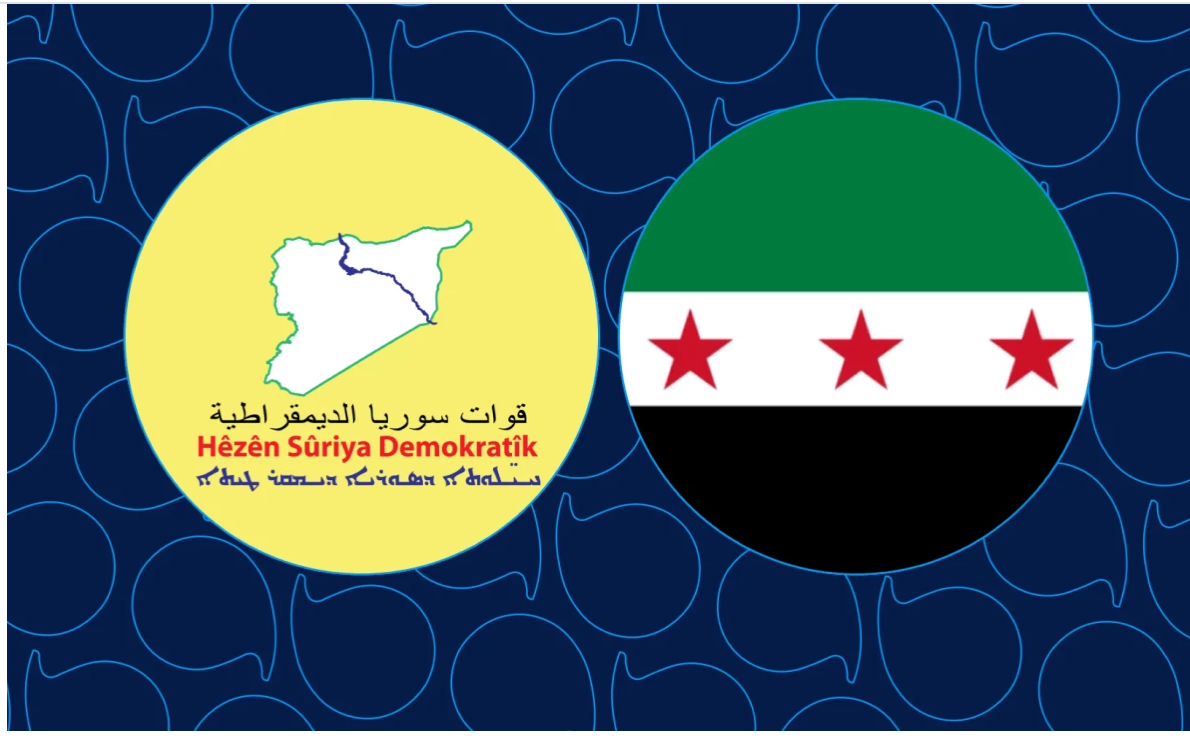 syria flags
Sources: Rudaw, Syrian National TV
Summary:
The Kurdish-led Syrian Democratic Forces (SDF) announced on Friday that it has reached a comprehensive agreement with the Syrian government to integrate its military, security, and civil institutions into the Syrian state through a phased process. The deal follows weeks of intense clashes in northeastern Syria and comes amid mounting humanitarian pressure in Kurdish-held areas, particularly in Kobane and Hasakah province.
Agreement Targets Territorial Unity and Institutional Integration
The Kurdish-led Syrian Democratic Forces (SDF) said on Friday that it has reached a “comprehensive agreement” with Damascus aimed at unifying Syrian territory and integrating Kurdish-led forces and institutions into the Syrian state.
“The agreement aims to unify the Syrian territories and achieve the full integration process in the region by enhancing cooperation between the concerned parties and unifying efforts to rebuild the country,” the SDF said in a statement.
The announcement comes after weeks of clashes between Syrian government-affiliated forces and Kurdish-led units in the Autonomous Administration of North and East Syria (AANES), commonly known as Rojava.
Phased Military and Security Integration
According to the SDF, the agreement outlines a phased integration process that includes the withdrawal of military forces from active contact points and the deployment of Syrian Interior Ministry security forces to the cities of Hasakah and Qamishli.
The deal also предусматривает the commencement of integration between local security forces and Syrian state institutions, a move that would effectively end the autonomous security structure that has governed much of northeastern Syria since the civil war.
In a significant military restructuring, the agreement includes the formation of a new division under the Aleppo province command. This division will consist of three SDF brigades and one brigade from the Kobane forces, marking the first formal incorporation of Kurdish-led units into the Syrian army framework since the conflict began.
Ankara’s Strategic Coup: How the Fall of Kurdish Autonomy Reshapes the Syria-Israel Equation
Kobane Under Pressure Amid Worsening Humanitarian Conditions
The announcement follows a deteriorating humanitarian situation in the Kurdish-majority city of Kobane, which once again found itself encircled during Damascus’ recent offensive.
Kobane gained international prominence in 2014 for its resistance against a prolonged siege by the Islamic State (ISIS), a battle in which the SDF later emerged as a key U.S.-backed force in the fight against the jihadist group.
Speaking to The New Region earlier this week, Aziza Ibrahim, co-chair of Kobane’s health department, warned that the city’s medical supplies were nearing exhaustion.
“The health situation is getting worse. We only have medicine left for one more week,” Ibrahim said on Wednesday.
Civil Institutions to Be Absorbed Into the Syrian State
Beyond military arrangements, the agreement also covers the integration of civil institutions operating under the Autonomous Administration of North and East Syria into Syrian state bodies.
The SDF said the deal includes the regularization of civil servants and the absorption of administrative structures into Damascus’ governance framework, a move likely to end nearly a decade of de facto self-rule in Kurdish-held areas.
The agreement also commits both sides to resolving outstanding issues related to education, civil documentation, and public services, which have long been points of contention between Kurdish authorities and the central government.
OPINION: Al-Sharaa’s Blitzkrieg: Is the Kurdish Entity in Syria Reaching Its End?
Damascus Pushes Centralization Amid Minority Concerns
Damascus has intensified its military campaign in northeastern Syria as part of President Ahmed al-Sharaa’s vision of restoring a unified, centralized Syrian state following years of fragmentation.
The offensive has drawn criticism from Syria’s ethnic and religious minorities, many of whom have repeatedly called for a federal system that would guarantee local autonomy and minority rights.
Human rights groups and local monitors have accused Syrian government-affiliated forces of violating ceasefires, committing abuses against civilians, and potentially engaging in war crimes during the recent operations.
The fighting has left hundreds dead and forced Kurdish-led forces — widely credited with defeating ISIS in Syria — to withdraw from large swathes of territory and consolidate their presence in Hasakah province.
High-Level Talks in Damascus
A source confirmed to The New Region on Thursday that SDF commander Mazloum Abdi was in Damascus for talks with Syrian officials.
Abdi had previously traveled to the Syrian capital earlier in the week to negotiate a ceasefire and discuss the framework for bringing Kurdish-led forces under the authority of the Syrian state through an integration agreement.
Neither Damascus nor the SDF disclosed details on international mediation, though the talks come amid shifting regional dynamics and declining Western engagement in Syria.
Kurdish Rights and Return of Displaced Persons
The SDF statement also noted that the agreement includes provisions to settle “the civil and educational rights of the Kurdish people” and to guarantee the return of displaced residents to their homes.
Following recent clashes in Rojava, the Syrian government has taken steps signaling a limited recognition of Kurdish cultural and civil rights.
On Wednesday, Syria’s Interior Ministry issued an urgent decree granting citizenship to stateless Kurds in northeastern Syria, ending more than six decades of exclusion from government services for individuals lacking official nationality.
Earlier this year, President Sharaa signed a decree recognizing Kurdish as a national language, allowing it to be taught as an elective subject in Kurdish-populated regions — a symbolic move that nonetheless falls short of Kurdish demands for constitutional recognition and regional autonomy.
Uncertain Future for Kurdish Autonomy
While the agreement marks a turning point in relations between the SDF and Damascus, analysts warn that its long-term implications remain uncertain.
Kurdish political groups have expressed concern that integration without constitutional guarantees could dismantle the self-administration structures established during the war, leaving Kurdish communities vulnerable to political marginalization once again.
For now, the deal appears to reflect a convergence of military pressure, humanitarian urgency, and Damascus’ determination to reassert control over all Syrian territory.
PA Turkey intends to inform Turkey watchers with diverse views and opinions. Articles in our website may not necessarily represent the view of our editorial board or count as endorsement.
Follow our English YouTube channel (REAL TURKEY):
https://www.youtube.com/channel/UCKpFJB4GFiNkhmpVZQ_d9Rg
Twitter: @AtillaEng
Facebook: Real Turkey Channel: https://www.facebook.com/realturkeychannel/***