Schinas Urges Türkiye to Choose Between Hamas and Europe Amid Rising Regional Tensions
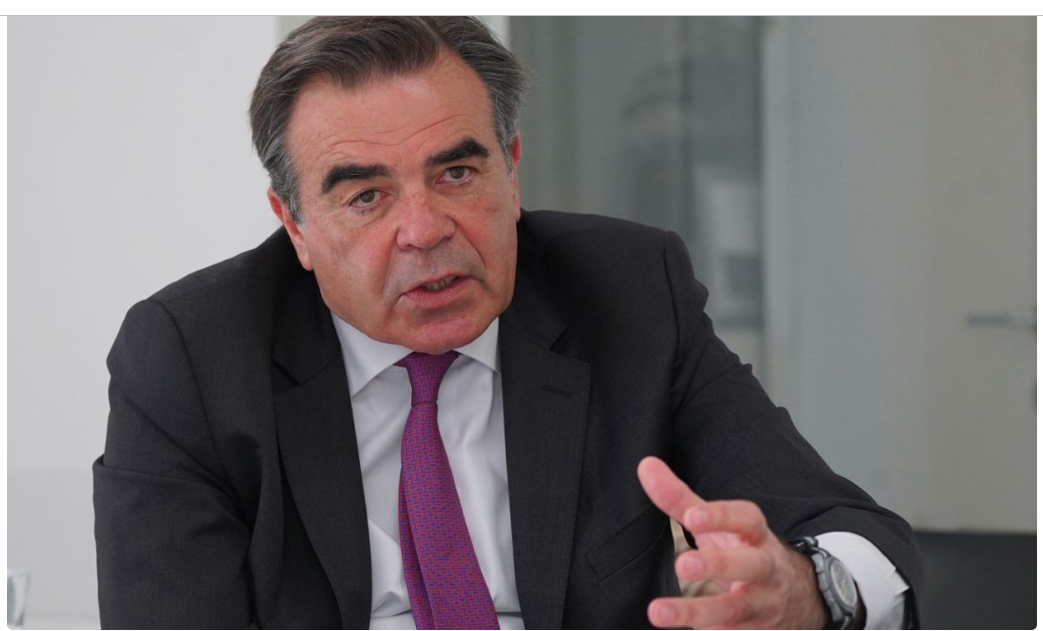 margaritas schinas eu
Former European Commission Vice-President Margaritis Schinas has called on Türkiye to clarify its geopolitical stance, urging Ankara to choose between supporting Hamas or aligning with Europe. His remarks come as Middle East tensions escalate due to the Iran conflict, placing Türkiye in an increasingly delicate diplomatic position between Western allies and regional actors.
“Hamas or Europe”: A Call for Strategic Clarity
Margaritis Schinas, former Vice-President of the European Commission, has urged Türkiye to make a clear strategic choice regarding its position in the Middle East.
In an interview, Schinas said Ankara must decide whether it stands with Europe or supports Hamas, which the European Union designates as a terrorist organization.
“Türkiye needs to tell us where it stands — with Hamas or with us,” he said.
Schinas argued that as a NATO member and long-standing EU candidate, Türkiye has an obligation to provide clarity to its Western partners.
Ankara’s Position Under Scrutiny
Schinas suggested that current regional developments — particularly the Iran conflict — have left Türkiye in an “embarrassed” position.
He pointed to longstanding ties between Turkish President Recep Tayyip Erdoğan and figures such as Iran’s leadership and Hamas officials, highlighting images and diplomatic engagements that, in his view, complicate Ankara’s positioning.
Erdoğan has repeatedly described Hamas as a “liberation movement” and has strongly opposed U.S. and Israeli actions against Iran.
Signals of Alignment with Iran
Recent statements from Turkish political figures have reinforced perceptions of closer alignment with Tehran.
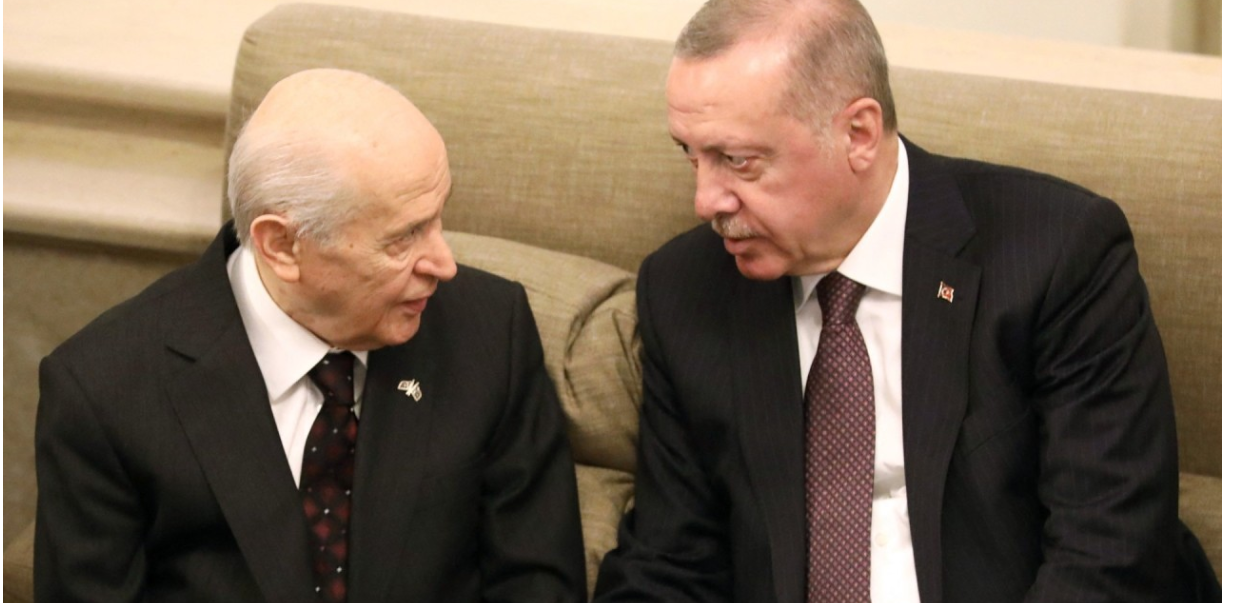
Devlet Bahçeli, leader of the Nationalist Movement Party (MHP) and a key ally of Erdoğan, recently stated that Ankara and Tehran share a common strategic outlook, saying their “horizons look in the same direction.”
Schinas warned that such positioning could deepen tensions between Türkiye and its Western allies.
Balancing Between West and Islamic World
According to Schinas, Türkiye appears to be attempting to position itself as a bridge between the West and the Islamic world.
However, he cautioned that this balancing act may become increasingly difficult amid intensifying geopolitical polarization.
“If Türkiye stands with Europe, the path is clearer. If it stands elsewhere, the implications are less predictable,” he said.
EU Relations Remain Stalled
Türkiye has been an official EU candidate country for more than two decades, but accession talks have made little progress.
Recent friction has also emerged over security cooperation. Türkiye was not fully included in the EU’s Security Action for Europe (SAFE) mechanism, reportedly due to objections from Greece.
Longstanding disputes between Türkiye and Greece — including maritime boundaries in the Aegean and the status of Cyprus — continue to complicate relations.
Military Tensions in the Eastern Mediterranean
Rising military activity in the Eastern Mediterranean has added to Ankara’s concerns.
The European Union has increased its presence around Cyprus amid fears of spillover from the Iran conflict. This includes deployments aimed at countering potential threats linked to Hezbollah.
Greece has:
- Sent F-16 fighter jets and naval assets to the region
- Deployed a Patriot air defense system near Türkiye
In response, Türkiye:
- Dispatched its own F-16 jets to northern Cyprus
- Accused Greece of violating international agreements by militarizing islands
Disputes Over Israel Cooperation
Ankara has also expressed concern over Greece’s growing defense cooperation with Israel, particularly a large-scale air defense initiative.
Turkish officials view such moves as destabilizing, while President Erdoğan has sharply criticized Israel’s broader regional strategy.
Erdoğan argued that Israeli military actions — from Gaza to Iran — go beyond security concerns and reflect a wider campaign aimed at reshaping the region.
A Critical Juncture for Türkiye
Schinas’ remarks highlight the increasing pressure on Türkiye to define its geopolitical orientation more clearly.
As tensions rise across the Middle East and Eastern Mediterranean, Ankara’s balancing strategy faces growing scrutiny from both European allies and regional actors.
PA Turkey intends to inform Turkey watchers with diverse views and opinions. Articles in our website may not necessarily represent the view of our editorial board or count as endorsement.
Follow our English YouTube channel (REAL TURKEY):
https://www.youtube.com/channel/UCKpFJB4GFiNkhmpVZQ_d9Rg
Twitter: @AtillaEng
Facebook: https://www.facebook.com/realturkeychannel/***
Related articles

Turkey’s Polls Send Mixed Signals as CHP Rises and AKP Holds Its Ground
Cracks in Erdogan’s Ruling Bloc? Coalition Tensions With Bahceli Expose a Fragile Partnership
Turkey’s Voters See AKP’s Economic Performance Plummet, ASAL Survey Shows