



Saudi Interest in Turkey’s KAAN Fighter Reportedly Unsettles Trump
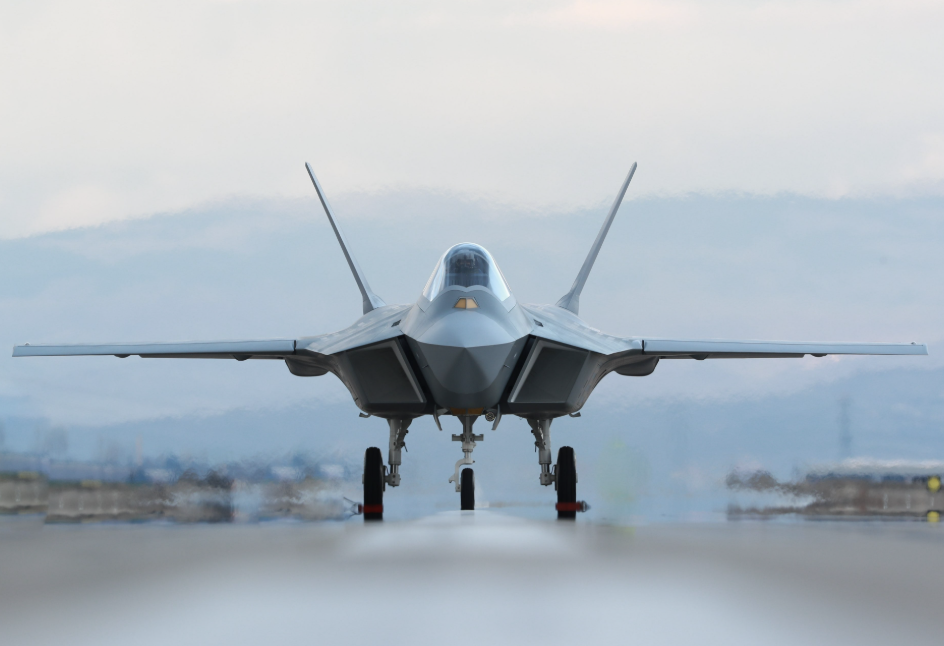 KAAN Jets
Saudi Arabia’s reported interest in joining Türkiye’s next-generation KAAN fighter jet program has allegedly caused unease within the administration of Donald Trump, according to current and former U.S. officials who spoke to Middle East Eye.
The development comes as Riyadh seeks to diversify its arms suppliers, a move that could reshape regional defense partnerships and challenge Washington’s long-standing dominance in the Saudi defense market.
Saudi Arabia Expanding Its Defense Options
In November, Saudi Crown Prince Mohammed bin Salman was hosted at the White House, where President Trump announced that Saudi Arabia would purchase advanced F-35 fighter jets as part of a broader strategic defense agreement.
However, recent reports suggest that Washington has begun seeking clarity regarding Riyadh’s parallel defense discussions with other regional actors, including Türkiye.
According to a U.S. official familiar with the matter, Saudi Arabia reassured Washington that it would not proceed with the purchase of Pakistan’s JF-17 fighter jet after objections were raised. Yet no similar assurance was reportedly provided regarding potential Saudi participation in Türkiye’s KAAN program.
Where Does KAAN Fit?
KAAN, developed by Türk Havacılık ve Uzay Sanayii (TAI), represents Türkiye’s flagship fifth-generation fighter jet initiative aimed at strengthening its domestic defense industry and expanding export potential.
Bilal Saab, a former senior U.S. defense official during the Trump administration, questioned how the Turkish jet would integrate into Saudi Arabia’s already extensive fleet.
“I don’t see where the Turkish fighter jet fits into the Saudis’ already quite extensive inventory. They have some of the best F-15s on the planet, even better than those used by Americans. The Eurofighter Typhoon is a good aircraft and they are about to acquire F-35s,” Saab said.
Saudi Arabia currently operates advanced U.S.-made F-15 variants and European Eurofighter Typhoons, positioning it among the region’s most heavily equipped air forces.
“The U.S. Wants to Be the Sole Supplier”
Another U.S. official familiar with the discussions stated that the Trump administration does not necessarily view a potential KAAN deal as a replacement for the F-35 program. Instead, it is seen as reducing the financial scope of additional American defense sales.
“The message delivered to the Saudis was: ‘What need do you think is not being met by the United States that is pushing you toward KAAN and Türkiye?’ This administration wants to be the sole supplier and prioritizes American exports,” the official said.
The comments suggest that Washington’s concerns may be more commercial than strategic, reflecting an economic approach to diplomacy focused on protecting U.S. defense market share.
Multipolar Middle East Reality
Officials speaking to Middle East Eye indicated that no major diplomatic crisis is expected. However, the episode underscores broader shifts in Middle Eastern geopolitics, where countries increasingly pursue diversified partnerships rather than relying exclusively on a single defense supplier.
Observers argue that Trump-era diplomacy often reflects a zero-sum economic mindset, which may clash with the region’s evolving multipolar dynamics.
Erdoğan Signals Possible Joint Investment
Earlier this year, Recep Tayyip Erdoğan stated during a visit to Saudi Arabia that a joint investment agreement related to KAAN “could be signed at any moment.”
At the recent World Defense Show in Riyadh, a model of the KAAN fighter jet was displayed bearing the Saudi flag, signaling visible interest.
Mehmet Demiroğlu, CEO of Turkish Aerospace Industries, told Breaking Defense last week that a potential agreement with Saudi Arabia could involve producing between 20 and 50 fighter jets for the kingdom.
Can Saudi Arabia Buy Both?
Defense analysts note that Saudi Arabia could theoretically acquire both the F-35 and KAAN platforms without creating direct operational conflict. Such a strategy would further diversify its procurement portfolio while maintaining ties with both Washington and Ankara.
Whether Riyadh ultimately formalizes participation in the KAAN program remains uncertain. What is clear, however, is that Saudi Arabia’s defense diversification strategy is being closely watched in Washington — particularly as Türkiye positions KAAN as a competitive next-generation platform on the global stage.