



QS World University Rankings 2026 Revealed: Where Do Turkish Universities Stand?
 metu
metu
The QS World University Rankings 2026 have been officially released, once again mapping the global landscape of higher education and innovation. This year’s results underline a rapidly shifting academic order shaped by research strength, innovation capacity, sustainability performance, and global reputation. At the very top, the Massachusetts Institute of Technology (MIT) has retained its long-held position as the world’s leading university, while Imperial College London climbed to second place.
Unlike previous editions, the 2026 rankings placed heavier emphasis on sustainability metrics, real-world research impact, and cross-border academic collaboration. These changes reflect a broader transformation in higher education, where universities are no longer judged solely by prestige or publication volume, but also by how effectively they respond to global challenges such as climate change, health crises, and technological disruption.
Global Top Universities: A Concentration of Innovation Power
The world’s top 20 universities are once again dominated by institutions from the United States, the United Kingdom, Europe, Asia, and Australia, confirming that academic excellence remains concentrated in a handful of global hubs. MIT leads the list with a perfect overall score, driven by its unmatched performance in engineering, artificial intelligence, entrepreneurship, and applied sciences. Its ecosystem continues to shape industries ranging from biotechnology to advanced manufacturing.
Following closely, Imperial College London rose to second place, powered by its strength in medicine, engineering, sustainability research, and global health initiatives. Stanford University, located at the heart of Silicon Valley, secured third place, reinforcing its status as the world’s most influential institution for entrepreneurship and technological innovation.
Traditional academic powerhouses such as the University of Oxford, Harvard University, and the University of Cambridge remain firmly in the top ten, reflecting centuries of scholarly excellence and modern research capacity. Meanwhile, ETH Zurich, UC Berkeley, UCL, and the National University of Singapore (NUS) highlight the increasingly global nature of elite higher education, with Europe and Asia closing the gap with Anglo-American institutions.
Asia-Pacific and Europe Continue Their Rise
One of the most notable trends in the QS World University Rankings 2026 is the accelerating rise of Asian universities. Institutions such as Tsinghua University, Peking University, and the University of Hong Kong continue to strengthen their global standing, supported by heavy investment in research infrastructure and international partnerships. These universities are becoming central players in fields like artificial intelligence, engineering, public policy, and climate science.
Similarly, universities in Australia, including the University of Melbourne, the University of Sydney, and UNSW, have secured strong positions within the top 20. Their performance reflects long-term strategies focused on internationalization, sustainability research, and interdisciplinary education.
Turkey’s Performance in QS World University Rankings 2026
Against this competitive global backdrop, Turkey achieved a significant milestone. According to QS data, 26 Turkish universities were included in the QS World University Rankings 2026, signaling steady progress in international visibility and academic performance.
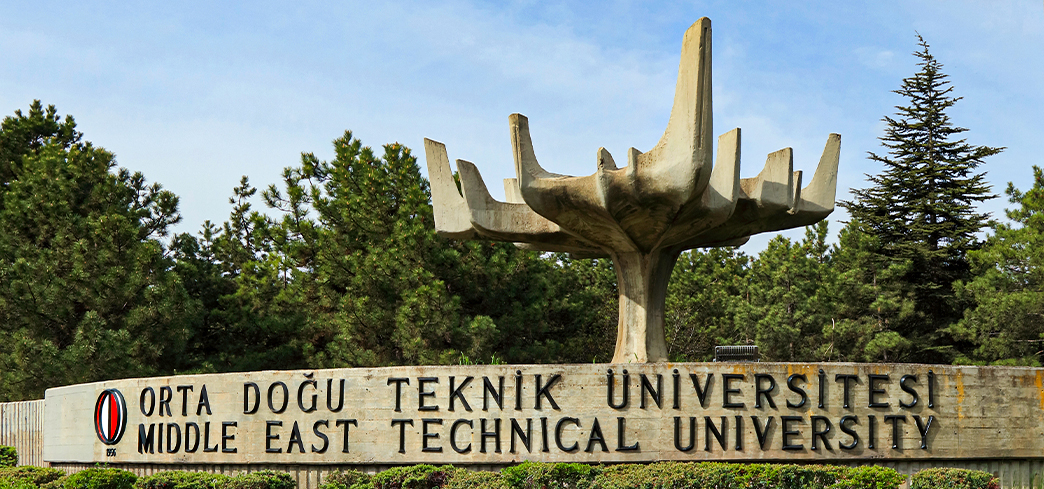
Leading the national ranking, Middle East Technical University (METU / ODTÜ) emerged as Turkey’s highest-ranked institution, placed 269th globally, making it the only Turkish university firmly within the top 300 worldwide. METU’s strong showing reflects its long-standing reputation in engineering, natural sciences, and research output.
Close behind, Istanbul Technical University (ITU) secured the 298th position, reinforcing Turkey’s strength in engineering and technology education. ITU’s entry into the top 300 marks a notable achievement, particularly in innovation-driven fields.
Among foundation universities, Koç University ranked 323rd globally, maintaining its position as Turkey’s leading private university with a strong upward trajectory. Boğaziçi University, known for its English-language instruction and research culture, placed 371st, while Sabancı University followed at 404th, recognized for its interdisciplinary and innovation-oriented academic model.
Completing Turkey’s top performers, Bilkent University ranked 415th, ensuring that six Turkish universities placed within the top 500 globally. This marks a historic achievement for Turkish higher education, with two universities in the top 300 and four within the top 400.
Broader Implications for Turkish Higher Education
Beyond the top tier, other prominent Turkish institutions such as Hacettepe University, Istanbul University, Ankara University, and Yıldız Technical University also featured in the rankings, albeit at lower positions. Their inclusion reflects ongoing improvements in research productivity, international collaboration, and academic reputation, even as structural challenges remain.
The 2026 results suggest that Turkey’s universities are gradually aligning with global benchmarks, particularly in research impact and internationalization. However, closing the gap with the world’s elite institutions will require sustained investment in research funding, academic freedom, global partnerships, and sustainability-focused innovation.