Peter Germanos: The Turkic Verdict
 turk dünyası
They once called it the
Turkish Gate.
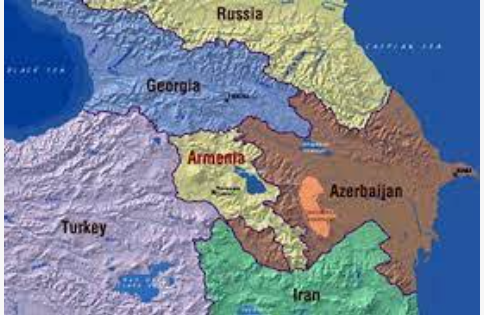
At the eastern edge of Anatolia, where the land thins and history thickens, Atatürk saw Dilucu not as a border, but as a hinge. A narrow passage between worlds. To the north, Armenia. To the east, Azerbaijan. Beyond them, a memory older than states, the uninterrupted belt of Turkic peoples stretching across Eurasia.
The Armenian corridor often reduced to maps and legal formulas, has always been more than a strip of land. It is the last knot tying Türkiye to the Caspian basin without intermediaries. When that knot tightens, Ankara is constrained. When it loosens, history accelerates. For Türkiye, the passage to Nakhchivan and onward to Azerbaijan is not about transit alone; it is about reuniting a fragmented civilizational geography severed by empires, wars, and revolutions.
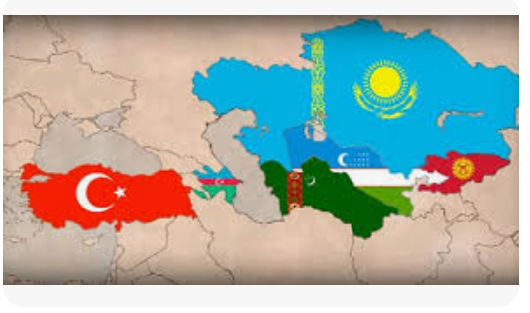
That geography is vast. From Anatolia through the Caucasus, across Central Asia, and deep into western China, Turkic languages form a living spine, spoken by peoples separated by borders but bound by grammar, memory, and myth.
This Turkic continuum, predating Islam and modern nationalism, survived Mongol storms, Persian courts, Russian tsars, and Soviet planners. It did not disappear; it waited.
Armenia sits at the fault line of this continuum. Its modern leadership understands this reality with unease. The relationship between Yerevan and Ankara is no longer frozen in slogans alone; it is shaped by fatigue, demographic decline, and geopolitical pressure. Armenia’s president does not negotiate from strength but from survival, aware that isolation is a luxury small states cannot afford forever.
Meanwhile, Türkiye watches Iran.
An Iranian collapse, or even a strategic retreat would not merely reshape the Middle East. It would open a vacuum eastward. Türkiye’s influence would no longer stop at the Caspian; it would breathe into Central Asia with unprecedented depth. Trade routes would realign. Energy corridors would bypass old chokepoints. Cultural diplomacy would follow pipelines. The Turkic space, long compressed, would expand like lungs finally filling with air.
This is why these are historic days.
Not because borders are changing overnight, but because gravity is. Empires today do not march; they connect. They build corridors, languages, supply chains, and narratives. Türkiye’s advantage is not brute force but continuity of people, speech, and memory.
The verdict is not written in treaties yet. But history, patient as always, is leaning in one direction.
And once the gate opens, it rarely closes again.
The author’s X post