OPINION: Time for CHP and DEM Party to exit
 cenaze
As pressure on opposition parties intensifies and legal risks mount, analysts argue Türkiye may be entering a new political phase where competitive elections are no longer viable. The potential restructuring of the opposition landscape—particularly the fate of CHP and DEM Party—could reshape the balance of power ahead of the next election cycle.
Democracy has long been treated as a luxury in Türkiye, and now President Recep Tayyip Erdoğan appears ready to close that chapter entirely. As he focuses on broader geopolitical ambitions, a sweeping domestic political reset seems underway. The immediate target is the main opposition Republican People’s Party, followed potentially by the Peoples’ Equality and Democracy Party.
Under this scenario, elections scheduled around 2027 may not take place in any meaningful competitive form—or possibly at all—given the assumption that Erdoğan would struggle to win under fully competitive conditions.
Mounting Pressure on CHP
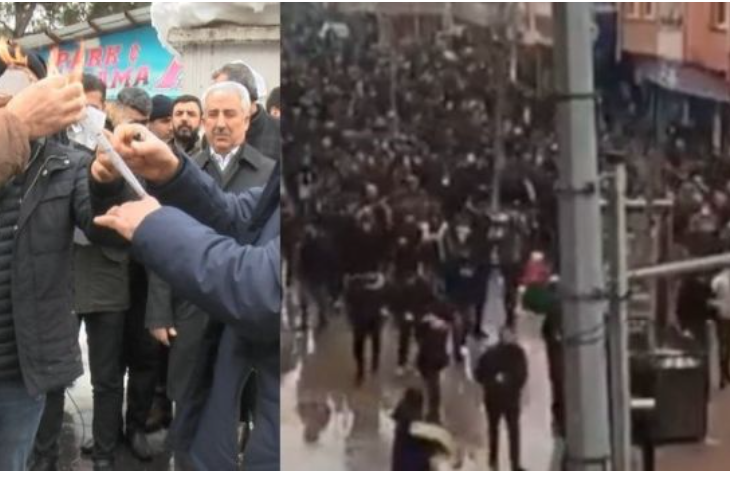
During the past week, two CHP district mayors and dozens of municipal staff were detained as investigations widened across multiple municipalities. Turkish media now widely expects that a May 6 court case targeting CHP leader Özgür Özel and 11 alleged accomplices—accused of bribing delegates during the party congress that unseated Kemal Kılıçdaroğlu—could result in the annulment of the congress.
Such a ruling would pave the way for Kılıçdaroğlu to be appointed as trustee (kayyum) to lead the party.
This outcome could trigger a major split within the opposition. Figures such as Ekrem İmamoğlu and Özgür Özel may choose to leave CHP and form a new party—potentially dividing opposition votes. This fragmentation could significantly improve Erdoğan’s chances in the next presidential election while allowing the AKP-MHP alliance to retain a narrow parliamentary majority.
Multiple Scenarios on the Table
FÖŞ expresses doubt that the May 6 trial alone will determine CHP’s fate. Alternative strategies may include:
- A closure case at the Constitutional Court on the grounds that CHP has become a criminal organization
- Direct political targeting of figures like Mansur Yavaş and Özgür Özel
Ultimately, the method may be secondary to the objective. Erdoğan is likely to pursue multiple strategies simultaneously, adjusting course depending on market and public reactions.
Why Act Now?
Several factors explain the urgency behind weakening the opposition:
- Parliamentary Risk: While the Justice and Development Party remains relatively stable in polls, its ally Nationalist Movement Party is losing support rapidly, threatening the coalition’s majority.
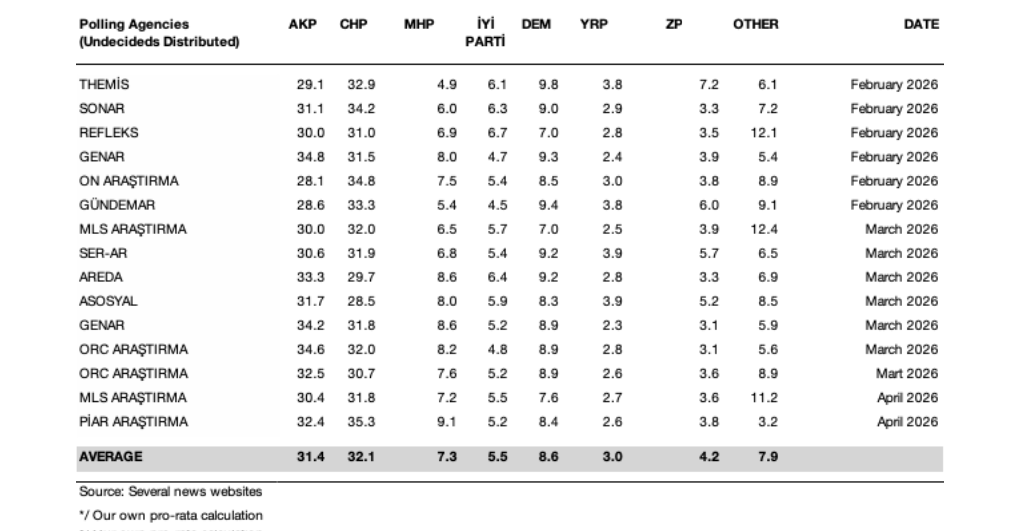
- Presidential Race: Erdoğan continues to trail behind both İmamoğlu and Yavaş in polling data, and in some cases loses ground even against Özel.
- Economic Constraints: The war has disrupted plans for an economic recovery in 2026–2027 that could have supported an early election campaign. Fiscal resources are also under strain.
- Need for Diversion: The ongoing Gulf crisis and rising poverty levels create pressure to shift public attention away from economic hardship and corruption allegations.
- Legislative Strategy: With the collapse of the Peace Process, hopes of extending presidential eligibility via a new constitution have faded. Erdoğan may instead seek parliamentary support through political transfers from smaller parties, potentially using municipal resources as leverage.
Peace Process Shelved Indefinitely
The multi-party parliamentary commission had previously submitted legislative proposals aimed at addressing the Kurdish issue. These measures were expected to focus on figures such as Abdullah Öcalan, imprisoned PKK sympathizers, and returning militants, rather than broader democratization.
However, the timeline has shifted from “within a month” to “summer months” following the outbreak of war.
Reports suggest growing unease within AKP ranks, with lawmakers concerned that any concessions without clear evidence of PKK disarmament would provoke voter backlash.
According to intelligence assessments from National Intelligence Organization, PKK has not disarmed. Instead, it may have repositioned its remaining forces toward eastern Iran, potentially seeking alignment with external actors.
As a result, all legislative efforts tied to the Peace Process have been suspended indefinitely.
Rising Domestic Tensions
With the Peace Process stalled, further crackdowns on opposition municipalities and political figures—particularly those affiliated with DEM Party—are increasingly likely.
At the same time, hopes for a positive domestic narrative have faded alongside expectations for a quick end to the Gulf conflict. The political environment is expected to be shaped by:
- Expanded security operations
- Increased political pressure
- Efforts to redirect public attention
Outlook: Political Risk Intensifies
Even if opposition parties are weakened or excluded from elections, the broader economic downturn may still limit Erdoğan’s electoral prospects.
Looking ahead, scenarios such as further geopolitical escalation and potential postponement of elections remain part of the political risk landscape.
Recent developments elsewhere also highlight uncertainty in electoral outcomes. Hungary’s long-time leader Viktor Orbán—once seen as entrenched—was recently voted out despite polling expectations, raising questions about whether similar reversals could occur elsewhere.
Related articles

Turkey’s May PMI slides below 50.0 benchmark
Mitsotakis – Erdogan summit aims to build confidence, no more
Report presented to Erdoğan cited problems in justice and the economy