OPINION: Türkiye’s Regional Weight Is Quietly Eroding
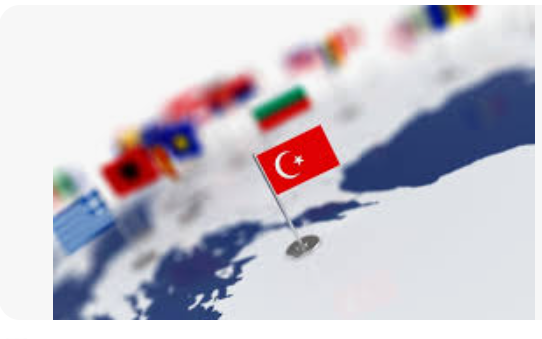 tr regional status
Summary:
As power balances across the Middle East and its periphery continue to shift, Türkiye’s regional influence appears to be gradually diminishing. Roles once associated with Ankara—mediation, facilitation, and strategic convening—are increasingly being assumed by other actors, while structural weaknesses in foreign policy credibility and economic capacity constrain Türkiye’s ability to reclaim lost ground.
Strategic Roles Drift Elsewhere
Türkiye’s relative weight in regional diplomacy has been eroding across several key theaters.
In the war in Ukraine, Ankara initially positioned itself as a facilitator and host for negotiations. That role has since migrated to the United Arab Emirates, which has emerged as a preferred venue for discreet diplomacy.
A similar pattern has played out in the Iran file. Before it even materialized, the possibility of Türkiye hosting US–Iran talks faded. At Tehran’s own request, Oman appears to have replaced Ankara as the preferred intermediary.
Following signals from the Trump administration urging European allies to assume greater responsibility within NATO, expectations briefly rose that Türkiye’s role in European defense might expand. That prospect, however, ran into resistance from Greece and the Greek Cypriot administration, as well as less visible opposition from France, effectively blocking Ankara’s deeper integration.
Efforts to broaden the Pakistan–Saudi Arabia bilateral alliance to include Türkiye also failed to gain traction.
Limits of the Trump Channel on Syria
On Syria, Ankara’s close and carefully cultivated relationship with Donald Trump delivered results—but only up to a point.
Through US mediation that sought to balance Israeli and Turkish interests, the PYD-YPG administration linked to the PKK was removed from governance east of the Euphrates. Yet when the issue shifted to control over ISIS detainees held under PYD-YPG supervision, Washington drew a firm line.
Despite Ankara’s proposal that Türkiye assume responsibility, the US instead organized a special operation to transfer ISIS prisoners and their families to Iraq, sidelining Türkiye from the process.
Why Ankara Is Struggling to Regain Ground
Several structural factors underpin Türkiye’s difficulty in reclaiming regional influence.
For nearly 25 years, foreign policy under the AK Party government has been marked by ideological rigidity followed by abrupt reversals. These sharp shifts have undermined confidence in Ankara’s long-term reliability. Relations with Israel, Saudi Arabia, Libya, Greece, Egypt, and the United Arab Emirates have repeatedly swung between confrontation and rapprochement, creating a perception of unpredictability.
As Ankara oscillated, alternative regional alliances consolidated. Israel’s alignment with Greece and the Greek Cypriot administration—later joined in part by Egypt and even elements of Palestinian representation—has largely excluded Türkiye from emerging energy and security frameworks in the Eastern Mediterranean.
Strategic Fatigue and External Friction
The political wear and tear of prolonged incumbency has further weakened Türkiye’s diplomatic leverage. Despite strong personal ties with Trump, US defense sanctions remain in place. Similarly, although the European Union acknowledges Türkiye’s substantial military capacity, relations with Brussels have stagnated or deteriorated.
Rather than advancing, EU–Türkiye ties have slipped to the point where even the existing Customs Union has come under scrutiny, particularly as the EU expands free trade agreements with India and Mercosur.
Economic Constraints Limit Influence
Türkiye’s prolonged economic crisis has become one of the most decisive constraints on its regional ambitions.
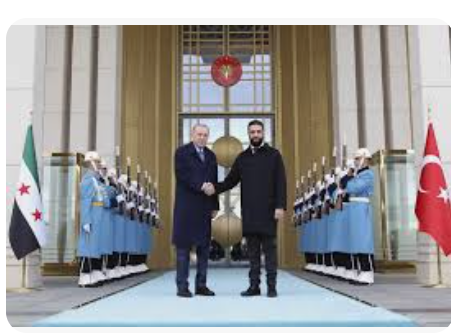
In Syria, for example, the HTS administration initially aligned with Ankara has increasingly gravitated toward Gulf Arab states with deeper financial resources. In the current phase of Syria’s reconstruction, the primary requirement is capital—something Türkiye lacks in sufficient scale.
This financial limitation weakens Ankara’s ability to translate political proximity into sustained influence.
The Cost of Lost Trust
In international politics, credibility lost through missteps or domestically driven rhetorical escalation is exceptionally difficult to restore. Türkiye’s most pressing challenge in the foreseeable future is not merely repositioning itself tactically, but rebuilding trust—both regionally and globally.
Until that credibility gap is addressed, Ankara’s ability to shape outcomes rather than react to them is likely to remain constrained.
By Zeynep Gürcanlı, Ekonomim
PA Turkey intends to inform Turkey watchers with diverse views and opinions. Articles in our website may not necessarily represent the view of our editorial board or count as endorsement.
Follow our English YouTube channel (REAL TURKEY):
https://www.youtube.com/channel/UCKpFJB4GFiNkhmpVZQ_d9Rg
Twitter: @AtillaEng
Facebook: Real Turkey Channel: https://www.facebook.com/realturkeychannel/