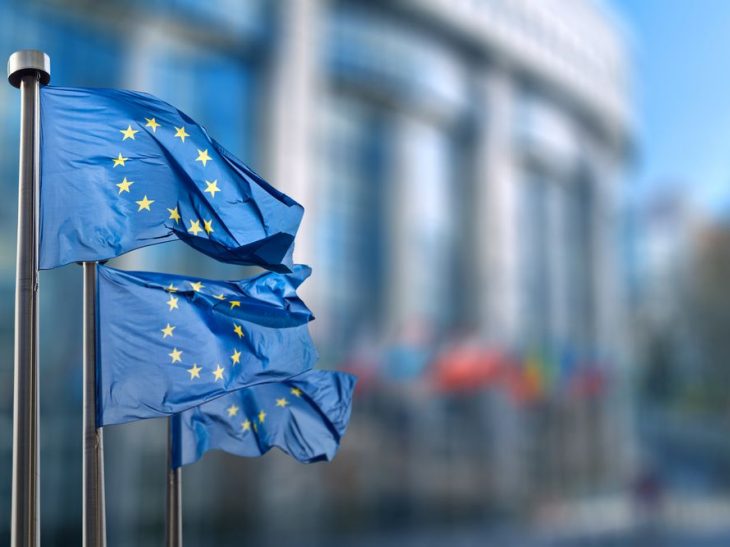
OPINION: Trump and Turkey Expose Europe’s Security Gap — Why It’s Time to Learn from India’s Model
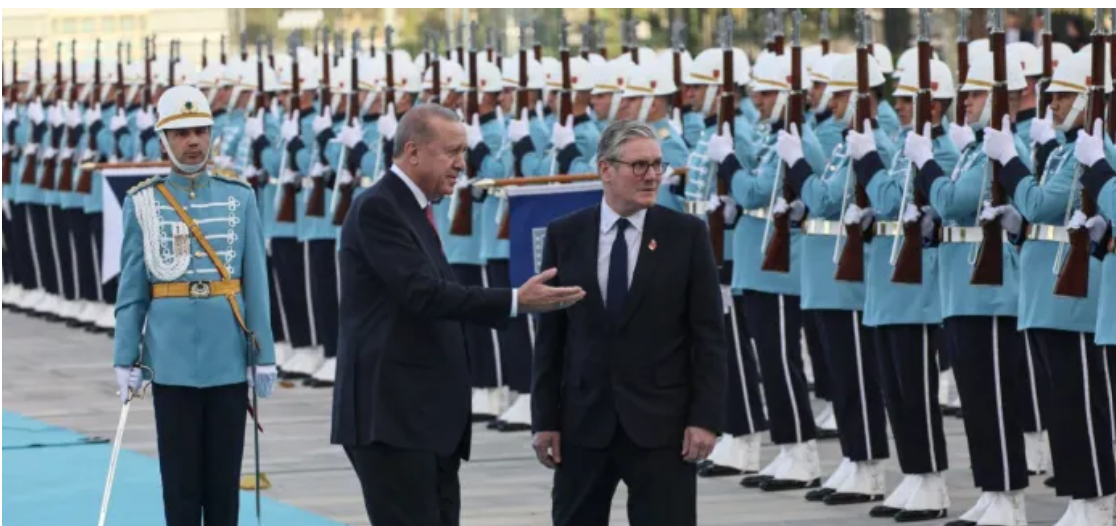 rte steermeer
Europe has not lost its security capabilities; it has lost confidence that it controls them. The return of Donald Trump’s transactional approach to alliances and Turkey’s growing leverage inside Europe’s security ecosystem have exposed a structural weakness. This op-ed argues that Europe’s answer lies not in higher spending alone, but in adopting a discipline closer to Narendra Modi’s defence self-reliance model: partnerships without veto points, and autonomy without isolation.
The end of the old transatlantic bargain
For decades, the transatlantic arrangement was simple: the United States carried the strategic risk, Europe managed the political calendar. That equilibrium collapsed under Trump, who made explicit what had long been implicit — security comes with a bill.
In 2025, Washington withdrew funding for Ukraine and effectively passed the cost to Europe. In January 2026, Trump publicly mocked Denmark over Greenland, forcing European leaders to confront a long-ignored vulnerability. Within weeks, the EU’s defence commissioner warned that a US takeover of Greenland would end NATO as it is known. By February, NATO was already planning an Arctic mission, led by France, with the aircraft carrier Charles de Gaulle dispatched to the North Atlantic.
Europe’s problem was not a lack of money or technology. It was a lack of discipline. Defence procurement was treated as an industrial policy rather than a strategic doctrine.
EU Moves to Rebuild Ties With Turkey as Ukraine War Reshapes Regional Security
India’s rule: no one else fights our wars
The clearest counterexample is India. Under Modi, New Delhi’s Atmanirbhar Bharat defence doctrine rests on a single, non-negotiable rule: no one else will fight India’s wars.
That principle shapes everything. India builds, maintains, repairs and upgrades its own core military systems — engines, radars, missiles and fighter aircraft. It now exports many of these systems. Foreign partnerships are encouraged, but only when they strengthen domestic capacity and never compromise strategic control.
Europe, by contrast, emerged from the Second World War with capital, technology, mature defence firms and decades of protection under the American umbrella. Yet it failed to convert those advantages into true autonomy.
Turkey as Europe’s exposed flank
Europe is now trying to institutionalise discipline through initiatives such as SAFE and joint programmes like Eurofighter. These steps are necessary, but not decisive. The unresolved vulnerability lies with Turkey.
Bringing Ankara into flagship EU defence schemes — via SAFE-enabled joint procurement or deeper integration into supply chains such as the Eurofighter Typhoon programme — is no longer theoretical. SAFE explicitly allows participation by non-EU states, including candidate countries and partners with security agreements.
This may be manageable for Ukraine or trusted partners. It is reckless without conditions when applied to Turkey.
Cyprus illustrates why. Turkey invaded the island in 1974 and still occupies 37% of its territory. Cyprus is an EU member state. This is not a frozen dispute on Europe’s periphery; it is an unresolved territorial fracture inside the Union.
Yet the EU chose to manage around the occupation rather than let it shape relations with Ankara. That decision created habits: normalising unresolved coercion while deepening functional cooperation whenever convenient.
Turkey’s regional rapprochement reshapes Middle East balance, Israeli media warn
Outsourcing pressure creates leverage
The same logic played out in migration. The 2016 EU–Turkey Statement effectively made Ankara the gatekeeper of Europe’s most politically volatile policy area. Turkish leaders repeatedly threatened to “open the gates”, and in February 2020, they did.
When pressure is outsourced, leverage follows.
Embedding Turkey into Europe’s rearmament drive would replicate this mistake in defence. Once production lines, sustainment chains and industrial constituencies are entangled, Europe’s willingness to enforce red lines weakens — even when its security requires firmness.
Greece and Cyprus have said this openly. Athens has tied Turkish access to EU defence funds to the lifting of Ankara’s casus belli threat. Nicosia links the issue directly to the occupation.
This is not obstructionism. It is risk management.
The Eurofighter dilemma
The Eurofighter case shows the cost of blurring lines. Germany has approved the delivery of Typhoon jets to Turkey, with the UK facilitating the pathway. The justification is industrial continuity and alliance cohesion.
The industrial logic is real. So is the strategic price.
The deeper Turkey is embedded in Europe’s most advanced defence ecosystem, the harder it becomes to enforce boundaries in the eastern Mediterranean, over Cyprus, or in any future crisis that tests European unity. Integration should not be confused with stabilisation. Integration becomes pressure when the integrated actor retains policies that undermine the bloc’s integrity.
India’s instinct is clearer: partner, buy and co-produce — but never allow a partner to become a single point of failure.
Greenland and the High North: another lesson missed
Europe is relearning this lesson in the Arctic. Greenland sits on the North Atlantic hinge. Trump’s insistence that the US must “own” it forced clarity. The European Commission has since confirmed the need for an Arctic security package, investment in icebreakers, and protection of undersea cables and routes as European security assets.
Europe did not lose Greenland. It failed to bind Greenland to its security imagination. After Greenland left the European Communities in 1985, the relationship was reduced largely to fisheries and association agreements, while defence remained largely unaddressed. Meanwhile, the US presence at Pituffik Space Base remained continuous.
Correction is still possible — through infrastructure investment, dual-use capabilities, and sustained maritime and air presence anchored with Denmark. The legal basis exists. Political will lagged.
Managing the United States without dependence
The sharpest contrast between Europe and India lies in how they manage the United States.
India maintains deep operational and industrial ties with Washington without replicating Europe’s dependence. Co-production and local industrial footprint are central. Partnership is welcome; production, sustainment and repair must be feasible at home.
Europe is edging toward the same understanding. It must avoid confusing trusted partners with merely convenient ones. SAFE’s limits on external participation reflect early recognition that control matters. But Europe’s exposure runs deeper, through critical minerals and energy supply chains linked to China, Russia and the Gulf.
India acted quickly when tensions with China rose, reducing leverage in digital and investment domains. The reflex mattered. Vulnerabilities were addressed before they hardened into vetoes.
Autonomy is what keeps alliances standing
Israel and the UAE offer parallel lessons. Israel combines deep alliances with non-negotiable domestic capability. The UAE builds local production through joint ventures before pressure crystallises. This is statecraft through supply chains.
Europe tends to move after costs are imposed.
Slogans no longer conceal exposure. SAFE is necessary. Eurofighter proves Europe can build complex systems at scale. But discipline is decisive. Self-reliance is not about spending more; it is about removing leverage — not swapping one dependency for another.
That is why Turkey cannot sit inside Europe’s self-reliance architecture as it is currently conceived: an ally in form, coercive in practice, occupying EU territory and holding an explicit threat over an EU member state.
Europe is already learning from India, whether it admits it or not. Autonomy does not weaken alliances. It is what keeps them standing.
Adopted from an article by
Shay Gal, Eurasian Times
***PA Turkey intends to inform Turkey watchers with diverse views and opinions. Articles in our website may not necessarily represent the view of our editorial board or count as endorsement.
Follow our English YouTube channel (REAL TURKEY):
https://www.youtube.com/channel/UCKpFJB4GFiNkhmpVZQ_d9Rg
Twitter: @AtillaEng
Facebook: Real Turkey Channel: https://www.facebook.com/realturkeychannel/***
Related articles
Trump Doctrine 2.0: What It Means for the Middle East
U.S. Ambassador Tom Barrack: “Turkish-American Relations Are on the Mend”
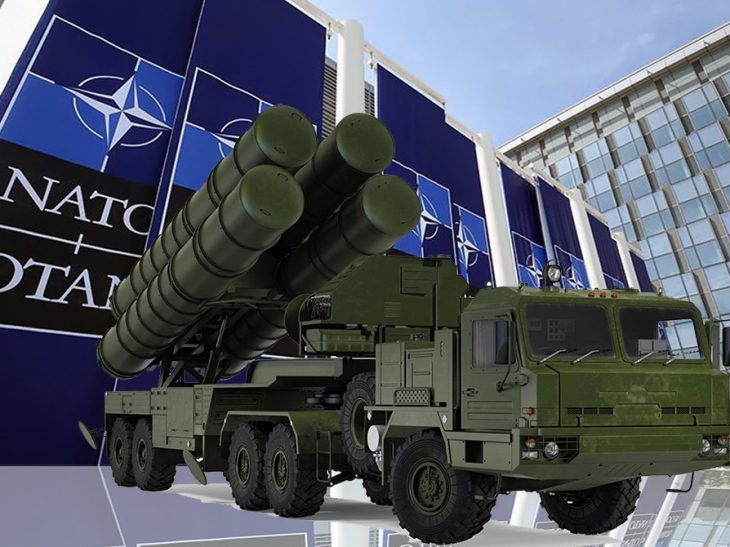
US offers Turkey a ‘sweet deal’ for turning over S-400 missiles to NATO command