OPINION: Through Riyadh and Cairo, Turkey Repositions Itself in the Arab World
 tr arab world
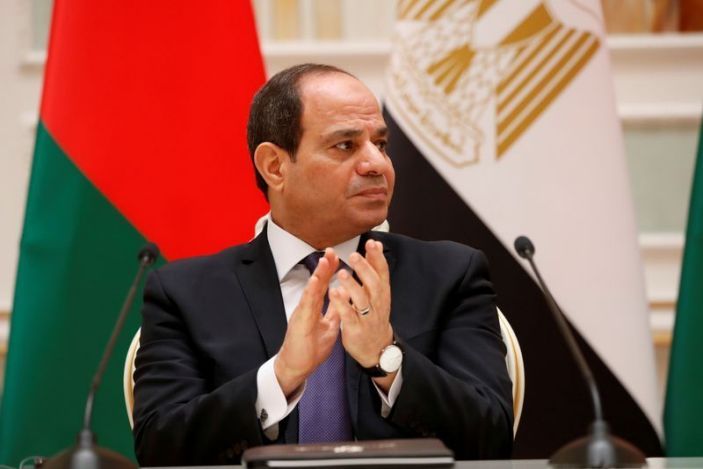
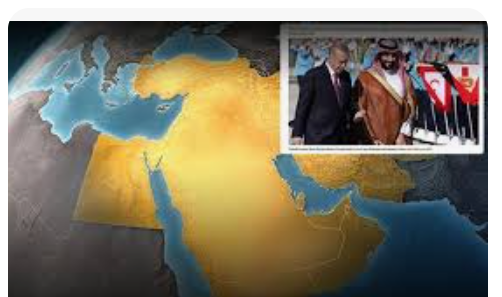
President Recep Tayyip Erdoğan’s recent visits to Saudi Arabia and Egypt marked more than a symbolic reset in relations, signaling Ankara’s strategic return to the Arab heartland. The outreach reflects Turkey’s effort to rebuild partnerships based on economic, military and regional coordination, as it recalibrates its foreign policy amid stalled EU ambitions and shifting global power dynamics.
Author, Rasha Ibrahim

From Normalisation to Strategic Coordination
Erdoğan’s engagements in Riyadh and Cairo were widely viewed by regional observers as closing a long chapter of political estrangement. More importantly, they laid the groundwork for a new phase of cooperation anchored in shared interests rather than ideological alignment.
Ankara’s immediate priority is economic. Turkish officials have set an ambitious target of raising bilateral trade with Saudi Arabia to $50 billion annually. Yet officials and analysts stress that the more consequential development lies in the defence sphere.
Military-technical cooperation with Gulf partners has evolved from simple arms procurement to joint production and capacity-building, according to Turkish statements. A former Turkish ambassador, speaking on condition of anonymity, said Ankara’s approach differs from traditional patron-client models.
“Turkey is offering capacity-building within a system it has designed,” the diplomat said. “These partnerships are based on mutual benefit and interdependence, not subordination or political leverage over Turkey’s regional choices.”
Turkey’s regional rapprochement reshapes Middle East balance, Israeli media warn
Sudan: A Test Case for Arab–Turkish Coordination
The emerging Turkish-Arab alignment is also evident in regional conflict zones, notably Sudan. Intelligence assessments and satellite imagery cited by regional analysts suggest that Turkish-made drones, operating from Egyptian bases, have contributed to shifting the balance between the Sudanese army and the Rapid Support Forces.
Political analyst Ümit Çağrı Sarı, who specialises in Horn of Africa affairs, said Egypt’s posture has evolved over the course of the war.
“For the first two years, Egypt largely maintained neutrality,” Sarı said. “But the UAE’s expanding support for the Rapid Support Forces pushed Cairo toward a more active role, which is now visible both diplomatically and militarily.”
Muscat Over Istanbul: Inside the High-Stakes Diplomacy and Iran’s 5-Stage War Plan
Egypt, Turkey and Sudan’s Power Equation
At the Washington Institute, Africa expert Ben Fishman noted that Egypt has long backed Sudan’s army chief, General Abdel Fattah al-Burhan, and that improving ties with Turkey reinforce this position.
Fishman pointed to international reports describing what he termed a “drone race” in southern Egypt, involving Turkish platforms.
“These reports add little beyond what was already broadly known,” he said, “namely that Turkish-Egyptian cooperation has become a significant element of Cairo’s Sudan policy.”
Eastern Mediterranean: Cooperation with Limits
Turkey also views improved relations with Egypt and Saudi Arabia as a lever to expand its strategic footprint in the eastern Mediterranean. However, analysts caution that rapprochement has clear boundaries.
Maritime boundary demarcation remains unresolved between Ankara and Cairo, particularly given Egypt’s existing agreements with Greece. A Turkish diplomat described Cairo’s approach as cautious.
“Egypt will not easily abandon what it has gained with Greece,” the diplomat said. “But if an agreement with Turkey offers longer-term strategic and economic advantages, limited but meaningful flexibility could emerge.”
Fishman, however, stressed that compartmentalisation now defines regional diplomacy.
“Cooperation on some files does not imply resolution of others,” he said. “The maritime dispute was not addressed in the 40-point memorandum both sides endorsed, showing that countries can work together while preserving disagreements.”
A ‘Smart Balancing’ Strategy
Turkey’s re-engagement with the Arab world forms part of a broader foreign policy recalibration. Ankara is deepening ties with BRICS economies while maintaining relations with European partners, and continues to import natural gas from both the United States and Russia.
Analysts describe this as a form of strategic hedging, allowing Turkey to diversify partnerships without committing fully to any single bloc.
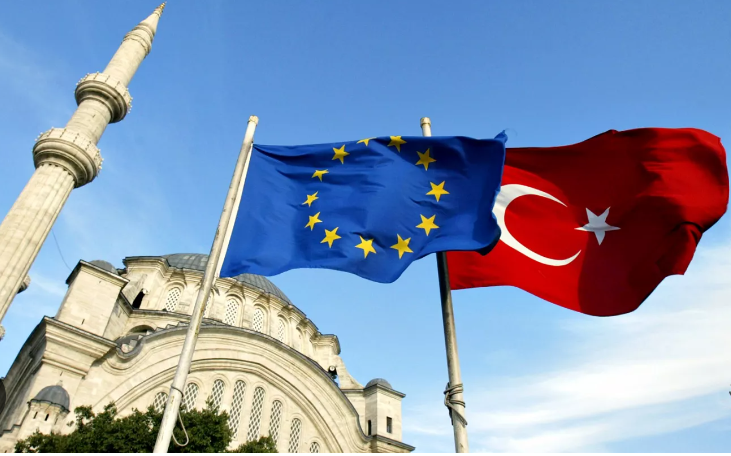
The Arab pivot also reflects Ankara’s assessment that EU accession prospects remain remote after two decades of stalled negotiations. Engagement with Arab capitals offers Turkey diplomatic depth, economic opportunity and strategic autonomy.
Open Question: Can the Rapprochement Last?
Despite the positive rhetoric surrounding Turkey’s renewed Arab outreach, uncertainties remain. Longstanding geopolitical rivalries, unresolved disputes and regional suspicions—often framed around concerns of “neo-Ottomanism”—continue to shape perceptions.
Whether Ankara’s renewed presence in Riyadh and Cairo evolves into a durable regional alignment, or remains a pragmatic but fragile convergence, will depend on how effectively Turkey and its Arab partners manage these structural tensions.
***PA Turkey intends to inform Turkey watchers with diverse views and opinions. Articles in our website may not necessarily represent the view of our editorial board or count as endorsement.
Follow our English YouTube channel (REAL TURKEY):
https://www.youtube.com/channel/UCKpFJB4GFiNkhmpVZQ_d9Rg
Twitter: @AtillaEng
Facebook: Real Turkey Channel: https://www.facebook.com/realturkeychannel/***