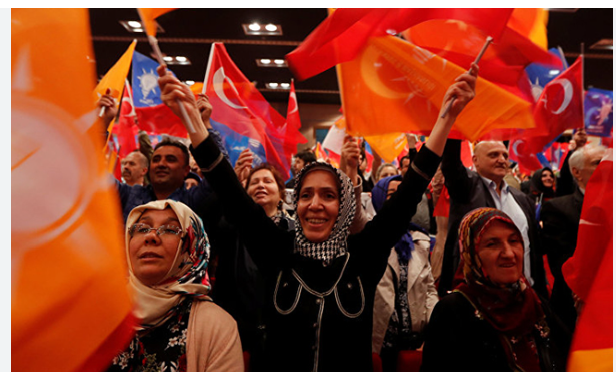
OPINION: MHP’s “Wolf Trap” for Democracy
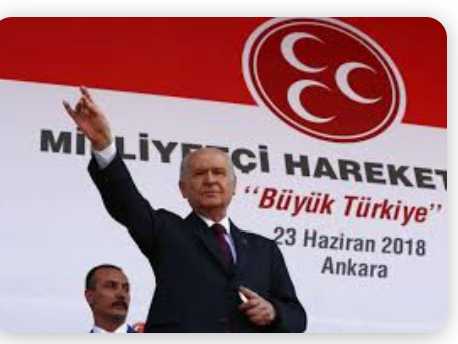 mhp
mhp
By Merdan Yanardag, BirGün Daily
A growing hesitation within opposition circles toward the Nationalist Movement Party (MHP) risks enabling a broader political strategy that could reshape Türkiye’s democratic landscape. This analysis argues that MHP’s role is not tactical but structural—aimed at extending the current power bloc and redefining the opposition’s space.
A Strategic Miscalculation by the Opposition
For some time, segments of Türkiye’s opposition—including social democrats, Kurdish political actors, and even parts of the socialist left—have displayed a cautious and at times ambiguous stance toward the MHP and the broader nationalist movement.
This hesitation is not without reason. At its core lies a political calculation: the expectation that MHP support could prove decisive in advancing a renewed “solution process” or triggering early elections.
However, this approach is increasingly seen as flawed. Rather than opening political space, it risks strengthening a strategy that incrementally constrains opposition forces and reshapes the political field to their disadvantage.
MHP’s Strategic Objective
The argument presented here is stark: MHP’s long-term objective is not merely to support the current government, but to help consolidate a more authoritarian system alongside the ruling bloc.
Within this framework, several elements stand out:
- A focus on influence within the security bureaucracy
- Reliance on organized political networks and mobilization capacity
- Efforts to control public space and street-level dynamics
While some of these assessments remain interpretative, the party’s short- to medium-term goal is clear: extending the political lifespan of the Erdoğan-led government. This objective has been openly acknowledged by MHP leadership.
Turkey’s Managed Instability: Political Pressure, Economic Strain, and Fragmentation Risks
Three Tactical Moves in a Political Deadlock
According to this perspective, the current political environment reflects a broader structural impasse. The governing coalition faces declining legitimacy, economic strain, and reduced capacity to generate public consent.
To navigate this situation, three key tactical moves are identified:
- Neutralizing the Main Opposition
Weakening the CHP and broader left-wing opposition to create a less competitive political landscape. - Repositioning the Kurdish Political Movement
Either incorporating it into the governing framework or detaching it from the broader opposition bloc. - Securing External Support
Maintaining alignment with international actors—particularly the United States—to reinforce political stability at home.
These moves collectively aim to manage the crisis of governance while preventing a systemic political shift.
The “Imralı Process” as a Political Tool
The renewed discussion around the Kurdish issue—often framed as a new “solution process”—is interpreted here not primarily as a democratization effort, but as a tactical maneuver.
The objective would be to:
- Fragment opposition alliances
- Neutralize key political actors
- Recreate conditions similar to past referenda dynamics, where divisions within the opposition proved decisive
In this reading, the process is less about resolution and more about political repositioning.
İBB Trial: İmamoğlu Confronts Judiciary Over “Double Standards”
A Changing Battlefield
The opposition has not remained passive. Initiatives such as proposals for by-elections aim to shift the political contest back to electoral legitimacy.
However, these efforts face significant constraints:
- Pro-government narratives quickly reframe such moves
- Institutional barriers limit feasibility
- Internal vulnerabilities weaken strategic coherence
As a result, opposition actors find themselves operating within a framework largely shaped by the ruling coalition.
Reassessing MHP: Ideology and Positioning
The article argues that MHP should not be viewed simply as a conventional nationalist party within democratic politics.
Instead, it is described as:
- A movement shaped by the Turkish-Islamic synthesis
- Influenced by Cold War-era security doctrines
- Distinct from earlier traditions of secular, reformist Turkish nationalism
Historically, the party’s trajectory has shifted significantly:
- From opposition to the AKP in earlier years
- To a close alliance after 2015, particularly following the 2016 coup attempt
This transformation is seen as central to understanding its current role.
Implications for the Opposition
The central conclusion is that the opposition must reassess its approach.
Key recommendations include:
- Moving away from cautious engagement toward clear political positioning
- Articulating MHP’s role within the broader power structure
- Strengthening ideological and organizational responses
The argument suggests that only sustained political pressure—not accommodation—can alter the current trajectory.
Conclusion: Managed Stability or Deepening Constraint
Türkiye appears to be entering a phase where political control is maintained through structured pressure rather than open competition.
In this environment:
- The ruling bloc consolidates influence
- The opposition faces structural limitations
- Political outcomes are shaped increasingly by institutional dynamics
Whether this trajectory leads to stabilization or further democratic erosion remains an open question. What is clear, however, is that the current balance is not static—and the choices made by political actors in the coming period will be decisive.
PA Turkey intends to inform Turkey watchers with diverse views and opinions. Articles in our website may not necessarily represent the view of our editorial board or count as endorsement.
Follow our English YouTube channel (REAL TURKEY):
https://www.youtube.com/channel/UCKpFJB4GFiNkhmpVZQ_d9Rg
Twitter: @AtillaEng
Facebook: Real Turkey Channel: https://www.facebook.com/realturkeychannel/
Related articles
First Take: Six-party opposition alliance unveils its government program
Another CHP Mayor Detained as Pressure on Opposition Municipalities Intensifies
CHP Leader Özel Backs November 2025 Elections, Says Party Is Fully Prepared