OPINION: Iran’s Weakening Is Turkey’s Opportunity — and Its Trap
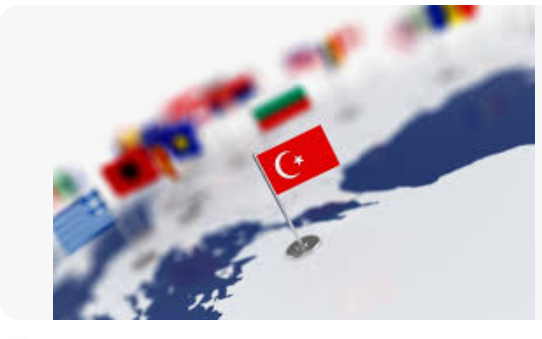 tr regional status
The February 28 US-Israeli strikes on Iran have reshaped the regional balance of power in ways that may significantly elevate Turkey’s strategic position. As Iran’s capacity to project influence weakens, Ankara’s relative weight rises across multiple theaters — from Syria to the Caucasus and Central Asia. Yet this opportunity carries substantial risks, including intensified rivalry with Israel, nuclear uncertainty, spillover instability and mounting economic pressures. Turkey’s challenge will be converting leverage into advantage without inheriting regional disorder.
A Shifting Balance of Power
The American and Israeli strikes on Iran have triggered immediate debates about escalation, retaliation and the future of Tehran’s nuclear program. But beyond the immediate battlefield dynamics, the broader geopolitical consequences may prove more significant.
When one regional power pole weakens, the relative value of remaining capable actors increases. In this context, Turkey stands out. As Iran’s ability to project power through Iraq, Syria and the Levant erodes, Ankara emerges as the most capable non-Arab Muslim power bordering multiple strategic theaters — the Levant, the Black Sea, the Caucasus, the Gulf and North Africa.
Geography, military posture and NATO membership combine to elevate Turkey’s strategic relevance at a time of regional volatility.
Strategic Depth and Flexible Statecraft
Turkish foreign policy has long sought to convert instability into leverage. Former Foreign Minister Ahmet Davutoğlu conceptualized this approach under the doctrine of “strategic depth,” and President Recep Tayyip Erdoğan has operationalized it in practice.
Ankara presents different faces to different audiences:
-
To Washington: an indispensable NATO ally, hosting Incirlik Air Base and playing a pivotal role in Black Sea security through the Montreux Convention.
-
To Europe: a migration buffer central to border externalization policy.
-
To Russia: an energy corridor and pragmatic interlocutor.
-
To China: a western anchor of the “Middle Corridor” linking Asia to Europe.
-
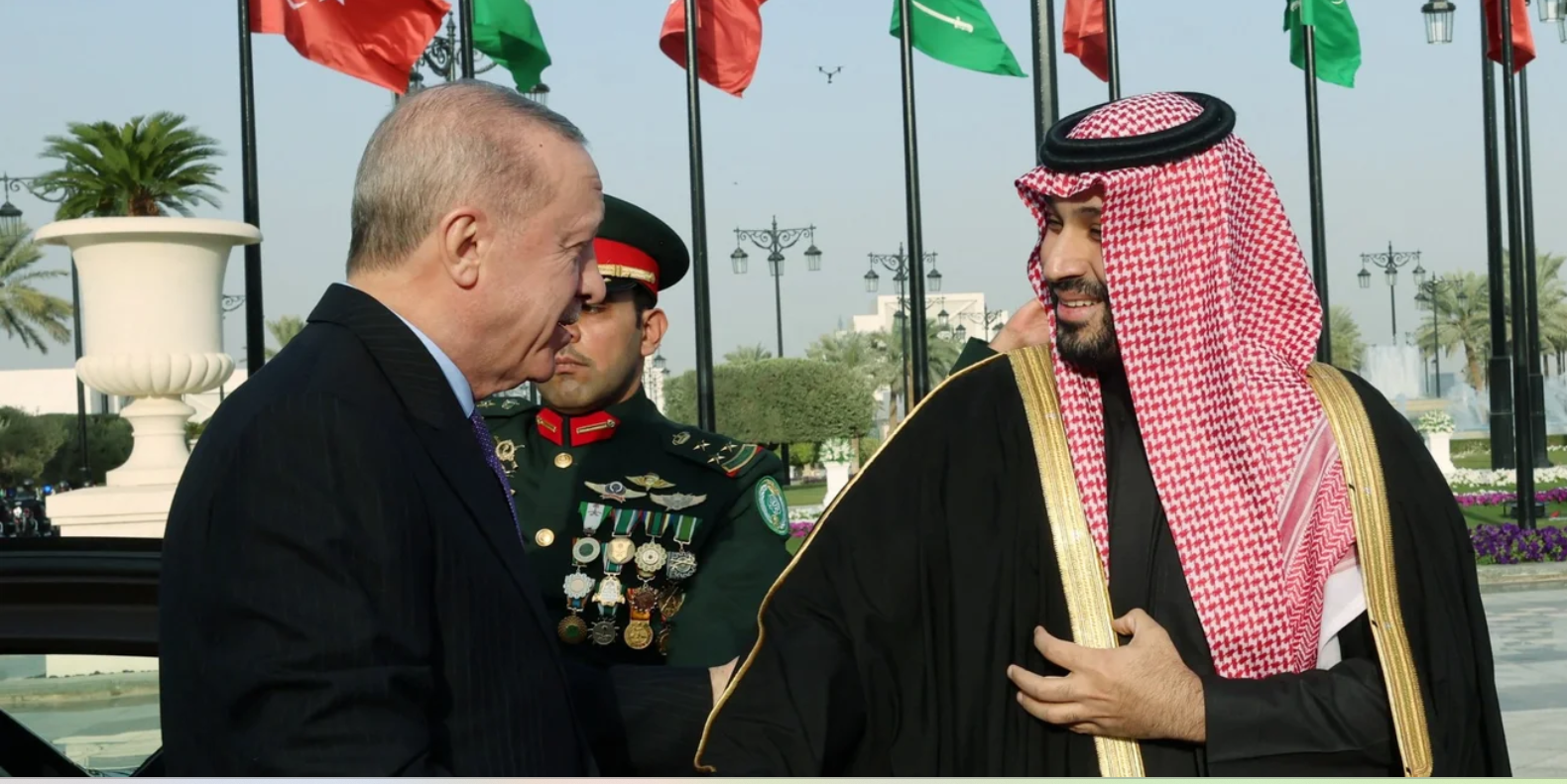
To Gulf monarchies: a defense partner capable of managing political Islam while offering investment and security cooperation.
This calibrated flexibility has become the operating doctrine of Turkish statecraft.
The “Resistance” Narrative After Iran
For decades, Iran positioned itself as the epicenter of resistance to Israel and American primacy. The recent strikes may not erase that narrative, but they disrupt its institutional anchor.
In the Middle East, political narratives rarely disappear — they relocate. The question now is who will frame the post-Iranian strategic moment.
Erdoğan has long sought influence over what is often called the “Muslim street.” Through religious diplomacy, media platforms and ideological linkages, Ankara has cultivated a communications network across parts of the Sunni world.
By condemning Israeli actions in Gaza and criticizing the strikes on Iran — while remaining embedded in NATO and economically tied to Western markets — Turkey maintains a deliberate duality. That dual positioning may become even more valuable in the post-strike environment.
Structural Competition with Israel
Iran’s weakening does not merely increase Turkey’s standing with the West. It also intensifies structural competition with Israel — particularly in Syria.
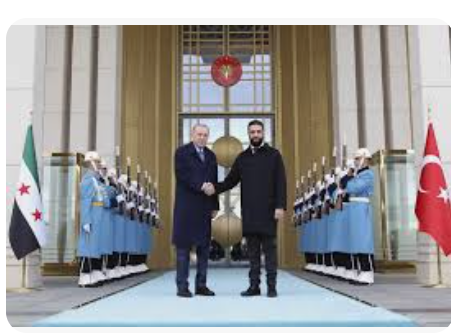
Since the fall of Bashar al-Assad, Ankara has consolidated influence in northern Syria, maintaining troops and cultivating local administrative structures. Israel, meanwhile, has expanded operations to prevent hostile entrenchment near its borders.
A delicate deconfliction mechanism exists between the two states, but mistrust runs deep. Israeli strategic circles increasingly view Turkey’s expanding footprint — from the Levant to North Africa and the Gulf — as a potential encirclement dynamic.
Turkey’s “Blue Homeland” maritime doctrine further complicates Eastern Mediterranean energy and connectivity projects that Israel sees as strategic lifelines to Europe. The friction is structural rather than rhetorical.
Central Asia and the Turkic Dimension
Beyond the Levant, Iran’s weakening has implications for Central Asia.
Turkey has invested heavily in cultural, linguistic and institutional ties across Turkic republics via the Organisation of Turkic States, defense cooperation and educational networks. Azerbaijan serves as the linchpin of this architecture.
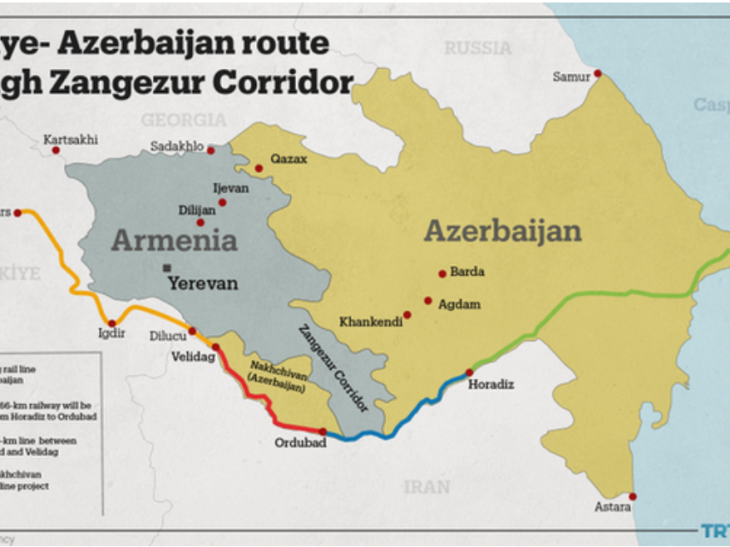
Iran had opposed the proposed Zangezur corridor, fearing a Turkish-Azerbaijani land bridge bypassing Iranian territory. If sanctions and instability constrain Iran’s regional transit role, Ankara’s Middle Corridor strategy — linking Central Asia to Europe via the Caucasus — gains relative appeal.
This shift would not represent a dramatic geopolitical realignment, but a gradual enhancement of Turkey’s comparative advantage.
The Nuclear Question: A Dangerous Uncertainty
The strikes were aimed at degrading Iran’s nuclear capacity. Even if damage has been inflicted, the broader strategic effect may be greater uncertainty.
A program pushed underground or rebuilt under weakened inspection regimes increases opacity rather than reducing risk.
For Turkey, nuclear asymmetry has long been sensitive — especially in relation to Israel’s undeclared capabilities. Saudi Arabia has also stated that it would seek nuclear capability if Iran does so.
Turkey is unlikely to pursue weaponization, but it may:
-
Expand civilian nuclear capacity
-
Deepen missile development
-
Increase technological hedging options
Ironically, the strikes may intensify regional proliferation pressures rather than resolve them.
The Russia Variable
The strikes also reshape the Russia-Turkey-Iran triangle that structured Syrian diplomacy under the Astana process.
With Russia weakened by its protracted war in Ukraine and Iran under pressure, Turkey emerges as the only fully functional diplomatic broker within that format.
This elevates Ankara’s diplomatic leverage not only in Syria but across broader regional negotiations.
Opportunity — and Exposure
Yet opportunity comes with significant risks.
A weakened Iran could generate:
-
Refugee flows toward Turkey
-
Fragmentation of militia networks
-
Sharpened Kurdish dynamics across Iran, Iraq and Syria
Sanctions enforcement could complicate Turkey’s intermediary economic role. Meanwhile, higher regional risk premiums could strain an already fragile domestic economy.
Turkey’s optimal scenario is not Iranian collapse but controlled degradation — sufficient to enhance its strategic value without unleashing systemic instability.
Washington’s Calculus
The Trump administration’s posture remains critical.
Washington requires Turkey simultaneously for NATO cohesion, Black Sea security, refugee containment and Middle East diplomacy. This dependency constrains how forcefully the US can pressure Ankara to choose sides.
That reality underpins Erdoğan’s strategic calculation.
A Central but Vulnerable Actor
It is tempting to label geopolitical moments in terms of winners and losers. Turkey appears to benefit from Iran’s weakening. But advantage in geopolitics is rarely absolute or permanent.
The February strikes have not crowned Turkey as regional hegemon. They have, however, confirmed Ankara’s centrality to the emerging order:
-
In regional security architecture
-
In corridor politics linking Asia to Europe
-
In Europe’s migration management
-
In shaping Muslim public opinion
-
In mediating between Washington and a more volatile Middle East
Turkey’s leverage has increased. So too has its exposure.
The margin for strategic miscalculation is narrower than it appears.
Source: Modern Diplomacy