OPINION: EU–Türkiye relations at a crossroads as Europe turns inward
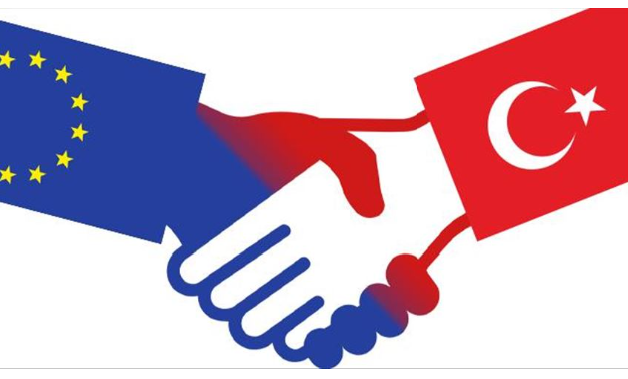 tr eu
tr eu
The European Union’s shift toward strategic autonomy, industrial policy, and economic security is creating growing tensions with Türkiye’s existing integration into the European economy. While trade ties remain deep, the institutional framework governing relations—centered on the Customs Union—is increasingly outdated. Analysts warn that without a broader reform agenda, structural asymmetries could undermine both economic cooperation and regional stability.
Deep integration meets changing EU priorities
Türkiye remains tightly integrated into the European economy:
- The EU accounts for roughly 40% of Türkiye’s exports
- Türkiye is the EU’s fifth-largest trading partner
- Turkish industries are embedded in European supply chains, particularly in automotive, machinery, and textiles
However, the EU’s evolving policy agenda—focused on resilience, de-risking, and industrial sovereignty—is beginning to clash with the logic of the 1996 Customs Union.
Europe’s industrial shift creates new asymmetries
Since 2022, the EU has adopted a more interventionist economic model, introducing:
- Large-scale state aid and subsidy frameworks
- Strategic industrial initiatives such as battery and hydrogen projects
- Policies favoring domestic production in key sectors
Participation in these mechanisms is largely limited to EU member states and closely associated partners.
As a result, Turkish firms:
- Compete in EU markets
- But lack access to EU-level industrial funding and subsidies
This creates a growing competitive imbalance.
“Made in EU” policies challenge Türkiye-based production
New regulations such as the Net-Zero Industry Act and the proposed Industrial Accelerator Act prioritize production within EU borders.
While Türkiye is not formally excluded, the framework:
- Incentivizes investment inside the EU
- Risks diverting production away from Türkiye
This could gradually fragment integrated supply chains that have developed over decades.
Critical raw materials: Türkiye left outside
The EU is also restructuring supply chains for critical raw materials to reduce dependency on external actors.
Despite Türkiye’s significant mineral resources, including boron and rare earth elements:
- EU partnerships have focused on countries like Canada, Australia, and Chile
- No structured EU–Türkiye raw materials framework exists
This signals a preference for diversification outside Türkiye rather than deeper integration.
Defense integration moves inward
The EU is increasingly treating defense as an industrial priority.
Initiatives such as:
- The European Defense Industrial Strategy (EDIS)
- Emerging discussions around a “Strategic Allied Framework for Europe” (SAFE)
are strengthening internal coordination among EU members.
Although Türkiye is a major NATO ally and defense producer, its participation in EU defense initiatives remains limited, raising concerns about long-term marginalization.
Trade asymmetry widens with new EU agreements
As the EU expands its global trade network:
- New agreements with partners such as India and Mercosur are progressing
- Negotiations continue with countries like Australia and Indonesia
Under the current Customs Union framework:
- These countries gain access to Türkiye’s market via EU agreements
- Türkiye does not automatically receive reciprocal access
This structural asymmetry is becoming more pronounced as the EU accelerates trade diversification.
CBAM: manageable but not structural
The Carbon Border Adjustment Mechanism (CBAM) introduces new costs for carbon-intensive imports.
While it poses challenges for sectors such as steel and cement, analysts note that:
- Its impact can be mitigated through regulatory alignment
- It does not create the same structural imbalance as industrial policy or trade asymmetries
Customs Union no longer sufficient
The Customs Union was originally designed as a transitional step toward EU membership.
However:
- Accession talks are effectively frozen
- The transitional model has become permanent
Analysts argue that even a modernized Customs Union—expanded to services and agriculture—would not address core issues such as:
- Exclusion from EU trade negotiations
- Lack of access to industrial subsidies
- Limited integration in defense and procurement frameworks
Toward a broader partnership model
Experts suggest that a more comprehensive framework is needed.
Key proposals include:
- Institutionalized consultation on EU trade policy
- Dynamic regulatory alignment mechanisms
- Selective industrial cooperation in green and defense sectors
- Expanded access to public procurement markets
- Binding dispute resolution mechanisms
Multilateral platforms such as the WTO, OECD, and G20 could also provide additional leverage, though they cannot replace bilateral reform.
Political constraints remain
Despite the economic rationale for reform, political challenges persist:
- Some EU member states are reluctant to extend deeper integration to non-members
- Concerns exist over regulatory control and budget implications
- Türkiye may face domestic adjustment costs from closer alignment
These factors complicate the path toward a comprehensive agreement.
Risks of inaction
Failure to adapt the relationship could have significant consequences:
- Investment diversion away from Türkiye
- Fragmentation of integrated supply chains
- Weakening of long-standing economic interdependence
Such outcomes could undermine both EU strategic goals and Türkiye’s economic position.
Conclusion
EU–Türkiye relations are entering a new phase shaped by geoeconomic competition and industrial policy.
While economic ties remain strong, the institutional framework governing the relationship is increasingly misaligned with current realities.
A broader, more flexible partnership model—short of full membership—may be necessary to sustain cooperation in an era defined by strategic autonomy and economic security.
Adopted from GMF, by Kadri Taştan and Erdal Yalçın
PA Turkey intends to inform Turkey watchers with diverse views and opinions. Articles in our website may not necessarily represent the view of our editorial board or count as endorsement.
Follow our English YouTube channel (REAL TURKEY):
https://www.youtube.com/channel/UCKpFJB4GFiNkhmpVZQ_d9Rg
Twitter: @AtillaEng
Facebook: Real Turkey Channel: https://www.facebook.com/realturkeychannel/
Related articles
12 figures who ruined Türkiye and why the debate still matters
Abdullah Gül: European Security Needs Turkey

EU Signals Openness to Cooperation with Türkiye’s Defense Industry Under SAFE Program