Nevşin Mengü: The Looming Risk Facing Türkiye in the Near Future
 danger
Opinion
Over the past two decades, countries drifting steadily toward authoritarianism and one-man rule have become increasingly prominent. Russia, just to Türkiye’s north, is a prime example. Similar trends are visible across much of the Balkans. We are living in an era in which governments that restrict freedom of expression and curtail personal liberties are not only tolerated, but often actively embraced.
Author and journalist Nevsin Mengu

Türkiye has not been immune to this global shift. For years now, the country has exhibited a gradual move toward inward-looking and authoritarian governance. Yet one factor has long distinguished Türkiye from many of its regional peers governed in similar ways: the continued existence of a strong, institutionalized opposition party.
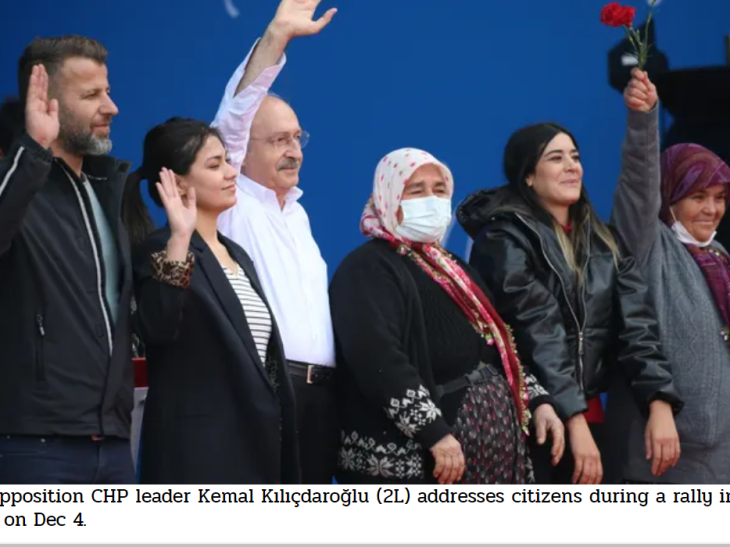
Despite fluctuations in its electoral performance, the main opposition Republican People’s Party (CHP) has at various moments acted as a stabilizer of the status quo, and at others as a guarantor of fundamental democratic rights — most notably the right to vote and to be elected. In this sense, the CHP has functioned as a systemic balancing mechanism.
This role is often forgotten today, particularly given the government’s current nationalist positioning. But during the early 2010s “peace process,” proposals such as establishing special police forces for certain regions were seriously discussed. Negotiations were conducted largely outside parliament, in meetings shielded from public scrutiny. At the time, repeated warnings from the CHP parliamentary podium — that state authority was being weakened and extra-legal structures tolerated — were widely dismissed. The subsequent trench warfare period later demonstrated that these warnings functioned as an early alert system.
Similarly, on issues such as the “Blue Homeland” doctrine and Türkiye’s rights in the Eastern Mediterranean, the CHP has pressured the government not through nationalist rhetoric, but by emphasizing continuity in drilling activities and the need for international legal legitimacy. This approach reinforced the principle that national interests should be defended through international law rather than reduced to short-term domestic political tools.
The party’s insistence on electoral integrity during the annulled and repeated 2019 Istanbul mayoral election also stands as a critical moment in defending democratic norms.
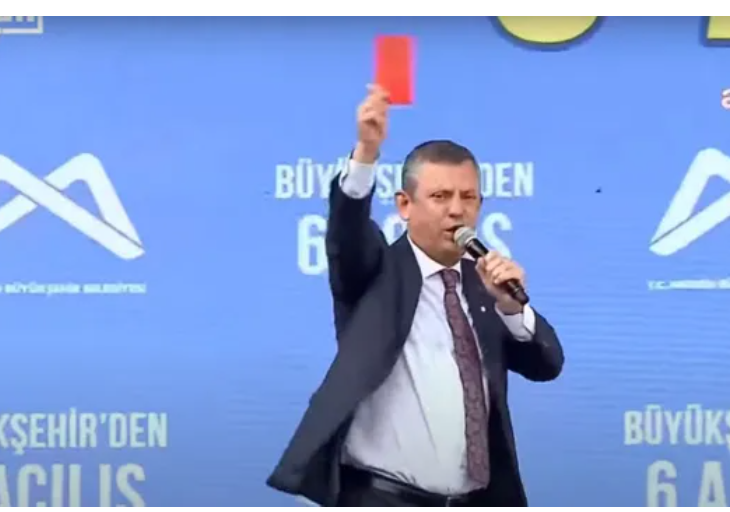
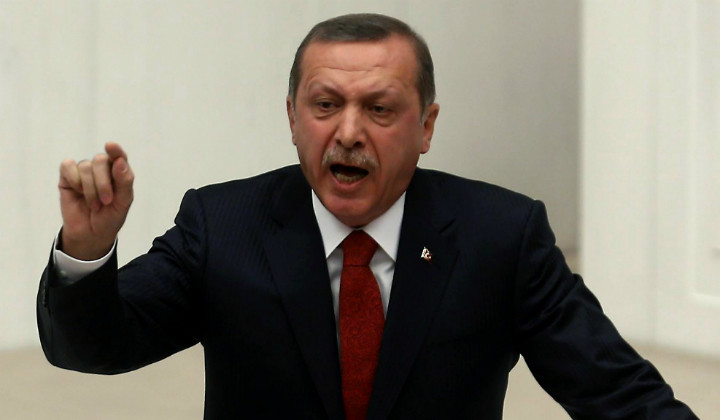
A pattern common to many authoritarian systems is the absence of a credible, institutional opposition — a vacuum that extremist parties and movements often rush to fill. Until now, Türkiye’s political equilibrium has rested on a familiar structure: a powerful government built around a charismatic leader, counterbalanced by an institutional opposition.
Whether this balance will survive the coming years remains an open question. The ruling bloc lost the 2023 presidential race only in the second round and suffered a significant defeat in the subsequent local elections — facts that continue to shape political calculations.
As Türkiye moves toward 2028, the government’s path will not be easy. With few believing inflation will fall below 20%, the temptation to weaken the opposition rather than compete with it grows stronger. Fragmenting the CHP, stripping it of coherence and influence, and reducing it to a symbolic, ineffective opposition would mark a decisive break.
Such a shift would not simply alter electoral dynamics. It would signal Türkiye’s entry into an entirely new political era — one in which the final institutional barrier against full authoritarian consolidation is removed.
PA Turkey intends to inform Turkey watchers with diverse views and opinions. Articles in our website may not necessarily represent the view of our editorial board or count as endorsement.
Follow our English YouTube channel (REAL TURKEY):
https://www.youtube.com/channel/UCKpFJB4GFiNkhmpVZQ_d9Rg
Twitter: @AtillaEng
Facebook: Real Turkey Channel: https://www.facebook.com/realturkeychannel/