Neo-Con Michael Rubin: Israel will defeat Turkey in 8 days
 tr israel
Outdated Doctrines and Drone Superiority: Why Michael Rubin’s “8-Day War” Forecast Sparked Global Ridicule
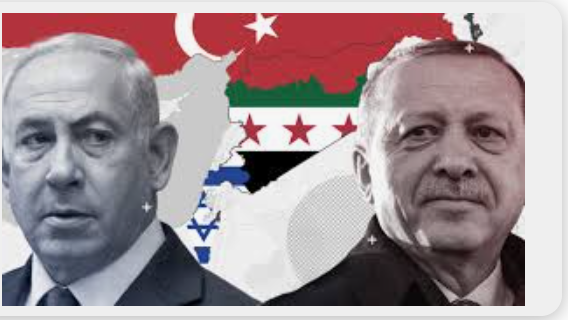
In a digital era where geopolitical discourse often blurs the line between strategic analysis and psychological warfare, a recent post by American Enterprise Institute (AEI) analyst Michael Rubin has ignited a firestorm across the Eastern Mediterranean and beyond. Rubin, known for his adversarial stance toward Ankara, suggested that Israel—historically capable of defeating major Arab coalitions in six days—could “defeat” Turkey in a window of just 8 to 10 days.
While the statement was likely intended to highlight Israel’s technological edge, it was met with a wave of technical rebuttals and historical counter-arguments from defense experts and the Turkish public alike. The consensus? Rubin’s “stopwatch diplomacy” ignores the fundamental shift in 21st-century warfare: the rise of the asymmetric, technologically independent regional power.
The Fallacy of the Historical Parallel
Rubin’s thesis draws heavily on the 1967 Six-Day War, where Israel’s preemptive strikes neutralized the Egyptian air force on the tarmac. However, analysts argue that comparing the Egypt of 1967 to the Turkey of 2026 is a massive intellectual leap.
Modern Turkey is not a post-colonial military reliant on foreign maintenance and outdated Soviet or French doctrines. It is a NATO member with the alliance’s second-largest standing army and, more importantly, a domestic defense industry that has achieved nearly 80% self-sufficiency. Unlike Israel’s 1967 adversaries, Turkey possesses a vast geographical depth and a “total defense” infrastructure that makes a “short, sharp shock” victory nearly impossible.
The Drone Superiority and “Sovereign” Technology
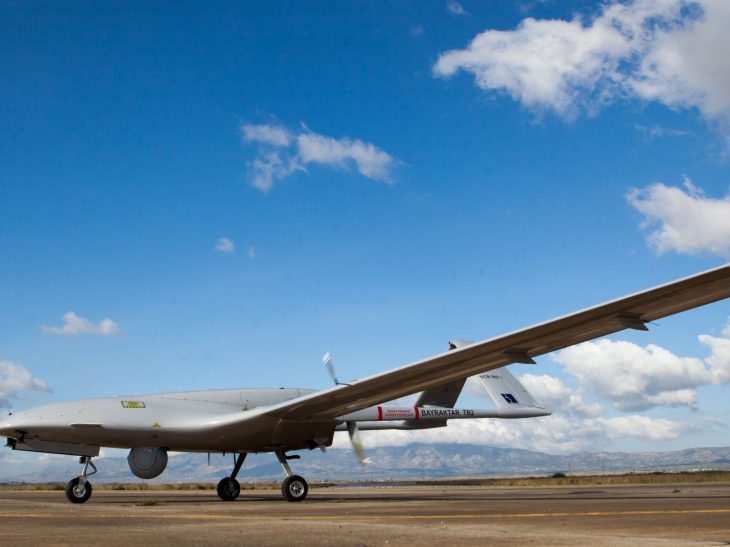
The most significant backlash to Rubin’s claims centered on Turkey’s status as a global drone superpower. In the last five years, Turkish UAVs (Unmanned Aerial Vehicles) have single-handedly altered the outcomes of conflicts in Libya, Nagorno-Karabakh, and Ukraine.
-
The Saturation Doctrine: Critics on X pointed out that Turkey’s fleet—ranging from the battle-hardened Bayraktar TB2 to the supersonic KIZILELMA and the ANKA-3 stealth flying wing—presents a “saturation” threat. Even the most advanced missile defense systems, such as Israel’s Iron Dome or Arrow, could be overwhelmed by “swarm” tactics, making a 10-day victory scenario look more like a loathesome logistical quagmire for any aggressor.
-
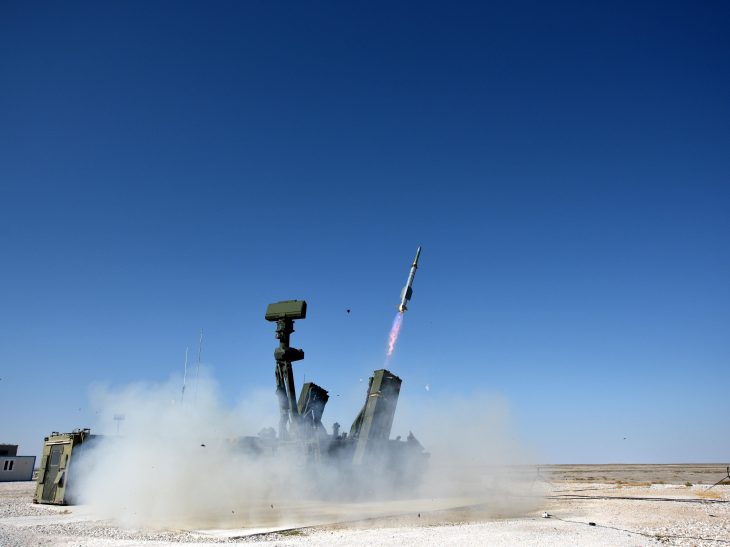
Ballistic and Hypersonic Ambitions: The emergence of the TAYFUN ballistic missile and Turkey’s rapid development of hypersonic mühimmat (ammunition) have added a layer of strategic deterrence that did not exist even five years ago. These systems provide Ankara with the ability to strike high-value targets at long range, effectively neutralizing the advantage of preemption that Rubin so heavily relies upon.
The Depth of Strategy vs. The Soundbite
Beyond the hardware, the debate highlighted the difference between tactical superiority and strategic victory. While Israel maintains a qualitative military edge (QME) in specific areas—notably the F-35 “Adir” fleet—Turkey’s military is built for sustained, high-intensity conflict across multiple theaters.
A war between Turkey and Israel would not be a localized skirmish; it would be a clash of civilizations and regional architectures. Turkey’s “Blue Homeland” (Mavi Vatan) naval doctrine and its integrated electronic warfare (EW) capabilities, such as the KORAL system, are designed to deny access to superior air forces (A2/AD). Rubin’s analysis fails to account for how Turkey’s EW suites could blind the very sensors required for a “lightning victory.”
Social Media: The Digital Counter-Offensive
On X, the reaction was swift and often witty. Turkish users highlighted that Rubin has a track record of failed predictions, including a 2025 op-ed suggesting Turkey’s “inevitable partition.” The counter-narrative was clear: the Turkish public is no longer intimidated by neocon rhetoric. They pointed to the fact that Turkey is the only country in the region producing its own jet engines, tanks (Altay), and aircraft carriers (TCG Anadolu), whereas Israel remains heavily subsidized by annual U.S. military aid.
Conclusion: The New Reality of the Eastern Med
Michael Rubin’s “8-10 day” claim may play well in specific ideological circles, but as a piece of military science, it is widely considered an anachronism. It reflects a mindset from the 1990s, failing to grasp that Turkey has successfully transformed its “intermittency” in the defense industry into absolute “sovereignty.”
In 2026, the Eastern Mediterranean is a chessboard of high-tech deterrence. Claims of rapid victories serve only to inflame tensions rather than provide insight. Turkey’s defense barrier is no longer just a collection of soldiers; it is a wall of silicon, steel, and indigenous software that no analyst’s stopwatch can easily outrun.