Murat Yetkin: Could Israel Ever Risk a Military Confrontation with Türkiye?
 tr israel2
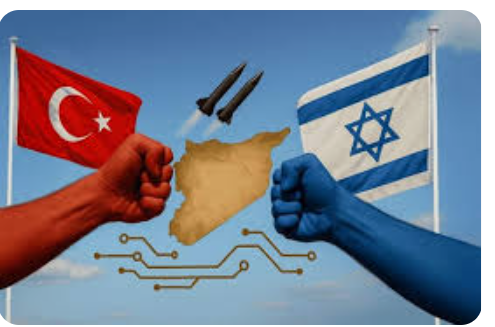
Turkish journalist Murat Yetkin argues that rising tensions in the Middle East and increasingly hostile rhetoric from some Israeli and Western commentators have revived a controversial question in Ankara: could Israel ever consider a direct confrontation with Türkiye? While such a scenario still appears unlikely, Yetkin suggests that regional power shifts, ideological narratives, and recent geopolitical developments have forced Turkish policymakers to consider the possibility more seriously.

Growing rhetoric against Türkiye
Debate over Israel’s regional strategy has intensified following the escalation of conflict involving Iran.
Some analysts and commentators in Western media have begun discussing the idea that, after Iran, the U.S.–Israel strategic alliance should prevent Türkiye from emerging as a dominant regional power.
According to Yetkin, one example came from a right-leaning columnist in The Wall Street Journal, who argued that the alliance should ensure that “Türkiye does not replace Iran” as a strategic challenge in the Middle East.
Statements from Israeli political leaders have also contributed to the debate.
Israeli Prime Minister Benjamin Netanyahu recently warned about what he described as a “rising Sunni threat” in the region during a meeting with Indian Prime Minister Narendra Modi. Former Israeli Prime Minister Naftali Bennett went further in later remarks, explicitly referring to a “Türkiye threat.”
Such rhetoric has fueled discussion among Turkish analysts about how Israel views Ankara’s growing geopolitical role.
Ankara’s concerns about strategic intentions
According to Yetkin, the question arises whether Israel—particularly under Netanyahu’s leadership and with strong U.S. political backing—might pursue more confrontational policies toward Türkiye.
He suggests that some policymakers in Israel may believe Washington would ultimately prioritize its close alliance with Israel even when doing so creates tensions with other partners.
While the official U.S. foreign-policy slogan remains “America First,” Yetkin argues that the depth of political support for Israel within American politics could lead some actors to assume that U.S. policy would align with Israeli interests in a crisis.
This perception, he writes, is one reason Ankara has increasingly sought greater strategic autonomy, particularly in the defense sector.
Erdoğan’s earlier warning about Israel
The discussion also draws on remarks made by Turkish President Recep Tayyip Erdoğan in October 2024 during the opening session of the Turkish parliament.
At the time, Erdoğan warned that Israel’s regional ambitions might eventually extend beyond its current conflicts.
In that speech he said the Israeli government, driven by the concept of the “Promised Lands,” could ultimately set its sights on Türkiye after conflicts in Palestine and Lebanon.
Erdoğan argued that some supporters of Israel in Türkiye underestimated what he described as broader ideological ambitions behind Israeli policies.
Although the comments received limited attention at the time—because domestic politics was focused on the launch of a new peace initiative involving Kurdish politics—Yetkin suggests they reflected deeper strategic concerns within Ankara.
Defense independence as a strategic priority
Türkiye has spent the past decade accelerating efforts to build an independent defense industry, including domestic drone production, missile systems, and air-defense projects.
While these efforts are often framed as part of a broader strategy to reduce dependence on Western arms suppliers, Yetkin suggests that Ankara’s security planning also considers worst-case scenarios involving potential regional confrontations.
Türkiye’s role within NATO has also expanded following Russia’s invasion of Ukraine, strengthening its strategic position within the alliance.
This NATO umbrella is generally viewed as a significant deterrent against any direct military confrontation involving Türkiye.
A changing Middle East balance
Yetkin places current tensions within a broader historical context stretching back more than three decades.
Following the collapse of the Soviet Union in the early 1990s, the Middle East contained numerous states that maintained tense or openly hostile relations with Israel.
These included:
-
Morocco
-
Algeria
-
Tunisia
-
Egypt
-
Jordan
-
Saudi Arabia
-
Gulf states
-
Syria
-
Iraq
-
Iran
At that time, Türkiye was the only Muslim-majority country in the region maintaining relatively stable relations with Israel.
Over the following decades, however, the regional landscape changed dramatically.
Peace agreements, diplomatic normalization initiatives, and shifting alliances gradually brought many Arab governments into varying degrees of cooperation with Israel.
Today, Yetkin argues, Türkiye remains one of the few major regional powers outside Israel’s strategic orbit, alongside Iran and groups aligned with Tehran.
Regional rivalry and ideological tensions
The shift in alliances has intensified strategic competition in the Middle East.
Türkiye’s growing influence in areas such as:
-
the Eastern Mediterranean
-
the South Caucasus
-
Syria
-
defense technology exports
has occasionally placed it at odds with Israeli interests.
At the same time, ideological differences—particularly regarding Palestinian policy—have deepened tensions between Ankara and Tel Aviv.
Despite these disputes, both countries continue to maintain diplomatic and economic relations, and most analysts consider direct conflict between them highly unlikely.
Strategic debate inside Türkiye
Yetkin’s argument reflects a broader discussion within Turkish strategic circles about long-term regional risks.
For Ankara, the key question is not necessarily whether Israel plans to attack Türkiye, but whether rapidly shifting regional dynamics require preparing for unexpected scenarios.
This includes:
-
expanding defense capabilities
-
strengthening NATO ties
-
pursuing independent foreign-policy options
The debate also highlights how geopolitical narratives—especially those tied to religion, ideology, or historical claims—can influence perceptions of threat even when the probability of conflict remains low.
A question still debated
Ultimately, Yetkin frames his analysis around a provocative question rather than a prediction.
Given the changing balance of power in the Middle East, rising tensions around Iran, and increasingly aggressive rhetoric from some political actors, he asks whether Israel might ever consider a confrontation with Türkiye.
For now, most analysts believe such a scenario remains extremely unlikely.
Yet in an era of rapidly shifting alliances and escalating regional conflicts, Yetkin concludes that Ankara believes it must consider even the most improbable possibilities in its strategic planning.
Visit Murat Yetkin’s excellent blog
PA Turkey intends to inform Turkey watchers with diverse views and opinions. Articles in our website may not necessarily represent the view of our editorial board or count as endorsement.
Follow our English YouTube channel (REAL TURKEY):
https://www.youtube.com/channel/UCKpFJB4GFiNkhmpVZQ_d9Rg
Twitter: @AtillaEng
Facebook: Real Turkey Channel: https://www.facebook.com/realturkeychannel/