Morning Brief: Two Days of Optimism Fade as Trump Reignites Uncertainty
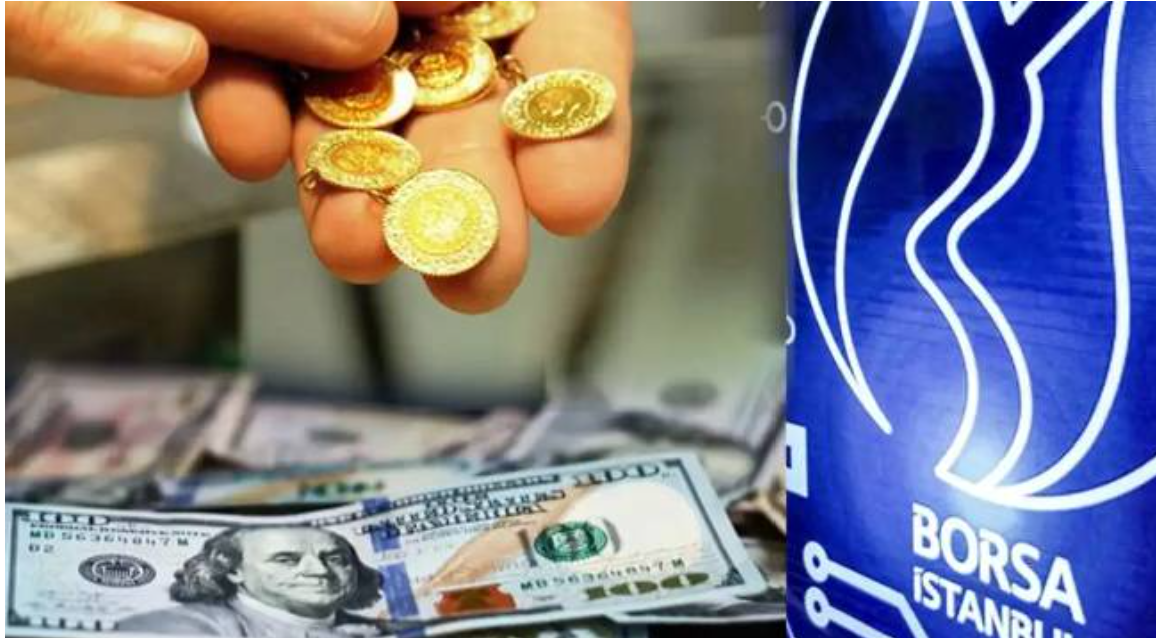 borsa altin
A brief risk-on rally in global markets quickly reversed after U.S. President Donald Trump delivered a speech that increased uncertainty around the Iran war. Oil prices surged again, equities fell, and investors rotated back into safe-haven assets. While Türkiye’s markets showed relative resilience, pressure on reserves and monetary policy expectations remains elevated.
Global markets once again shifted direction under the influence of Trump’s messaging. After two days of optimism driven by expectations of a potential de-escalation in the Iran conflict, the latest remarks from the U.S. president reversed sentiment sharply.
Instead of offering a clear exit strategy, Trump signaled that military operations could continue in the coming weeks, raising fresh concerns about energy supply disruptions and prolonging geopolitical risk.
What Drove the Short-Lived Rally?
Earlier in the week, global markets rallied strongly after reports suggested that Trump was willing to end the conflict even if the Strait of Hormuz remained closed. This narrative fueled hopes of a controlled de-escalation.
Additional support came from Iran’s President Masoud Pezeshkian, who indicated that Tehran would be open to ending the war if credible guarantees were provided.
Markets chose to focus on these constructive signals, despite inconsistencies in Trump’s messaging.
Borsa Istanbul Strategy: Risks abound, but lucrative upside potential
Trump’s Speech Resets Market Expectations
That optimism faded quickly.
In his latest address, Trump claimed that U.S. forces had largely achieved their military objectives but stopped short of outlining a concrete timeline for withdrawal. Instead, he warned that operations could continue for another two to three weeks and that energy infrastructure could become a target if necessary.
This ambiguity was enough to shift investor sentiment back toward caution.
The key takeaway for markets: the conflict is not over, and energy risks remain elevated.
Oil Rebounds Above $105
Oil prices, which had briefly retreated on de-escalation hopes, surged again. Brent crude rose nearly 5% in early trading, climbing back above $105 per barrel.
The move reflects not only fears of prolonged conflict but also ongoing uncertainty around the Strait of Hormuz, a critical artery for global energy flows.
Even in a scenario where hostilities ease, supply disruptions have already caused structural damage. Markets increasingly believe that oil will struggle to fall below $80 in the near term.
Stagflation Concerns Re-Emerge
One of the most important consequences of recent developments is the return of stagflation fears—slowing growth combined with persistent inflation.
Federal Reserve Chair Jerome Powell added to these concerns by acknowledging tension between the Fed’s dual mandate of price stability and full employment. In practical terms, this suggests policymakers may face difficult trade-offs in the months ahead.
For emerging markets, the implications are even more severe. Rising energy, fertilizer, and transportation costs—combined with disrupted supply chains—could intensify inflation while weakening growth prospects.
Turkish Stock Market: Top 10 2026 Stocks with Highest Potential
Equities Reverse Sharply
Equity markets, which had rallied strongly over the previous two sessions, turned lower.
- Nasdaq had gained around 5% in two days
- South Korea’s Kospi had surged as much as 8.5%
But the trend reversed sharply:
- U.S. equity futures fell more than 1%
- European futures dropped over 1.5%
- Asian markets followed suit, with Korea down nearly 4% and Japan’s Nikkei losing around 2%
The rapid reversal highlights how fragile the recent optimism was.
Dollar Strengthens, Gold Pulls Back
As risk appetite weakened, the U.S. dollar regained strength. The EUR/USD pair, which had climbed to 1.16, retreated to around 1.1530.
U.S. Treasury yields also moved higher, reflecting renewed selling pressure in bonds.
Gold, which had rebounded to $4,800 amid improving sentiment, fell back toward $4,650. Silver also declined to around $72.
From a technical perspective:
- Gold needs a sustained move above $4,750 to confirm a stronger uptrend
- Silver must hold above $71.50 to maintain bullish momentum
Türkiye: Resilient but Not Immune
Despite global volatility, Turkish markets remained relatively stable over the past two days.
- BIST 100 gained about 2.5%
- Banking stocks rose roughly 3%
- The two-year government bond yield dropped to around 40.85%
- CDS spreads declined to 285 basis points
- USD/TRY stabilized near 44.40
However, this stability has been supported by active policy measures.
Central Bank Actions and Reserve Pressure
The Central Bank of the Republic of Türkiye (CBRT) has been actively managing market stress.
Net foreign currency reserves (excluding swaps and public FX) have declined sharply—from $82.4 billion to $8.6 billion over the past two months. Since the start of the conflict, the decline has reached approximately $61 billion.
Part of this reflects valuation effects from falling gold prices, but the primary driver is intervention aimed at stabilizing the currency.
The CBRT has resumed FX-for-TL swap operations with banks, providing liquidity while temporarily boosting foreign exchange buffers.
While reserve depletion is a concern, such measures are typically expected during periods of acute stress. The key question is whether reserves can be rebuilt once conditions stabilize.
Rate Hike Risk Increasing
If current pressures persist, a rate hike becomes increasingly likely.
Although the official policy rate remains at 37%, effective funding costs have already moved closer to the upper band of the corridor. This suggests a form of “stealth tightening.”
Should the conflict drag on and pressure on the lira intensify, markets may begin pricing in a move toward 40% in the coming policy meetings.
Domestic Data Signals Weakness
Incoming domestic data also points to a weakening backdrop:
- Manufacturing PMI fell to 47.9 in March (a five-month low)
- Consumer confidence dropped sharply by over 10%
- Istanbul inflation (ITO) rose around 3% month-on-month
Official inflation data is expected to come in near 2.3% for March, but the full impact of the war on prices is likely to materialize in the months ahead.
Conclusion
The brief optimism that lifted markets over the past two days has largely dissipated.
Oil is rising again, equities are under pressure, and safe-haven demand is returning. Stagflation risks are back in focus, while central banks face increasingly complex policy decisions.
For Türkiye, relative stability has been maintained—for now—but at the cost of declining reserves and rising policy risks.
In the days ahead, markets will focus on a few critical variables:
- The duration of the conflict
- The status of the Strait of Hormuz
- The trajectory of energy prices
- Central bank responses
Volatility is likely to remain elevated.
PA Turkey intends to inform Turkey watchers with diverse views and opinions. Articles in our website may not necessarily represent the view of our editorial board or count as endorsement.
Follow our English YouTube channel (REAL TURKEY):
https://www.youtube.com/channel/UCKpFJB4GFiNkhmpVZQ_d9Rg
Twitter: @AtillaEng
Facebook: Real Turkey Channel: https://www.facebook.com/realturkeychannel/
Related articles

CBRT Weekly Data: Net Reserves Rise by $2.6 Billion, Dollarization Inches Higher

ANALYSIS: Borsa Istanbul Extends Losses as Global Tech Selloff, Corporate Raids Weigh on Sentiment
World Bank Revises Up Global and Türkiye Growth Forecasts