Morning Brief: Japan Bond Yields Hit 1999 High as Energy Shock Ripples Across Markets
 bitcoin japon gov bonds
Global markets are grappling with a deepening energy-driven inflation shock linked to the Middle East war, while Japan’s 10-year bond yield has surged to its highest level since 1999. In Türkiye, inflation risks remain elevated and expectations are shifting toward tighter monetary policy.
Food Prices Rising, Fertilizer Emerging as Key Risk
The United Nations Food and Agriculture Organization (FAO) reported that its global food price index rose 2.4% in March to 128.5, driven largely by higher energy costs.
While the increase remains moderate for now, the more critical risk lies in fertilizer prices. Since the start of the war, fertilizer costs have surged by roughly 30%, raising concerns that farmers may scale back planting. This could tighten supply and push food prices higher in the coming months.
Inflation Trends in Türkiye and Northern Cyprus
In Northern Cyprus, monthly inflation came in at 2.18% in March, while annual inflation eased to 37.40% from 40.22%. Transportation led price increases, rising 6.9%, followed by food at 3.2%.
In Türkiye, official data showed:
- Monthly inflation: 1.94%
- Annual inflation: 30.87%
Transportation costs rose 4.5%, while housing and energy increased 1.9%, and food prices climbed 1.8%. Core indicators remained relatively stable, but producer prices signaled ongoing cost pressures.
Overall, the disinflation trend appears fragile, with energy-driven risks still firmly in place.
War Impact Yet to Fully Feed Into Inflation
March inflation data does not yet fully reflect the impact of the ongoing conflict. Rising oil, gas and fertilizer prices, alongside supply chain disruptions and weaker tourism flows, are expected to push inflation higher in the coming months.
As a result, year-end inflation forecasts are being revised upward, with expectations now clustering around 29–30%.
CBRT Reserves and Rate Outlook
Foreign outflows and declining swap positions continue to pressure Türkiye’s financial system. Net foreign exchange reserves have dropped sharply from around $70 billion before the war to approximately $9 billion in recent days.
Despite criticism over reserve depletion, policymakers appear focused on stabilizing markets. If the conflict persists, the Central Bank of the Republic of Türkiye (CBRT) is widely expected to tighten policy further.
- Policy rate: 37%
- Effective funding cost: ~40%
A move toward a 40% policy rate at the next meeting would not be surprising under current conditions.
Strong U.S. Data Delays Rate Cuts
U.S. nonfarm payrolls rose by 178,000 in March, well above expectations, while unemployment declined to 4.3%. Wage growth moderated, complicating the inflation outlook.
The data suggests:
- The U.S. economy remains resilient
- Inflation risks persist
As a result, expectations for Federal Reserve rate cuts have been pushed further out.
Oil Above $110 as Supply Risks Intensify
Rising tensions around the Strait of Hormuz have pushed oil prices above $110 per barrel. Supply disruptions, estimated at 12–15 million barrels per day, represent a historically significant shock.
U.S. equity futures are under pressure, while Asian markets show mixed performance:
- Japan and South Korea outperform
- Broader risk appetite remains fragile
Jet fuel prices have surged nearly 95% since the war began, highlighting the scale of cost pressures.
Japan Yield Shock Signals Inflation Concerns
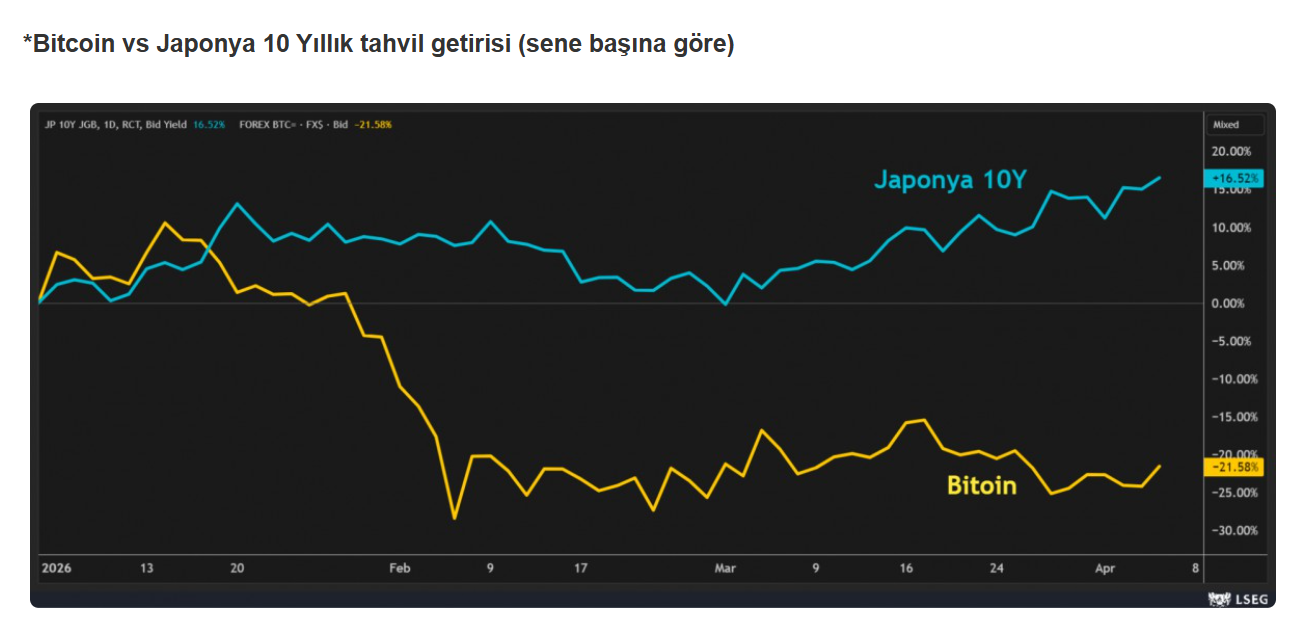
Japan’s 10-year government bond yield has climbed to 2.41%, the highest since 1999. This reflects rising inflation expectations and growing pressure on the Bank of Japan (BoJ) to shift toward a more hawkish stance.
Higher rates could trigger an unwinding of carry trades, leading to yen appreciation and renewed selling pressure on global risk assets.
Low Liquidity, Fragile Market Sentiment
With global markets partially closed for Easter, trading volumes remain thin and sentiment cautious.
- Gold: $4,630
- Silver: $72
- Bitcoin: near $70,000
For gold to resume its upward trend, a sustained move above $4,750 will be needed.
By Emre Degirmencioglu, Kıbrıs İktisat Bankası
PA Turkey intends to inform Turkey watchers with diverse views and opinions. Articles in our website may not necessarily represent the view of our editorial board or count as endorsement.
Follow our English YouTube channel (REAL TURKEY):
https://www.youtube.com/channel/UCKpFJB4GFiNkhmpVZQ_d9Rg
Twitter: @AtillaEng
Facebook: Real Turkey Channel: https://www.facebook.com/realturkeychannel/_**
Related articles
Atilla Yesilada market view: Run, hide, take cover
Morning Report: Gold and Silver Lose Momentum as Rate-Cut Expectations Fade Amid Energy Shock

Experts Warn Turkey Faces Economic, Security, and Migration Risks as Iran Conflict Deepens