Low Education Spending Undermines Long-Term Development in Türkiye
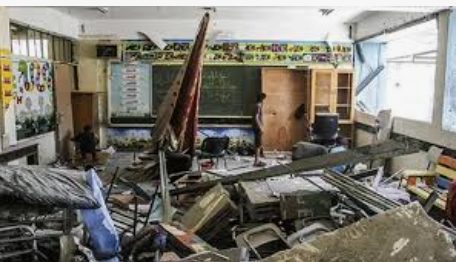 egitim coktu
Summary:
Education spending in Türkiye has declined significantly as a share of GDP since peaking in 2016. Data compiled from TÜİK, OECD and Eurostat show that although there has been a partial recovery since 2022, spending levels remain below earlier highs. Public education expenditure is below the European average, and Türkiye ranks 34th in per-student spending at the primary level, raising concerns about long-term competitiveness and human capital formation.
President Recep Tayyip Erdoğan frequently highlights the achievements of Türkiye’s defense industry. New weapons systems are being added to the inventory of the Turkish Armed Forces on a near-daily basis, while the sector leads a surge in high-technology exports.
In a recent speech, Erdoğan praised the country’s youth:
“Gençler geleceğe dair umutlarımı yeşertiyor. Onlarla yürümek benim için ayrı bir gurur. Cemre, ayağı toprağa basanların, bir ağaç gölgesinde serinleyenlerin, avuçlarıyla gözelerden su içenlerin, yağmurun sesine kulak verenlerin iyilik hareketidir.”
Yet the allocation of resources to education remains a subject of debate. After a strong increase during the first decade of Erdoğan’s leadership, the share of national income devoted to education has weakened in recent years. Analysts warn that insufficient investment in skills development risks producing a generation of graduates without adequate market-ready competencies.
Education Spending Peaks in 2016, Then Declines
According to data from the Türkiye İstatistik Kurumu (TÜİK), the share of education spending in GDP followed an upward trajectory in the early 2010s before reversing course.
Education expenditure as a percentage of GDP:
-
2011: 5.2%
-
2012: 5.6%
-
2013: 5.5%
-
2014: 5.7%
-
2015: 5.5%
-
2016: 5.9% (peak)
The year 2016 marked the highest recorded level at 5.9%. After that, the ratio declined steadily.
-
2018–2019: 5.7%
-
2020: 5.2%
-
2021: 4.7%
-
2022: 3.8% (lowest point in recent years)
Although the ratio rose to 4.2% in 2023 and 4.9% in 2024, it remains below the 2016 peak and earlier averages.
Public Education Spending Below European Average
When focusing solely on general government expenditure, Türkiye’s position appears weaker.
Public education spending amounts to 3.5% of GDP, placing Türkiye 31st in Europe. This compares with a European average of 4.7%.
According to 2023 data from Eurostat, Sweden ranks first among 33 European countries, allocating 7.2% of GDP to education.
The difference between total education spending (including private sector and household contributions) and general government spending is also notable. While total spending reached 4.9% of GDP in 2024, the public component alone stands at 3.5%, indicating a significant role for private and household financing.
Türkiye Ranks 34th in Per-Student Spending
Per-student spending data from the Organisation for Economic Co-operation and Development (OECD) further highlight the gap.
In 2022, total education expenditure per primary school student in Türkiye, adjusted for purchasing power parity, was calculated at $3,386. This places Türkiye 34th in global rankings.
For comparison:
-
Luxembourg: $25,482
-
Switzerland: $22,041
-
Norway: $19,752
-
Costa Rica: $5,272
-
Mexico: $2,877
The figures illustrate that Türkiye’s investment per student remains substantially below that of advanced economies.
Human Capital and Long-Term Growth Risks
The decline in education spending raises broader structural concerns.
Economists argue that:
-
Technical and vocational skill development remains insufficient.
-
Graduate employability is under pressure.
-
The transition to high value-added production requires stronger human capital foundations.
While defense industry achievements and export growth in high-tech sectors are notable, sustainable economic development depends on broad-based investment in education quality and accessibility.
Türkiye’s demographic advantage could translate into economic strength only if supported by consistent, well-funded education policies.
Conclusion
Education spending in Türkiye, after peaking in 2016, has yet to regain its earlier momentum as a share of GDP. Public expenditure remains below the European average, and per-student investment lags behind many OECD peers.
The data suggest that without renewed emphasis on education financing and structural reform, long-term competitiveness and inclusive growth may face constraints.
Related articles

Turkey’s Seasonally Adjusted Inflation Falls Below Expectations, Opening Door for Possible Rate Cuts

Seasonally Adjusted Inflation Picks Up Speed in Turkey

Economist Mahfi Eğilmez: “Never Let Inflation Rise Again Once You’ve Lowered It”