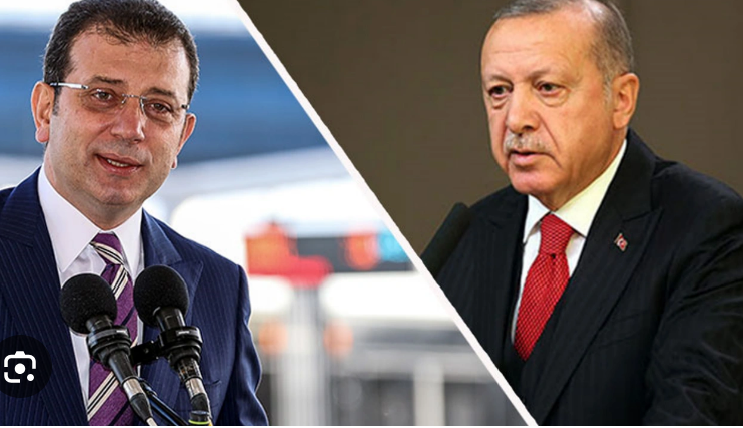
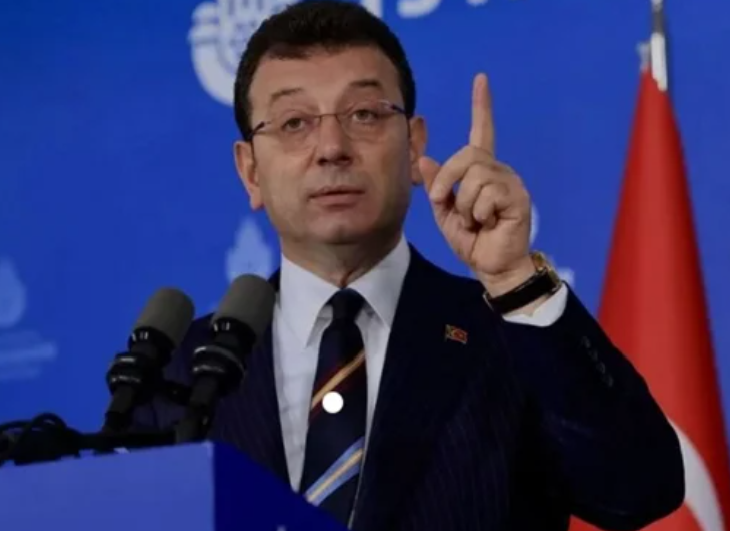
Turkey’s most formidable opposition figure, Ekrem İmamoğlu, says his imprisonment will not stop him from defeating President Recep Tayyip Erdoğan — even if that fight must be waged from a jail cell.
Writing from the high-security Silivri prison on the outskirts of Istanbul, the former Istanbul mayor struck a resolute tone in written responses to questions from POLITICO, insisting he remains the legitimate presidential challenger capable of ending Erdoğan’s quarter-century dominance of Turkish politics.
“What we are living through today is not a genuine legal process,” İmamoğlu wrote. “It is a strategy of political siege.”
Arrest That Shook Turkish Politics
İmamoğlu’s detention last March triggered mass protests across Türkiye and drew sharp criticism from international observers. Opposition parties view the case as a politically motivated effort to neutralize the most popular secular rival to Erdoğan’s Islamist-rooted Justice and Development Party (AK Party).
Now 55, İmamoğlu faces an extraordinary cumulative prison demand exceeding 2,300 years on charges ranging from corruption and extortion to money laundering and espionage — accusations he and his supporters categorically reject.
Replying via his lawyers and political advisers, İmamoğlu said the objective was clear: “President Erdoğan’s aim is not only to shape the next election. It is to erase my candidacy now and in the future.”
A Political Tide Turning Against the Incumbent
The crackdown on İmamoğlu and dozens of other opposition mayors followed signs of a significant political shift. In the 2024 local elections, secular parties dealt Islamists an unexpectedly heavy defeat, winning key municipalities — including Istanbul — by wide margins.
Just as İmamoğlu was poised to be named the Republican People’s Party (CHP) presidential nominee, prosecutors launched a sweeping case against him. Despite his incarceration, more than 15 million citizens participated in a symbolic CHP primary to endorse his candidacy — an unprecedented show of public support.
“The scale of the case exposes its weakness,” İmamoğlu said, pointing to more than 1,300 municipal inspections, a 3,900-page indictment largely based on contested testimony, and a trial timetable stretching over 4,600 days.
Campaigning from Behind Bars
With the next presidential election officially scheduled for 2028, the jailed mayor continues to loom large over Turkish politics. He has already defeated Erdoğan-aligned candidates three times in Istanbul — including in conservative districts long considered AK Party strongholds.
Despite the limits imposed by detention — including the blocking of his main X (formerly Twitter) account inside Türkiye — İmamoğlu continues to campaign digitally through social media platforms with the help of his team.
“What defines a campaign is its ideas, its values, and the shared will of citizens,” he wrote. “Everyone knows my arrest is unjust. Even many AK Party voters see it as a grave blow to justice.”
He highlighted that only about 2 million of the 15.5 million votes cast in the CHP primary came from party members. “The rest came from every segment of society,” he said, framing the movement as one transcending partisan lines.
Legal Barriers and Institutional Power
Still, the fate of İmamoğlu’s candidacy rests with a judiciary widely criticized for lacking independence. In February, prosecutors opened a probe alleging his university diploma was forged. One day before his arrest, Istanbul University annulled the degree — a potentially decisive move, as Turkey’s constitution requires presidential candidates to hold a university diploma.
Another court hearing is expected later this month.
According to Soner Çağaptay of the Washington Institute, Erdoğan is unlikely to allow İmamoğlu to contest a genuinely free and fair election. “For Erdoğan, this would be a mortal political threat,” he said, arguing that state institutions will be used to block the challenger’s path.
Foreign Policy Critique and Trump Factor
From prison, İmamoğlu also launched a broad critique of Erdoğan’s foreign policy, particularly Ankara’s relationship with U.S. President Donald Trump.
“Diplomacy has shifted from institutions to leader-to-leader bargaining,” he wrote, questioning what Türkiye has gained from closer ties with Washington. “We are still excluded from the F-35 program, sanctions remain, and regional tensions continue to rise.”
He accused the government of using security narratives to justify domestic repression, warning that normalizing curtailed freedoms “for stability” risks hollowing out democracy.
A European Alternative
If elected, İmamoğlu said restoring ties with Europe would be a priority. He reaffirmed the CHP’s commitment to full EU membership and pledged to modernize the Customs Union, expand it to services and digital trade, and align Türkiye more closely with European democratic standards.
Life Inside Silivri
Despite the uncertainty, İmamoğlu says he maintains a strict daily routine in prison, reading, writing and following developments as closely as possible. What weighs most heavily, he admits, is separation from his family and the ordinary rhythms of city life.
“I miss walking freely in the streets, direct contact with people, and unplanned moments,” he wrote. “But what truly determines everything is not the walls around me.”




 ekrem imamoglu