



Iraq Shifts Oil Exports to Türkiye as Middle East War Redraws Energy Routes
 kerkuk2
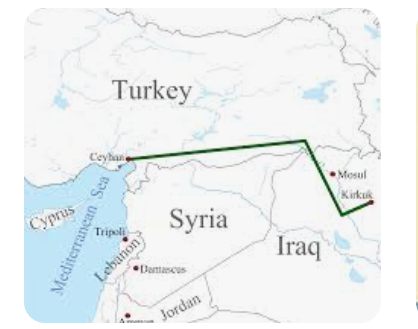
The escalating Middle East war is reshaping global energy logistics, pushing Iraq to reroute oil exports through Türkiye to bypass risks in the Strait of Hormuz. The shift highlights Türkiye’s rising role as a strategic energy corridor and geopolitical actor in an increasingly fragmented region.
Iraq Turns to Türkiye Amid Hormuz Risks
As tensions around the Strait of Hormuz intensify, Iraq has moved to secure alternative export routes for its crude oil.
Baghdad has:
- Restarted a previously idle pipeline
- Redirected oil flows toward Türkiye’s Ceyhan port
Iraqi Oil Minister Hayyan Abdul-Ghani stated that exports via Türkiye could reach:
👉 Up to 1 million barrels per day
This shift reflects growing urgency among regional producers to diversify supply routes as maritime chokepoints become increasingly vulnerable.
Türkiye Emerges as a Strategic Energy Corridor
Analysts argue that Türkiye’s role is evolving beyond transit into a central node in global energy logistics.
According to geopolitical consultant Norman Ricklefs:
- Türkiye already serves as a key corridor for Caspian and Russian gas
- Disruptions in the Persian Gulf and Red Sea increase its strategic value
👉 Türkiye is becoming a critical alternative route linking Europe with global energy markets
“Development Road” Project Gains Momentum
The war is also accelerating Iraq’s ambitious infrastructure initiative:
The Iraq Development Road
This multi-billion-dollar project aims to:
- Transform Iraq into a transit hub between Asia and Europe
- Deepen economic integration with Türkiye
Experts suggest the ongoing conflict is:
👉 Acting as a catalyst to fast-track the project
“Less U.S., More Türkiye”: Israeli Analysis Points to Shifting Middle East Power Balance
Structural Constraints Remain
Despite growing interest in overland routes, several challenges persist:
- Political instability in Iraq
- High infrastructure costs
- Continued cost advantage of maritime transport via Hormuz
In the near term:
👉 Türkiye serves as a complementary route
👉 In the medium term, it may become a strategic alternative
Türkiye’s Regional Influence Expands
Beyond energy, Türkiye is strengthening its geopolitical footprint:
- Expanded military presence in Qatar
- Modernization of naval capabilities
- Deepening ties with Saudi Arabia and Egypt
According to regional experts:
👉 Türkiye is positioning itself as a counterbalancing force to Iran
Mehmet Ögütcü: If Hormuz Is Asia’s Artery, Malacca Is Its Chokepoint
A New Regional Axis Taking Shape
Emerging cooperation between Türkiye, Saudi Arabia, Egypt, and Pakistan reflects:
- A shared interest in regional stability
- A coordinated stance toward ongoing conflicts
This alignment is increasingly viewed as:
👉 An alternative geopolitical axis in the Middle East
Rising Tensions with Israel
However, Türkiye’s growing role is also contributing to new fault lines:
- Israel has identified Türkiye as a strategic competitor
- War dynamics are intensifying political and rhetorical tensions
Analysts warn:
👉 Türkiye’s expanding influence could be perceived as a direct challenge by Israel
Conclusion: War Accelerates Türkiye’s Strategic Rise
The Middle East conflict is not only disrupting energy flows but also reshaping geopolitical hierarchies.
Türkiye stands out as:
✔ A key energy corridor
✔ A rising diplomatic actor
✔ A strategic bridge between regions
Yet this ascent comes with:
👉 Increased geopolitical friction
👉 Greater exposure to regional instability
The coming months will determine whether Türkiye can consolidate this role into lasting strategic leverage.
rfi, Dorian Jones
PA Turkey intends to inform Turkey watchers with diverse views and opinions. Articles in our website may not necessarily represent the view of our editorial board or count as endorsement.
Follow our English YouTube channel (REAL TURKEY):
https://www.youtube.com/channel/UCKpFJB4GFiNkhmpVZQ_d9Rg
Twitter: @AtillaEng
Facebook: Real Turkey Channel: https://www.facebook.com/realturkeychannel/***