Iran’s Foreign Minister Araghchi: “We Have No Reason to Attack Turkey”
 aragchi iran
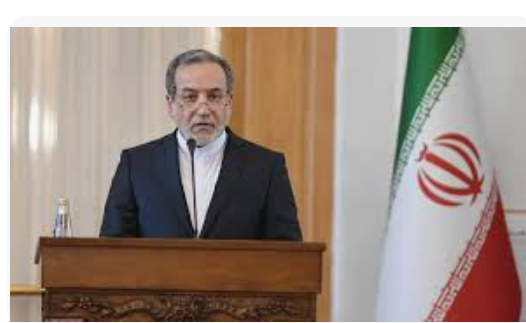
In a high-stakes interview with US media, Iranian Foreign Minister Abbas Araghchi sought to de-escalate tensions with regional neighbors while maintaining a defiant stance against the United States and Israel. Addressing recent reports from NATO alleging that an Iranian missile had entered Turkish airspace, Araghchi was categorical: “Turkey is a good neighbor. We have absolutely no reason to attack Turkey, nor is there any reason to send drones into Azerbaijan.”
As the conflict enters its second week, Araghchi’s comments come at a critical juncture for Tehran, which is currently navigating both a multi-front war and a domestic transition of power following the passing of Supreme Leader Ali Khamenei.
Governance Amidst War: The Transition of Power
Addressing the internal state of the Islamic Republic, Araghchi reassured the international community that the “system continues to function” despite the loss of their leader. Under the Iranian Constitution, a Temporary Leadership Council has assumed responsibility while the Assembly of Experts prepares to select a successor.
“The President, the cabinet, and all officials are at their posts,” Araghchi stated. However, he admitted that the constitutional process of electing a new leader might take longer than usual due to the “active state of war.”
“A War Crime”: The Attack on IRIS Dena
One of the most contentious points of the interview involved the US attack on the Iranian frigate IRIS Dena in the Indian Ocean. Araghchi labeled the incident a “war crime,” claiming the vessel was an unarmed training ship participating in a peaceful naval parade hosted by the Indian Navy.
“Attacking an unarmed vessel filled with cadets is a dangerous precedent in international maritime law,” Araghchi argued. He claimed that the US had failed to provide a valid justification for the strike, which resulted in significant casualties among Iranian sailors.
Military Stalemate and the Failure of a “Quick Victory”
Reflecting on the first six days of the conflict, the Foreign Minister asserted that Washington’s “Plan A”—a swift government collapse and total military victory—had failed. He highlighted that despite the intensity of US and Israeli strikes, Iran’s command structure remains intact and its missile capabilities functional.
“Our missiles are still active and hitting their targets with precision,” Araghchi said, claiming successful strikes against Israeli positions and US bases. “The fact that they could not prevent our missile launches is our victory; it proves our resilience.”
Respect for Sovereignty vs. Targeting US Bases
A significant portion of the interview focused on Iran’s relations with its Muslim neighbors. Araghchi revealed he is in constant contact with regional foreign ministers to reassure them that they are not targets. However, he issued a stern caveat regarding the presence of American assets on their soil.
“Our war is with the United States. Our targets are exclusively US bases and facilities,” Araghchi explained. “Unfortunately, some of these are located on the territory of our neighbors. While we have no issue with these countries, we will continue to strike US facilities wherever they are found.”
Regarding the missile incident involving Turkey, Araghchi noted that an investigation is underway, suggesting the projectile could have originated elsewhere or suffered a technical malfunction.
No Negotiations, No Ceasefire
Despite the mounting pressure, Tehran appears unwilling to return to the diplomatic table. Araghchi stated that Iran would not request a ceasefire, citing previous failed negotiations with the US as proof that Washington cannot be trusted.
“We see no reason to negotiate with the US. Every time we have talked in the past, they attacked us while discussions were still ongoing,” he said. He drew a parallel to the 2024 conflict, suggesting that it was Israel that eventually begged for an unconditional ceasefire after 12 days of Iranian resistance. “The same process will repeat itself,” he predicted.
Nuclear Safety and the Threat of Ground Invasion
Addressing global fears regarding Iran’s nuclear program, Araghchi reiterated that the country’s security doctrine, supported by a religious fatwa, prohibits the development of nuclear weapons. He maintained that Iran remains committed to the NPT (Non-Proliferation Treaty) and that its nuclear stockpiles are “in secure locations and under supervision.”
Finally, Araghchi issued a chilling warning regarding a potential US ground operation. He claimed that Iran has prepared for this scenario more extensively than any previous conflict, significantly improving the quality and reach of its weaponry. “If US ground troops enter, it will be a catastrophe for them. We are ready for every scenario.”