



Iran’s Azeris Fear Ethnic Conflict Could Draw Türkiye and Azerbaijan Into the War
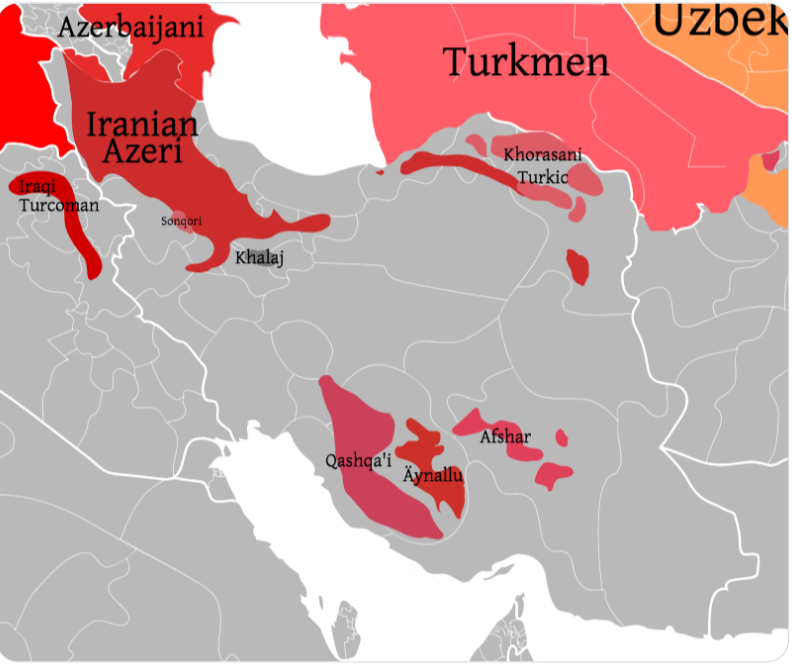 iran azeri harita
The war triggered by Israeli and U.S. attacks on Iran is raising fears that ethnic tensions inside the country could escalate into a broader regional conflict. Iran’s large Azeri population, concentrated in the northwest near Türkiye and Azerbaijan, worries that a Kurdish-Azeri confrontation could pull both Ankara and Baku into the war. Analysts warn that such a scenario could destabilize not only Iran but also the fragile geopolitical balance across the South Caucasus and the wider Middle East.
Rising Fears of Ethnic Conflict Inside Iran
As the war in Iran intensifies, concerns are growing that the conflict could ignite ethnic tensions within the country.
Ehsan Hosseinzadeh, an Iranian refugee living in France, says that only months ago he believed foreign military intervention might help Iranians overthrow the Islamic Republic. But one week after the war began, he fears the consequences could spiral into something far worse.
The 38-year-old, who was born in the northwestern Iranian city of Urmia, worries that the conflict could ignite ethnic divisions and draw neighboring powers into the crisis.
Urmia sits in a strategically sensitive region bordering Türkiye, Azerbaijan, Armenia and Iraq, an area where multiple ethnic and religious communities have lived side by side for centuries.
For Hosseinzadeh, the danger is clear.
“If an ethnic conflict erupts between Azeris and Kurds in that region, both Baku and Ankara could feel compelled to intervene,” he said.
Iran War Raises New Concern for Ankara: PKK Enters the Equation
Azeris: Iran’s Largest Minority
Ethnic Azeris constitute the largest minority group in Iran, accounting for roughly 24% of the country’s 93 million population.
Most Azeris live in Iran’s northwestern provinces, often referred to collectively as Iranian Azerbaijan.
The region also contains a significant Kurdish population, along with Armenian and other minority communities. Historically, shifting imperial and national borders have left the region with overlapping identities and grievances.
This complex ethnic landscape makes northwestern Iran particularly vulnerable during periods of political instability or war.
Drone Incident Raises Regional Alarm
Tensions escalated further this week after Azerbaijan accused Iran of launching a drone strike that hit an airport facility in Nakhchivan, a landlocked Azerbaijani exclave.
The attack injured four civilians and triggered a sharp response from Baku, which vowed retaliation.
Nakhchivan is strategically located, bordering Iran, Türkiye and Armenia, making the incident particularly alarming.
The strike raised fears that the war could spread beyond Iran’s borders and trigger a broader regional confrontation.
Türkiye Seen as Highly Exposed
Analysts say Türkiye could become deeply entangled if the conflict spills over into ethnic confrontation.
Türkiye shares a nearly 500-kilometer border with Iran, one of the oldest continuously managed borders in the Middle East, dating back to 1639.
Several factors increase Türkiye’s vulnerability in a regional escalation:
-
ethnic communities living on both sides of the border
-
cross-border trade and infrastructure links
-
energy pipelines and economic ties
The tension was underscored this week when a ballistic missile launched from Iran toward Turkish airspace was intercepted by NATO air defenses.
President Recep Tayyip Erdoğan warned shortly afterward that the Iran war had pushed regional tensions to a “terrifying level.”
Kurdish Factor Raises Ankara’s Concerns
A major source of anxiety for Türkiye is the potential role of Kurdish armed groups.
Reports that the United States has opened contacts with Iranian Kurdish organizations have triggered alarm in Ankara.
Geopolitical analyst Güney Yıldız says the situation poses a serious strategic dilemma for Türkiye.
The country only recently ended its four-decade conflict with the Kurdistan Workers’ Party (PKK) after the group announced its disbandment and entry into a peace process last year.
However, in Iran, the Kurdish group PJAK (Kurdistan Free Life Party) — linked to the PKK network — remains active.
“A CIA-backed Kurdish uprising emerging on Türkiye’s eastern border would be Ankara’s nightmare scenario,” Yıldız said.
Diplomatic Efforts Failed to Prevent War
Before the conflict erupted, Türkiye reportedly launched intensive diplomatic efforts to prevent a war.
Foreign Minister Hakan Fidan held consultations with the United States, Iran, Oman and several Gulf countries in an attempt to highlight the potential consequences of a regional conflict.
Despite these efforts, the war began with Israeli and U.S. strikes against Iranian targets.
Azerbaijan–Türkiye Alliance Adds Another Layer
The crisis also intersects with the close strategic partnership between Türkiye and Azerbaijan.
The two countries share strong linguistic, cultural and political ties and have deepened their cooperation in recent years.
During the 2020 Nagorno-Karabakh war, Turkish drones and military advisers played a critical role in helping Azerbaijan defeat Armenian forces.
Iran traditionally maintained ties with Armenia to balance the influence of the Azerbaijani-Turkish alliance in the South Caucasus.
However, Azerbaijan’s victory in 2020 weakened Tehran’s diplomatic leverage in the region.
Energy and Transit Corridors at Risk
Northwestern Iran is not only politically sensitive but also economically strategic.
Türkiye receives more than 15% of its natural gas imports from Iran, delivered through the Tabriz–Ankara pipeline.
A prolonged conflict could disrupt these energy flows and threaten critical trade and transport corridors connecting the Middle East and the Caucasus.
The war therefore risks destabilizing a complex network of economic and geopolitical relationships that underpin regional stability.
Ethnic Fault Lines Could Deepen
Experts warn that if Iran’s central authority weakens significantly, the region could become a battleground for competing ethnic and geopolitical interests.
Iran’s Azeris have historically been well integrated into the country’s political and economic system.
Even Supreme Leader Ayatollah Ali Khamenei is of Azeri descent.
Kurdish communities, by contrast, have faced greater political repression and maintain several armed organizations operating from bases in neighboring Iraq.
If central authority collapses or weakens dramatically, tensions between these groups could escalate rapidly.
A Difficult Dilemma for Iranian Opposition
For many Iranian democracy activists, the current situation presents a painful dilemma.
While many oppose the Islamic Republic and hope for political change, they fear that war could lead to ethnic fragmentation and instability.
Hosseinzadeh says he still believes Iran needs a democratic transformation.
But the war has made him deeply anxious.
“The regime must go,” he said. “But we also have to be careful. The danger of ethnic conflict and foreign intervention is real.”
His hope, he says, remains a federal democratic system that guarantees equal rights for all ethnic communities in Iran.
Whether the current conflict brings Iran closer to that vision — or further away from it — remains uncertain.