Iranian Dissident Source Says Trump Determined to Strike Iran, Timing Still Under Debate
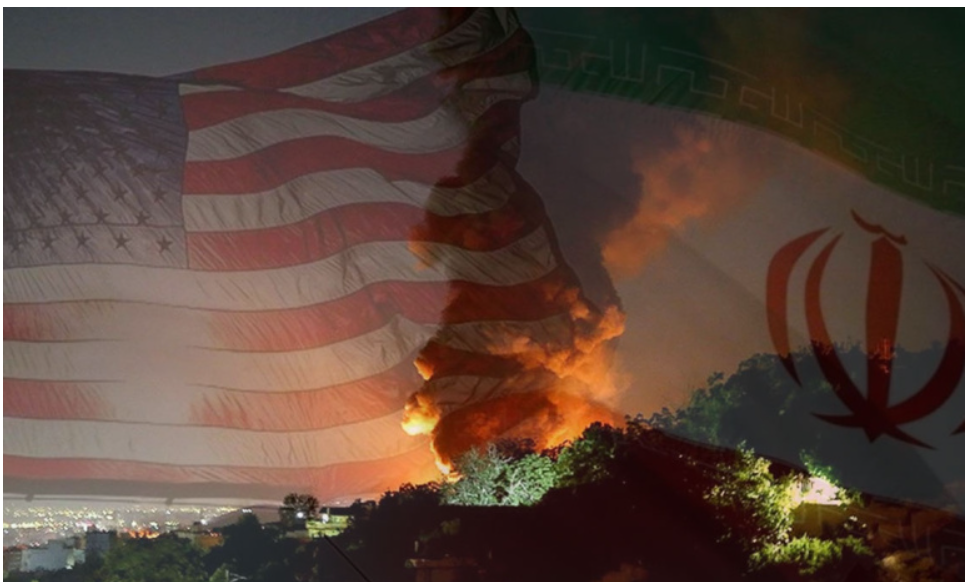 iran saldiri
Summary:
Decision-making circles in Washington and Tel Aviv have effectively moved beyond diplomacy with Iran, with military action now widely seen as inevitable, according to a Western source familiar with U.S.-Israeli coordination talks. The only remaining question, the source said, is when the political and operational window will open — a decision that could be made within days or over the coming weeks.
Diplomacy Seen as Exhausted
A Western source speaking to Iran International said senior officials in the United States and Israel no longer view negotiations with Iran as a viable path forward. Instead, discussions have shifted decisively toward military options, with diplomacy largely regarded as exhausted.
“At this stage, the debate is no longer whether an attack will happen, but when,” the source said, adding that unlike earlier periods, the logic driving current discussions is not based on reaching a new agreement with Tehran.
The source said planners are focused on identifying a suitable operational and political moment to act — one that could materialize quickly or take shape over several weeks.
Trump Signals Readiness Despite Mixed Messaging
U.S. President Donald Trump said on Thursday that he planned to speak with Iran, even as he ordered another U.S. warship deployed to the Middle East. Pentagon officials reiterated that U.S. forces were prepared to carry out any decision made by the president.
Iran, however, has said it will not engage in negotiations while Trump continues to issue military threats. Tehran has repeatedly warned that talks under pressure would be meaningless.
According to the source, recent assessments in Washington and Tel Aviv frame the objective not as limited deterrence, but as delivering a decisive blow intended to severely weaken — and potentially collapse — Iran’s governing structure.
“This would not be comparable to anything Iran has experienced before,” the source said. “It would be unprecedented.”
A ‘Once-in-a-Lifetime’ Strategic Window
Joint U.S.-Israeli discussions have concluded that current conditions differ fundamentally from previous confrontations with Iran, the source said. Decision-makers reportedly believe the present moment represents a “once-in-a-lifetime opportunity,” prompting a higher willingness to accept risk.
During last year’s 12-day conflict in June, Washington and Tel Aviv avoided escalation beyond certain thresholds. The prevailing view now, the source said, is that such restraint may no longer be appropriate.
In June, Israel launched a surprise military operation against Iran, followed by U.S. airstrikes on June 22 targeting Iran’s nuclear facilities in Isfahan, Natanz and Fordow. Those attacks came after Iran failed to reach an agreement within a 60-day deadline set by Trump.
On Friday, Trump confirmed that he had directly communicated a deadline to Iran but declined to provide further details.
Israel on Full Alert, Trigger Scenarios Considered
The source said Israel’s potential role could significantly expand the scope of any forthcoming operation. If Israel becomes directly involved — a scenario that is already being planned for — the scale of the campaign would dwarf last year’s conflict.
One scenario under discussion involves waiting for a triggering event, such as an attempted Iranian missile launch toward Israel. Such an incident could serve as justification for a far broader and more destructive military response.
“Israel is on full alert,” the source said. “The decision has been made. This will happen. The only question is when.”
Is Iran’s Supreme Leader the Ultimate Target?
Separate analysis published by The Guardian suggests that U.S. and Israeli planners may be considering an even more dramatic escalation: targeting Iran’s supreme leader, Ayatollah Ali Khamenei, in a capture-or-kill operation.
Some analysts argue that targeting other Iranian military facilities would be unlikely to produce the strategic collapse sought by Washington. Focusing on Khamenei, however, would represent an extraordinary escalation.
A Western analyst cited by The Guardian said a capture operation would require “exquisite intelligence” from inside Iran — similar to the months-long CIA effort that enabled the seizure of Venezuela’s former president Nicolás Maduro — and questioned whether such intelligence exists in Iran’s case, even with potential Israeli assistance.
While Israel demonstrated its capability to assassinate senior Iranian officials during last June’s conflict, Israeli officials later acknowledged that Khamenei’s stringent security measures kept him beyond reach.
Assassination Would Mark Historic Escalation
Analysts suggest that an assassination attempt may be viewed as less risky than a capture mission, particularly if carried out using standoff weapons. However, such a move would mark an unprecedented act: a U.S. attempt to kill the leader of a country with which it is not formally at war and from which it faces no immediate threat.
The risks of unintended consequences remain high. Although Khamenei has reportedly shortlisted potential successors, his removal could trigger an internal power struggle that Washington would be unable to control.
Iran’s Likely Military Response
Iranian officials have warned that any attack on Khamenei would constitute a declaration of war. President Masoud Pezeshkian said on Sunday that such an act would prompt an immediate and forceful response.
Iran’s most potent defensive capability lies in its offensive arsenal, particularly its estimated stockpile of around 2,000 high-speed ballistic missiles stored in underground “missile cities.”
Potential Iranian counterstrikes could target U.S. naval assets, including aircraft carriers operating in the Indian Ocean, or American bases in the Gulf, such as al-Udeid airbase in Qatar, which hosts U.S. Central Command.
While U.S. and allied missile defenses remain robust, last year’s conflict demonstrated that approximately 14% of Iranian ballistic missiles were able to penetrate Israeli and U.S. air defense systems.
Risk of Regional and Global Escalation
A broader conflict would risk dragging Gulf states and their allies into the confrontation. Britain has already reinforced its presence at al-Udeid airbase, deploying additional Royal Air Force assets to help deter potential Iranian attacks.
Another option for Tehran could be to mine the Strait of Hormuz, disrupting global energy shipments. However, analysts note that such a move would depend on submarine operations that the U.S. Navy is closely monitoring.
No Easy ‘Knockout’ Scenario
Despite the growing momentum toward confrontation, analysts caution that neither side has a clear path to a rapid or decisive victory. Iran’s military options may be constrained, but so too are the prospects for Washington and its allies to achieve an immediate collapse of the Iranian regime.
As military preparations accelerate and diplomatic channels narrow, the risk of a major regional conflict appears to be rising sharply — with potentially global consequences.
Sources: Iran International, The Guardian
PA Turkey intends to inform Turkey watchers with diverse views and opinions. Articles on our website may not necessarily represent the view of our editorial board or count as endorsement.
Follow our English YouTube channel (REAL TURKEY):
https://www.youtube.com/channel/UCKpFJB4GFiNkhmpVZQ_d9Rg
Twitter: @AtillaEng
Facebook: Real Turkey Channel: https://www.facebook.com/realturkeychannel/***
Related articles

Turkey’s Gaza Brigade Plan Risks Squeezing Israel on Two Fronts — JNS

Hamas Signals Willingness to Disarm as Trump Invites Erdoğan to Founding Role in Gaza Peace Council
Erdoğan, Qatari Emir Discuss Israel-Iran Tensions and Gaza Crisis