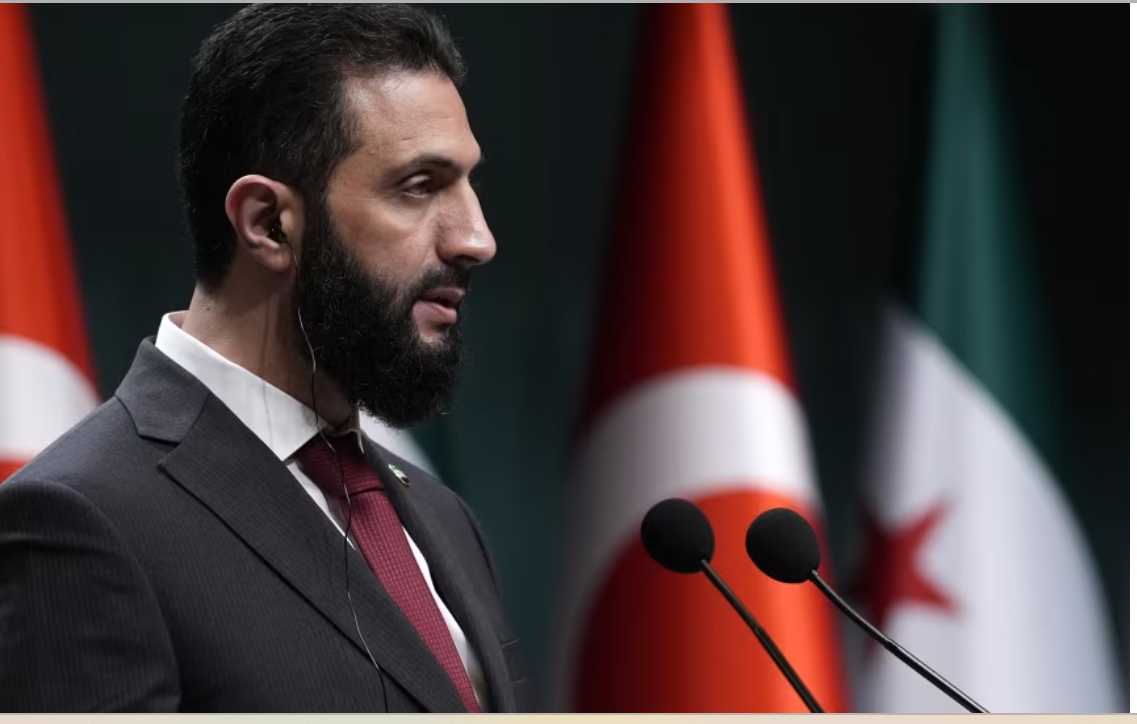
Iran War Raises New Concern for Ankara: PKK Enters the Equation
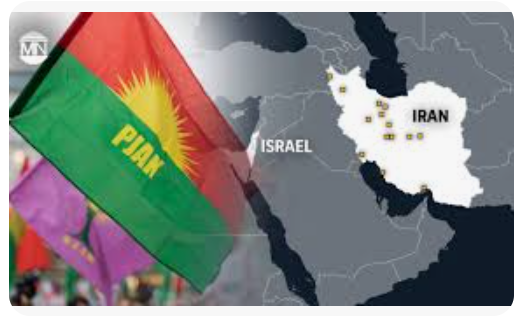 pjak
pjak
Commentary by Atilla Yesilada
As the Iran war escalates, Ankara faces a growing set of security concerns beyond rising energy prices. Turkish analysts warn that attempts by the United States and Israel to mobilize Kurdish armed groups against Tehran could destabilize the region and potentially revive the PKK as a geopolitical actor, creating new risks for Türkiye’s national security.
A New Strategic Risk Emerging from the Iran War
The Iran war is already inflicting heavy damage on Türkiye’s economy through rapidly rising oil and natural gas prices. However, the political dimension of the conflict could soon evolve into a development that deeply unsettles Ankara.
Although Tehran denies it, it is almost certain that Iran fired missiles toward Türkiye. The aim of the attack was not to damage the Incirlik base but to signal that Ankara should refrain from collecting intelligence for the United States. Iran also struck Azerbaijan, sending a clear message to President Ilham Aliyev not to allow Iranian Azeris to rise up.
Iran now appears to be striking neighboring countries with little restraint. Further attacks targeting the Incirlik base or the Kürecik radar installation cannot be ruled out. Even more alarming is the possibility that Iranian operatives could carry out sabotage operations against American or Jewish targets inside Türkiye.
Over the past two days, however, a new threat has begun to emerge from the Iran war. Despite White House denials, there are growing indications that PKK-linked elements are being mobilized toward Iran. The apparent goal would be to trigger unrest in Iran’s Kurdish provinces and force Iranian military forces to divert attention away from the main conflict.
Iraqi Kurdish authorities appear reluctant to participate in such a strategy. However, the PKK itself may seek to exploit the situation, moving fighters into Iran rather than dissolving its armed structure.
If PKK-linked forces and Iranian Kurdish separatist militias succeed in carving out territory free from regime control, a new center of militancy could emerge. In that scenario, the PKK might attempt to gain international legitimacy—possibly seeking political leverage within Türkiye by portraying itself as a useful partner against Iran.
This article attempts to analyze what is currently unfolding in Iran’s Kurdish regions.
Washington’s Search for “Boots on the Ground”
While the United States and Israel continue airstrikes against Iranian targets, Washington faces a familiar strategic dilemma.
Iran is a large country with significant military capacity, and the United States has little appetite for deploying American troops in a full-scale ground war.
As a result, a strategy increasingly discussed in Washington involves creating internal pressure on the Iranian regime.
This approach focuses on exploiting Iran’s ethnic fault lines, including:
-
Kurds
-
Balochs
-
Azeris
-
Arab communities in Khuzestan
The goal would be to open multiple internal fronts that could weaken Tehran’s control.
Within this framework, the “Kurdish option” has returned to the center of debate.
Kurdish Groups as a Potential Pressure Tool
Reports in Western media suggest that U.S. policymakers are considering whether Kurdish armed groups could play a role in increasing pressure on Iran.
Some intelligence-linked reports claim that discussions have taken place about supporting Kurdish opposition groups operating from northern Iraq.
These groups include:
-
PJAK (Free Life Party of Kurdistan)
-
Kurdistan Democratic Party of Iran (KDPI)
-
Komala factions
-
PAK (Kurdistan Freedom Party)
Some sources claim thousands of fighters may already be positioned near the Iranian border.
However, several Kurdish opposition leaders deny that any offensive into Iran has begun. They insist that without clear American military backing—particularly air support—such an operation would be suicidal.
Tehran Responds with Preemptive Strikes
Iran appears to be taking these risks seriously.
In recent days Iranian forces have launched missile and drone strikes against Kurdish opposition bases in northern Iraq, targeting groups Tehran accuses of collaborating with foreign powers.
The strikes reportedly caused casualties and damaged infrastructure in several Kurdish camps.
From Tehran’s perspective, the threat is clear: while U.S. and Israeli forces apply pressure from the air, Kurdish insurgent groups could potentially open a second front on the ground.
Such a scenario would force Iranian forces to divide their resources.
Trump’s Statements Add Fuel to Speculation
Statements by U.S. President Donald Trump have further intensified speculation.
Trump recently described Kurdish forces potentially entering Iran as “wonderful,” a remark widely interpreted as signaling openness to the idea of Kurdish ground operations.
Although the White House has officially denied plans to arm Kurdish groups, diplomatic contacts have raised eyebrows.
Trump has reportedly spoken with two key figures in Iraqi Kurdish politics:
-
Masoud Barzani
-
Bafel Talabani
The timing of these conversations has drawn close attention in Ankara.
Why Ankara Is Alarmed
For Türkiye, these developments carry serious implications.
The Kurdish regions of northwestern Iran are geographically close to areas where the PKK has long operated across borders.
Turkish officials and analysts highlight three major concerns:
1. A revival of PKK influence
An Iranian power vacuum could allow PKK-linked structures to expand and regain operational momentum.
2. The emergence of a new Kurdish geopolitical corridor
A political or militant Kurdish belt stretching from Syria to Iran is a scenario Ankara has long opposed.
3. Expansion of the PKK–PJAK network
PJAK is widely viewed as the Iranian branch of the PKK. A strengthened PJAK presence could create new security challenges along Türkiye’s eastern frontier.
A Potentially Transformational Regional Conflict
If the Iran war expands further, it could reshape the entire Middle Eastern security landscape.
Any significant weakening of Iran would affect multiple regional arenas, including:
-
Iraq
-
Syria
-
Lebanon
-
the Gulf balance of power
For Ankara, the crisis is therefore not merely a distant conflict but a direct geopolitical risk.
Türkiye appears to favor a strategy of containing and freezing the crisis rather than allowing it to escalate into a broader regional war.
Playing with Fire in the Middle East
History suggests that external interventions in the Middle East often produce unintended consequences.
The wars in Iraq and Syria remain powerful reminders that attempts to reshape regional politics through military pressure can generate instability that lasts for decades.
Using ethnic fault lines inside Iran as a strategic tool may appear attractive in the short term.
However, the long-term consequences could prove far more unpredictable.
For Ankara, the most troubling possibility is that the Iran war may once again turn the PKK into a regional geopolitical instrument—reviving dynamics that Türkiye has spent decades trying to contain.
PA Turkey intends to inform Turkey watchers with diverse views and opinions. Articles in our website may not necessarily represent the view of our editorial board or count as endorsement.
Follow our English YouTube channel (REAL TURKEY):
https://www.youtube.com/channel/UCKpFJB4GFiNkhmpVZQ_d9Rg
Twitter: @AtillaEng
Facebook: Real Turkey Channel: https://www.facebook.com/realturkeychannel/
Related articles
Turkey Signals Readiness to Support Syria After Deadly Aleppo Clashes
Saudi Arabia’s New Regional Strategy Finds a Natural Partner in Turkey
OPINION: Turkey Signals No Immediate Withdrawal from Syria or Iraq