Iran gas flows to Türkiye: Cut off or still moving?
 iran gazı
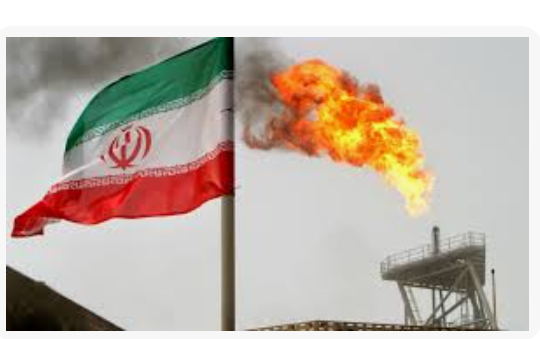
Conflicting reports over whether Iran has halted natural gas exports to Türkiye have created fresh uncertainty in already volatile energy markets. While Bloomberg sources claim flows were disrupted following Israeli strikes on Iran’s South Pars field, Ankara insists supplies remain uninterrupted—raising questions over what is really happening behind the scenes.
A disruption—or a misunderstanding?


The mystery began after Israeli strikes on Iran’s South Pars gas field—one of the world’s largest—triggered retaliation across Gulf energy infrastructure.
According to Bloomberg, Iran halted gas exports to Türkiye in the aftermath of the attack. Yet Turkish officials have firmly denied any disruption, creating a sharp divergence between market reports and official statements.
Energy Minister Alparslan Bayraktar dismissed the claims outright:
“There is no such situation. There is no problem in natural gas supply. Storage facilities are 71% full.”
The contradiction has left analysts questioning whether the issue is a temporary technical disruption, a partial slowdown, or simply market speculation.
Why the confusion matters
Türkiye relies on Iran for roughly 14% of its annual gas demand—a meaningful but not dominant share.
That makes the question less about immediate shortages and more about signal versus reality:
- Is Iran quietly reducing flows without a formal announcement?
- Are technical disruptions being interpreted as political cuts?
- Or are markets overreacting to geopolitical headlines?
So far, there is no definitive answer.
Markets react as if the worst is true


Regardless of the facts on the ground, markets have reacted decisively.
European gas futures have surged to their highest levels in over three years, trading roughly 70% above pre-war levels. The mere possibility of disruptions—from Iran or elsewhere—has been enough to trigger price spikes.
This reflects a broader pattern: in today’s environment, uncertainty itself is a driver of prices.
COMMENTARY: Iran War Escalates Into Global Shock as Türkiye Faces Economic and Strategic Risks
Türkiye’s buffer: Storage and diversification
Behind the conflicting narratives lies a more stable reality.
Türkiye continues to import gas from its primary suppliers—Russia and Azerbaijan—while maintaining access to LNG markets. Storage levels, currently above 70%, provide a cushion against short-term disruptions.
With total storage capacity reaching 6.3 billion cubic meters and daily consumption averaging around 230 million cubic meters, the system appears resilient—for now.
Not the first time flows are questioned
Iran has a history of cutting or reducing gas exports to Türkiye, particularly during winter months when domestic demand surges.
In past cases, interruptions were often attributed to “technical issues,” though timing frequently aligned with internal supply pressures.
This precedent adds another layer to the current uncertainty: even if flows have not been fully halted, partial reductions cannot be ruled out.
Regional signals add to the puzzle
Developments elsewhere in the region reinforce the ambiguity.
Iraq has already confirmed that Iranian gas flows were briefly disrupted before partially resuming following the South Pars attack. This suggests that at least some supply interruptions have occurred regionally—even if Türkiye’s case remains unclear.
The bigger picture: Risk without clarity
At its core, the issue is not whether gas has definitively stopped—but whether the system is becoming unreliable.
The war has introduced multiple overlapping risks:
- Direct attacks on energy infrastructure
- Retaliatory strikes across supply routes
- Political leverage over gas exports
- Market speculation amplifying uncertainty
For Türkiye, the immediate outlook remains stable. But the longer the conflict persists, the harder it becomes to distinguish between rumor, disruption and strategic signaling.
A question still unanswered
For now, the key question remains unresolved:
Is Iranian gas to Türkiye truly flowing as normal—or only appearing to be?
Until clearer data emerges, the gap between official assurances and market reports will continue to fuel volatility.
Source: Diken.com.tr, PA news desk