



The Truth About Turkish Defense Industry: İbrahim Kiras
 Turkish-defense-industry
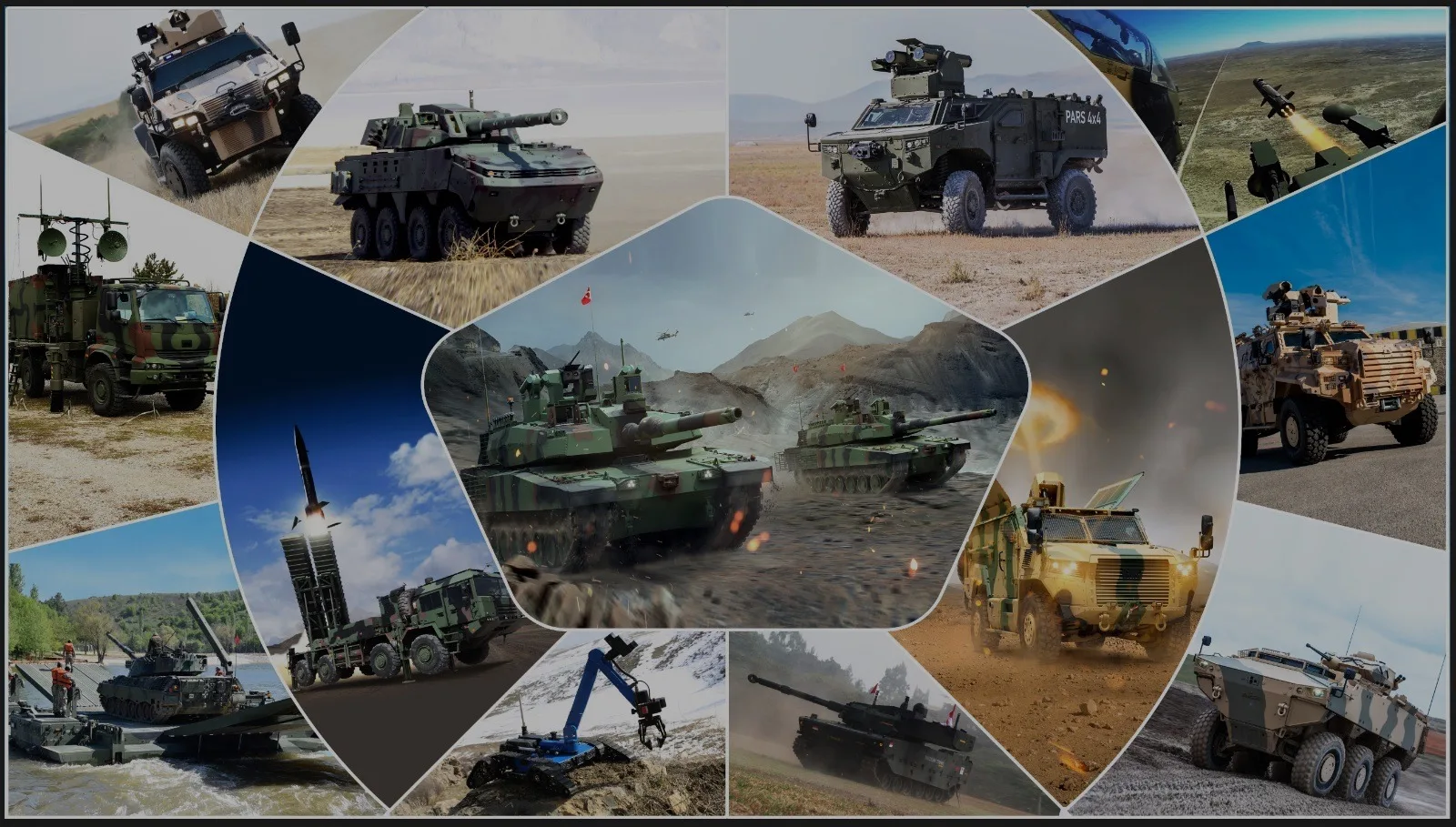
Columnist İbrahim Kiras argues that Türkiye’s defense industry achievements should not be confused with political mythology. While the country has made important advances in areas such as drones and defense technology, critical weaknesses remain—particularly in air defense systems and advanced military hardware. Recent events, including Iranian missiles intercepted over Turkish territory by NATO systems, have highlighted gaps between the narrative of a fully independent defense industry and the current strategic reality.
The Unanswered Questions About the S-400s
Since the Biden administration, one of the most persistent issues in attempts to repair US–Türkiye relations has been the S-400 missile defense system that Ankara purchased from Russia.
Kiras recalls joking years ago that at least the system had one benefit: it gave Türkiye and the United States something to talk about during diplomatic negotiations.
But the core questions surrounding the S-400 purchase remain unresolved even today.
Five years ago, Kiras wrote that several key issues had never been answered:
-
Will Türkiye actually deploy the Russian missile system?
-
Will it remain in storage indefinitely?
-
Could it eventually be returned?
-
More fundamentally, why was it purchased in the first place?
The strategic dilemma remains striking. As a NATO member, Türkiye bought a defense system designed for a rival military bloc.
This raises difficult questions:
Would the system even function if Türkiye faced a conflict with a country aligned with Russia? If not, what real purpose does it serve?
Conflicting Explanations From Ankara
Government officials have presented different explanations for the S-400 decision depending on the audience.
Domestically, the purchase was often framed as a move that forced the United States to respect Türkiye’s strategic independence.
Internationally, however, the explanation was different: Ankara said it had first attempted to purchase Patriot missile systems from the United States, but Washington allegedly offered unfavorable terms and refused technology transfer.
Yet Kiras notes that the situation was more complex.
A third country reportedly offered a missile system at a lower price than Russia, but Türkiye declined that option. Meanwhile, Russia itself did not agree to technology transfer either.
In other words, neither price nor technology transfer fully explains the decision.
Even today, the real rationale remains unclear.
NATO Systems Defend Turkish Airspace
Recent events connected to the war involving Iran have again highlighted Türkiye’s air defense challenges.
During the crisis, Iranian missiles flying over Turkish territory were intercepted by NATO defense systems.
This revealed a key reality: despite ambitious announcements over the years, Türkiye still lacks a fully operational national air defense umbrella.
The much-publicized “Steel Dome” air defense project, frequently presented in political speeches as a major technological milestone, remains largely in the development phase.
Progress in Defense Industry—But Also Mythology
None of this means Türkiye has failed to make progress in defense production.
The country has made significant advances in recent years, particularly in the development of drones and unmanned aerial systems.
However, Kiras warns that political narratives surrounding the defense sector sometimes blur the line between real achievements and exaggerated mythology.
Türkiye’s domestic defense industry initiative dates back to the 1970s and gained momentum during the 1980s under Prime Minister Turgut Özal.
Because of its strategic importance, Kiras argues, this effort should be treated as a national project beyond day-to-day political messaging.
Turning defense achievements into political slogans risks undermining long-term progress.
Drones Are Not the Whole Defense System
Türkiye’s success in producing unmanned aerial vehicles (UAVs) and armed drones (UCAVs) is widely acknowledged.
But a modern defense system is far broader than drones alone.
Despite claims that drones could transform military capabilities, several structural vulnerabilities remain visible.
One of the most striking examples is Türkiye’s removal from the F-35 fighter jet program.
The Cost of the F-35 Decision
Türkiye had been a partner in the F-35 program since 1999.
Turkish defense companies produced over one thousand components for the aircraft, and the Turkish Air Force had planned to acquire around 100 jets.
However, after Ankara insisted on purchasing the S-400 system from Russia, the United States removed Türkiye from the program in 2019.
The ordered aircraft were never delivered.
As a result, Türkiye now finds itself negotiating with Washington to purchase and modernize fourth-generation F-16 fighter jets, while many regional competitors are acquiring fifth-generation aircraft.
Dependence on Foreign Technology
The challenges extend beyond fighter jets.
Several flagship defense projects still rely on foreign technology in key areas.
Examples frequently cited include:
-
The Altay main battle tank, whose engine and transmission were ultimately sourced from South Korea
-
The KAAN national fighter jet, which currently relies on US-made F110 engines during its test flights.
According to official information, the long-term goal is to replace those engines with a domestically developed TF35000 engine, expected to begin testing around 2026, with integration into the aircraft planned in the early 2030s.
Despite claims that the aircraft has reached around 90 percent localization, critical components such as engines and ejection seats still require foreign suppliers.
A Gap Between Narrative and Reality
Kiras argues that none of these issues diminish the importance of Türkiye’s defense industry progress.
However, ignoring existing weaknesses risks creating unrealistic expectations.
The case of the S-400 system illustrates the problem clearly.
After sacrificing billions of dollars in investment and losing access to the F-35 program, the missile system itself reportedly remains unused and stored.
Meanwhile, political rhetoric continues to celebrate the rise of a fully independent defense industry.
For Kiras, the lesson is simple: achievements should be acknowledged—but the empty side of the glass should not be ignored.
PA Turkey intends to inform Turkey watchers with diverse views and opinions. Articles in our website may not necessarily represent the view of our editorial board or count as endorsement.
Follow our English YouTube channel (REAL TURKEY):
https://www.youtube.com/channel/UCKpFJB4GFiNkhmpVZQ_d9Rg
Twitter: @AtillaEng
Facebook: Real Turkey Channel: https://www.facebook.com/realturkeychannel/