How Turkey’s 200 Lira Banknote Lost Almost All Its Dollar Value
 dollar-TL
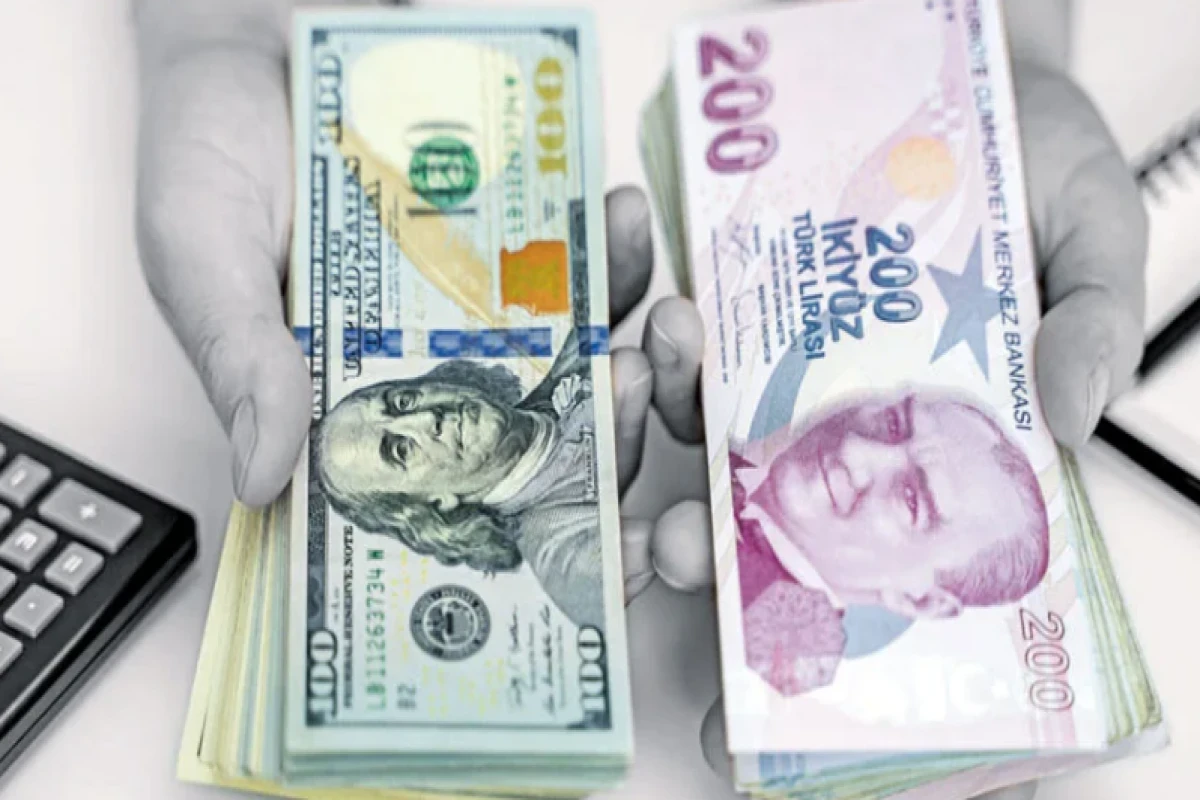
The dramatic erosion of the Turkish lira’s purchasing power is perhaps most clearly illustrated by the fate of its highest-denomination banknote. Since entering circulation in 2009, the 200 Turkish lira note has lost nearly all of its value against the US dollar. Once capable of buying more than $100, it is now worth little more than a cup of coffee, around $4.6 today.
This stark transformation reflects nearly two decades of persistent inflation, currency depreciation, and shifting economic conditions. The journey of the 200 lira note has become a tangible symbol of how deeply exchange rate volatility has reshaped everyday financial reality in Turkey.
From a Symbol of Prestige to a Shrinking Store of Value
When the 200 lira banknote was introduced in 2009, it carried a strong symbolic meaning. It was presented as a sign of monetary confidence and stability, representing the highest value paper currency in circulation. At the time, the exchange rate stood at approximately 1.52 TL per US dollar, meaning that a single 200 lira note was worth roughly $131.
Fast forward 17 years, and the contrast is striking. Despite multiple economic policy shifts and recent monetary tightening efforts, the dollar has climbed toward the 43.3 TL level. As a result, the same banknote that once commanded significant international purchasing power now equates to just $4.6, underscoring the magnitude of the lira’s long-term decline.
A 28-Fold Surge in the Dollar Exchange Rate
The transformation can be summarized in one dramatic figure: the dollar has risen nearly 28 times against the Turkish lira since 2009. This shift has steadily eroded the real value of cash holdings, particularly for citizens and businesses that rely heavily on physical money.
While inflation-adjusted calculations reveal even deeper losses in domestic purchasing power, the dollar comparison provides a clear, widely understood benchmark. It highlights how currency depreciation has reshaped not only macroeconomic indicators but also the most basic financial interactions of daily life.
Cash Becomes a Physical Burden
According to Nefes Gazetesi, the absence of higher-denomination banknotes—such as 500- or 1,000-lira notes—has created practical challenges across the economy.
As the lira weakens, large cash transactions have become increasingly cumbersome, turning money itself into a logistical problem.
In sectors where cash payments remain common, particularly in real estate and automotive sales, handling large sums has become a physical burden. Experts point out that transactions that once fit neatly into a wallet now require bags or even suitcases to transport securely.
When Millions Mean Thousands of Banknotes
The numbers illustrate the issue clearly. A relatively modest property purchase priced at 1 million TL now requires 5,000 individual 200 lira banknotes. This volume is not only inconvenient but also raises concerns around counting accuracy, transaction speed, and security risks.
What was once a theoretical discussion about inflation and currency value has therefore become a daily operational challenge for businesses and individuals alike. Cash-heavy transactions are slower, harder to verify, and more vulnerable to loss or theft.
Why Higher-Denomination Notes Matter
Economists note that many countries experiencing prolonged inflation eventually introduce higher-value banknotes to reduce transaction friction. In Turkey’s case, however, no such step has yet been taken. This has left the 200 lira note—despite its sharply diminished value—bearing the full weight of large-scale cash usage.
While digital payments and bank transfers are increasingly common, cash remains deeply embedded in certain segments of the economy. Without higher denominations, the declining real value of existing notes amplifies inefficiencies rather than merely reflecting inflation on paper.
A Living Timeline of Currency Depreciation
More than any chart or economic report, the 200 lira banknote serves as a living timeline of the Turkish lira’s depreciation. Its journey from being worth $131 to barely $4.6 encapsulates years of inflationary pressure, exchange rate shocks, and changing monetary conditions.
For many citizens, this transformation is not abstract. It is felt directly in daily expenses, savings decisions, and the simple act of carrying cash. The story of the 200 lira is therefore not just about a banknote; it is about how macroeconomic trends translate into everyday life.
Related articles

Timothy Ash: Turkey’s Economy Is on the Right Path, But Inflation Remains the Real Test

Economist Onur Canakci: Turkey’s Deepening Structural Crisis and Mounting Uncertainty

ISO President Erdal Bahçıvan Sounds Alarm: “We’re Approaching a Tipping Point”