How Erdoğan/AKP View the Peace Commission Report: Vague Support, Many Unknows
 baris sureci
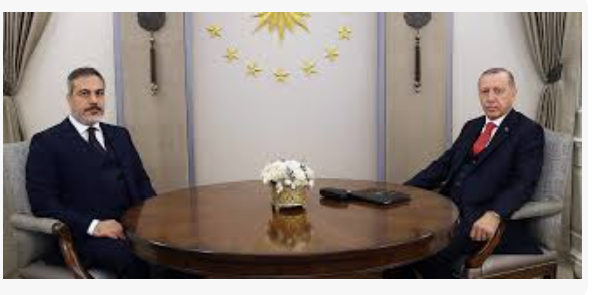
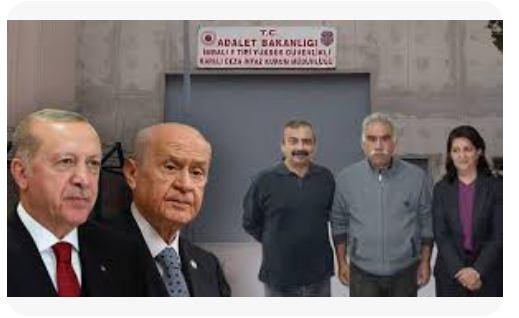
President Recep Tayyip Erdoğan said the “Terror-Free Türkiye” process is being managed with “exceptional success” despite attempts at sabotage, as Parliament’s National Solidarity, Brotherhood and Democracy Commission finalized its report. The document outlines a roadmap including verified disarmament by the PKK, targeted legal arrangements, reintegration mechanisms and legal safeguards for officials involved in the process.
President Recep Tayyip Erdoğan said the ruling People’s Alliance had taken a “historic step” to strengthen national unity at a time of heightened regional and global uncertainty, launching what he described as a decisive effort to end decades of terrorism.
“By initiating the Terror-Free Türkiye process, we have not only put our hands but our bodies on the line to break the half-century-old bloody shackles placed on our nation,” Erdoğan said. “Despite dark actors seeking to sabotage the effort, we have managed the process for 16 months with great sensitivity and exceptional success.”
He added that relevant institutions were continuing their field duties in coordination, and that a peaceful resolution of the situation in northern Syria would further ease the path ahead.
Erdoğan confirmed that the parliamentary commission established under the Grand National Assembly had completed its final report with the support of all political party groups. He thanked lawmakers and contributors, describing the document as a roadmap that would give fresh momentum to the process.
From Report to Legal Phase
Erdoğan said Parliament would now begin deliberations on the legal dimension of the initiative. He indicated that steps would be taken regarding the full dissolution of the terrorist organization that has declared its intention to lay down arms.
“First, we will realize a terror-free Türkiye, and then, God willing, a terror-free region,” he said.
He emphasized the importance of preventing provocations during the sensitive transition period, calling on governors and civil authorities, particularly in border provinces, to ensure public order and eliminate any security gaps.
Peace Commission Report: Virtue Signaling or Roadmap for Democratization?
Speaker Kurtulmuş: Parliament as the Legitimate Address
Parliament Speaker Numan Kurtulmuş opened the session at which the report was presented, framing the moment as a historic turning point.
He described the Turkish Grand National Assembly as “the legitimate address for resolving issues concerning the nation’s future” and said the commission’s approach would guide administrative and legal steps following the verified disarmament and dissolution of the organization.
Kurtulmuş also underlined the need for a new constitution, linking the peace initiative to broader institutional reform.
Key Provisions in the Report
According to details shared at the session, the report contains several critical recommendations:
1. Verified Disarmament
The most important threshold is the confirmed laying down of arms and full dissolution of the PKK by all its elements. Intelligence authorities would verify and report this status before the process is officially declared complete.
2. Legal Arrangements
Debate continues over the sequencing of legal reforms — whether legislation should follow verified disarmament or be enacted beforehand to clarify the legal framework under which militants would surrender.
Observers note that clarity on legal conditions could accelerate disarmament.
3. Temporary and Specific Legislation
The commission proposes a standalone and temporary legal framework to manage the transition, while avoiding perceptions of impunity. References were made to historical precedents in Turkish law that included limited monitoring periods after past uprisings.
4. Reintegration Mechanisms
Beyond disarmament, the report calls for structured reintegration policies to facilitate the return of former militants to civilian life, though operational details remain undefined.
5. Monitoring and Reporting Mechanism
The executive branch would establish an internal monitoring and reporting system to oversee both the disarmament stage and the post-dissolution phase.
6. Legal Safeguards for Officials
The report stresses the importance of legal protection for officials involved in the process. Supporters cite past incidents, including the 2012 investigation targeting intelligence officials during the previous peace process, as justification for such safeguards.
Political Reactions and the Need for Broad Support
The pro-Kurdish DEM Party signaled it would attach a dissenting note to the report, objecting to references describing the PKK as a “terrorist organization.” However, political commentators argue that parliamentary consensus will be crucial in the legislative phase.
Legal reforms tied to the peace initiative will require cooperation from both the main opposition CHP and DEM Party lawmakers.
Analysts suggest that despite rhetorical disputes, cross-party engagement will be necessary to translate the commission’s recommendations into binding law.
A Delicate Balance Ahead
The initiative unfolds amid volatile regional dynamics, including developments in northern Syria and shifting alliances in the Middle East. Erdoğan framed the effort as part of a broader strategy to consolidate domestic unity while navigating geopolitical uncertainty.
Whether the process results in full and verified disarmament — and whether legal reforms gain broad parliamentary backing — will determine if the commission’s roadmap marks a turning point or another difficult chapter in Türkiye’s long-running conflict.
Related articles
Parliament passes Turkey’s new election bill

Türkiye Opposes Greece’s Chevron Deal Offshore Crete Amidst Improving Relations
Turkey’s election winner to face challenging economy, experts warn