Hakan Fidan comments on nuclear energy create a storm of controversy
 nuclear-missiles
The Nuclear Question: Fidan’s Silence and the Looming Arms Race in the Middle East
As the geopolitical landscape of 2026 shifts under the weight of Iranian enrichment and shifting U.S. security guarantees, Turkish Foreign Minister Hakan Fidan has ignited a firestorm of international speculation. By refusing to rule out a Turkish nuclear weapons program, Fidan has signaled that Ankara may no longer be content to remain a “latent” nuclear power.
“Inevitably Joining the Race”
In a landmark interview with CNN Türk, Fidan addressed the possibility of Iran achieving weapons-grade capability. While emphasizing that Turkey does not wish to disrupt the regional balance, his warning was stark: “We may inevitably have to join the same race.”
The statement is a departure from decades of Turkish adherence to the Nuclear Non-Proliferation Treaty (NPT). Fidan framed the issue not as an ambition, but as a strategic necessity born of Washington’s perceived retreat from its security commitments to allies in Europe and Asia.
The Kremlin’s Watchful Eye
The response from Moscow was swift. Kremlin spokesperson Dmitry Peskov stated that Russia has “taken note” of Fidan’s remarks, pointedly reminding Ankara that nuclear security rests on strict adherence to international agreements.
The exchange turned particularly tense during a live broadcast when host Ahmet Hakan asked Fidan directly if Turkey should have nuclear weapons. Fidan’s refusal to answer, punctuated only by a silent smile, has been interpreted by regional analysts as a calculated “strategic ambiguity” designed to increase Turkey’s deterrence without a formal policy shift.
Turkey’s Nuclear Infrastructure: From Civilian to Strategic?
While Ankara officially maintains a civilian program, the foundation for a potential “Breakout Capability” is being laid through massive infrastructure investments:
-
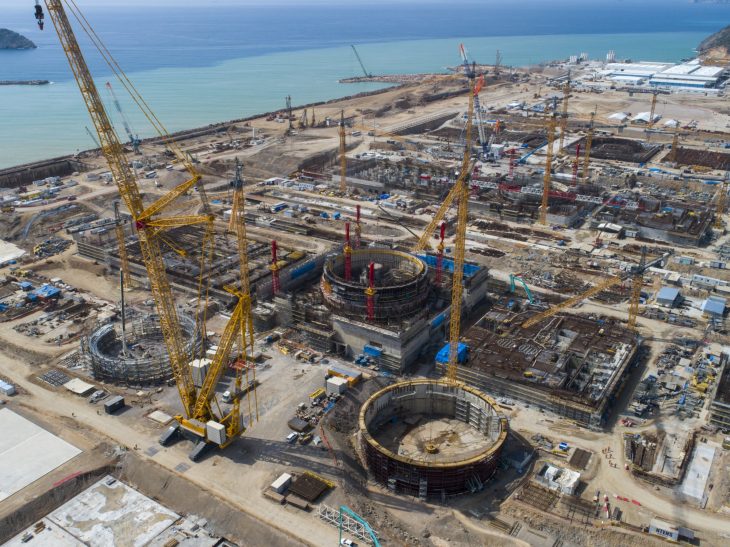
The Akkuyu Plant: The $24 billion, Russian-built facility is set to provide 10% of Turkey’s electricity.
-
Fuel Independence: Turkey sits on 9,000 tons of uranium and a staggering 380,000 tons of thorium. Thorium is a critical asset, as it can be converted into weapons-grade Uranium-233.
-
Technological Sovereignity: In 2018, Turkey revoked the licenses of U.S. firms like Westwater Resources, reclaiming full control over its domestic nuclear materials to ensure “Turkish decisions alone” shape the future.
Turkey’s Estimated Nuclear Raw Material Reserves
| Material | Estimated Reserve | Potential Use |
| Uranium | 9,000 Tons | 30-50 years of energy self-sufficiency |
| Thorium | 380,000 Tons | Potential conversion to U-233 |
The Pakistan Connection and Israeli Concerns
The Israeli press (JNC) has reacted with alarm, noting Turkey’s warming ties with Pakistan, the world’s only nuclear-armed Islamic nation. Analysts suggest this “rapprochement” is designed to diversify Ankara’s access to nuclear knowledge, potentially bypassing Western restrictions.
In July 2025, Fidan criticized the NPT as a “structural injustice” that preserves the supremacy of the U.N. Security Council’s permanent five members. This rhetoric, combined with Turkey’s massive domestic defense industry growth, suggests that a nuclear layer to Turkey’s “Ottoman-style” power projection may be more a matter of when than if.
Domestic Opposition and Regional Risks
Despite the nationalist appeal of nuclear independence, the path is fraught with risk:
-
Ecological Concerns: Opposition lawmakers cite the environmental risks of nuclear plants in seismic zones.
-
Russian Dependency: Critics argue that the Akkuyu project deepens Turkey’s energy reliance on Putin’s Russia.
-
Sanctions: Any move toward enrichment would likely trigger CAATSA-style sanctions far more severe than those seen during the S-400 crisis.