



Green Passport Expansion: 3 Professions Move Closer to Visa-Free Travel
 green-passport-turkey
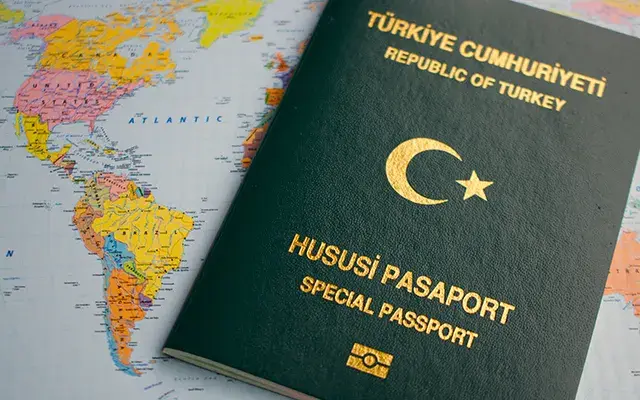
A new legislative proposal in Turkey could soon allow three professional groups to obtain green passports, granting them visa-free travel to numerous countries. The bill, submitted to the Grand National Assembly of Turkey, seeks to extend eligibility to dentists, veterinarians, and architects who meet specific seniority requirements.
The proposal was introduced by Nermin Yıldırım Kara, a member of the main opposition party, and has been formally referred to the parliamentary commission for evaluation. If approved, the regulation would expand the scope of the so-called “special stamped passport”, widely known as the green passport, which currently provides significant international travel advantages.
15-Year Seniority Requirement Introduced
Under the proposed amendment, eligibility would not be automatic. Applicants must meet three core conditions:
They must be registered members of their respective professional chambers — the Chamber of Dentists, the Chamber of Veterinarians, or the Chamber of Architects.
They must be actively practicing their profession.
They must have at least 15 years of professional seniority.
This structured eligibility framework aims to ensure that the benefit is granted to experienced professionals who have demonstrated long-term contribution to their fields.
The proposal aligns the three professions with other groups already entitled to green passports under similar tenure-based criteria.
Why the Change Matters
Supporters of the bill emphasize the growing importance of international engagement in professional development. Dentists, veterinarians, and architects frequently participate in global conferences, congresses, symposiums, trade fairs, and specialized training programs.
According to the explanatory memorandum accompanying the proposal, these professions play a critical role in representing Turkey’s scientific and technical capacity abroad. Facilitating international mobility would help professionals stay updated with global research, evolving technologies, and industry standards.
The justification highlights that visa barriers can create significant obstacles to professional growth, delaying participation in urgent academic or technical events. Removing these restrictions for experienced practitioners is framed as an investment in long-term national competitiveness.
Addressing Public–Private Sector Disparities
Another central argument for the proposal is the need to eliminate inequality between public- and private-sector professionals.
Under current passport regulations, certain high-ranking public sector employees — including physicians and architects who reach designated civil service grades — are already eligible for green passports. However, professionals in the private sector who meet comparable experience levels are excluded.
The bill aims to correct what its proponents describe as a structural imbalance. By extending eligibility based on professional seniority rather than public employment status, the regulation would create a more uniform system across sectors.
Professional chambers have reportedly advocated for this change for years, arguing that mobility rights should not depend solely on public employment.
Who Currently Qualifies for a Green Passport?
At present, Turkey’s green passport system is available to specific categories of individuals. These include:
Civil servants serving in first, second, or third-degree positions, as well as retirees from those ranks.
Former members of parliament and former ministers.
Mayors of metropolitan, provincial, and district municipalities during their term of office.
Executives of exporting companies that exceed certain export volume thresholds.
Lawyers registered with a bar association who have at least 15 years of seniority.
Athletes are officially recognized with the title of “state athlete.”
The proposed expansion would place dentists, veterinarians, and architects into a comparable framework based on professional experience.
Broader Implications for International Mobility
Green passports allow visa-free or simplified entry to many countries, particularly within Europe and parts of Asia. For professionals whose careers depend on rapid international travel, the document can significantly reduce administrative burdens and waiting times.
If enacted, the legislation could strengthen cross-border academic collaboration, increase participation in global industry events, and improve Turkey’s professional representation abroad.
At the same time, the proposal remains under parliamentary review. Commission discussions and potential amendments may shape the regulation’s final structure before it proceeds to a general vote.
For now, the initiative represents a critical step in redefining how professional seniority intersects with international mobility rights in Turkey.