“Gold Goes Under the Pillow, Silver Under the Bed”: Turkish Jewelers Flag Surging Demand and Policy Strains
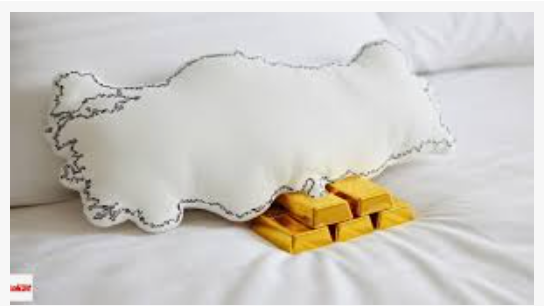 altin yastik
Summary:
As gold and silver prices hit record highs, Turkey’s jewelry exporters say demand—especially for silver—has surged beyond expectations, while import quotas and regulatory hurdles are squeezing production and exports. Industry leaders warn that unless policy constraints ease, Turkey risks losing hard-won global market share despite booming global appetite for precious metals.
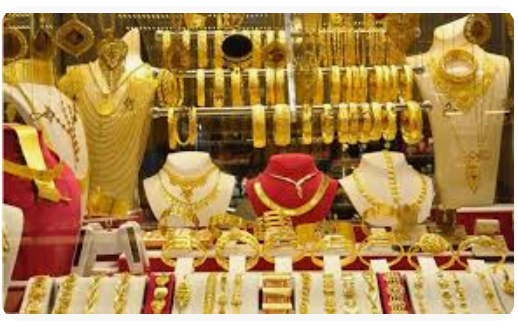
With gold and silver prices at historic highs, more than 550 jewelry companies from 50 countries gathered in Antalya this week for the Jewellery Antalya Buyer Delegation Program, organized by the Turkish Jewellery Exporters’ Association (JEA).
The event drew around 1,350 international buyers from regions including Latin America, the Middle East, the Balkans, Russia, Central Asia and Europe, underscoring Türkiye’s role as a major global jewelry manufacturing hub.
Yet despite strong interest, uncertainty over precious metal prices—and geopolitical tensions following the US military operation in Venezuela—dominated discussions. On the second day of the event, many Turkish producers and foreign buyers avoided locking in prices, opting instead to focus on design talks and future orders rather than immediate contracts.
Export growth driven by prices, not volumes
Speaking to reporters, JEA President Burak Yakin said Türkiye’s jewelry exports reached $7.9 billion in 2025, up 6% year-on-year in value terms. However, he stressed that much of the increase was driven by higher prices rather than volumes.
“If the gold import quota is lifted in the second quarter, as we expect, and the price gap with international markets disappears, exports could rise to $12–13 billion within a few years,” Yakin said.
JEA Vice President Murad Kosker offered a more cautious assessment, noting that export volumes have fallen by nearly half, despite higher headline values. Türkiye remains a net jewelry exporter, he said, but policy constraints are eroding competitiveness.
Tax burden and closed channels
Industry representatives pointed to a 47.5% tax burden on imported jewelry products. In previous years, manufacturers had mitigated gold shortages by importing semi-finished products from Europe under customs union exemptions. That channel was effectively closed after authorities imposed an additional 6% levy under the Resource Utilization Support Fund (KKDF).
“These measures were introduced to control capital outflows,” Yakin said, “but they have also created a structural price disadvantage for Turkish producers.”
“We can’t keep up with silver demand”
While gold prices rose 64.2% in 2025, silver surged by 146%, drawing intense investor and consumer interest.
Kosker summed up the situation with a vivid metaphor:
“Gold goes under the pillow. Silver doesn’t fit there anymore—it goes under the bed. Demand has exploded, and we simply can’t keep up.”
He noted that one kilogram of silver costs around $2,800, compared with $150,000 for a kilogram of gold, making silver more accessible to households and small investors.
Yakin warned, however, that silver prices have risen too quickly:
“Silver moved very fast from $50 to $70 an ounce. At $75, I wouldn’t buy it myself. Gold is different—its supply is limited, it has real use, and in a world where cryptocurrencies trade at $100,000, gold at $4,500 an ounce is not excessive.”
Proposal: Pay interest on gold deposits
Calling Türkiye a “gold country,” Yakin proposed introducing gold-denominated interest on gold deposits, similar to interest paid on lira accounts.
He estimated that at least 2,500 tonnes of gold remain outside the financial system in households.
“If people earned even 10–15 grams instead of three grams annually, much of that gold would voluntarily enter the system,” he said, suggesting central bank guarantees could further boost trust.
Quotas cost Türkiye market share
Before import quotas were imposed, Türkiye had overtaken Italy in jewelry exports, Yakin recalled. Now, higher domestic gold prices are pushing buyers—and even manufacturers—abroad.
“With gold priced at $147,500 per kilo here versus $140,000 in Dubai, the choice is obvious,” he said, adding that some workshops have relocated to Egypt and other regional hubs.
Full traceability coming with new system
Kosker said the Precious Metals Tracking System (PMTS) will soon bring full traceability to gold transactions.
“Even a grandmother selling her gold will be registered with her national ID. Every transaction will be invoiced. Buyer and seller will both be on record—and we support this as a sector,” he said.
Workshops closing in Istanbul
Mustafa Atayik, head of the Istanbul Jewelers’ Chamber, said 30–40% of workshops in Kuyumcukent—Türkiye’s main jewelry manufacturing zone—have shut down due to quotas and shrinking margins.
“Jewelry creates high value-added—up to $7,000 per kilo of gold,” he said. “We spent 30 years building export markets and lost many of them in just one year.”
Atayik also noted a shift in consumer behavior: heavy wedding sets have been replaced by gram gold purchases, reflecting both high prices and declining purchasing power.
By Recep Ercin