France, Turkey, and the Black Sea: A Window for Strategic Reset
 rte-macron
Summary:
Europe’s ambition to build greater strategic autonomy is constrained by strained relations between two of its most consequential security actors: France and Turkey. As the Black Sea becomes a central front in Europe’s security order following Russia’s invasion of Ukraine, Paris and Ankara face growing incentives to overcome rivalry and coordinate pragmatically. While deep disagreements persist, shared interests around Ukraine, regional stability, and postwar security architecture offer a narrow but meaningful opportunity for a reset.

A Troubled Relationship Holding Back European Strategy
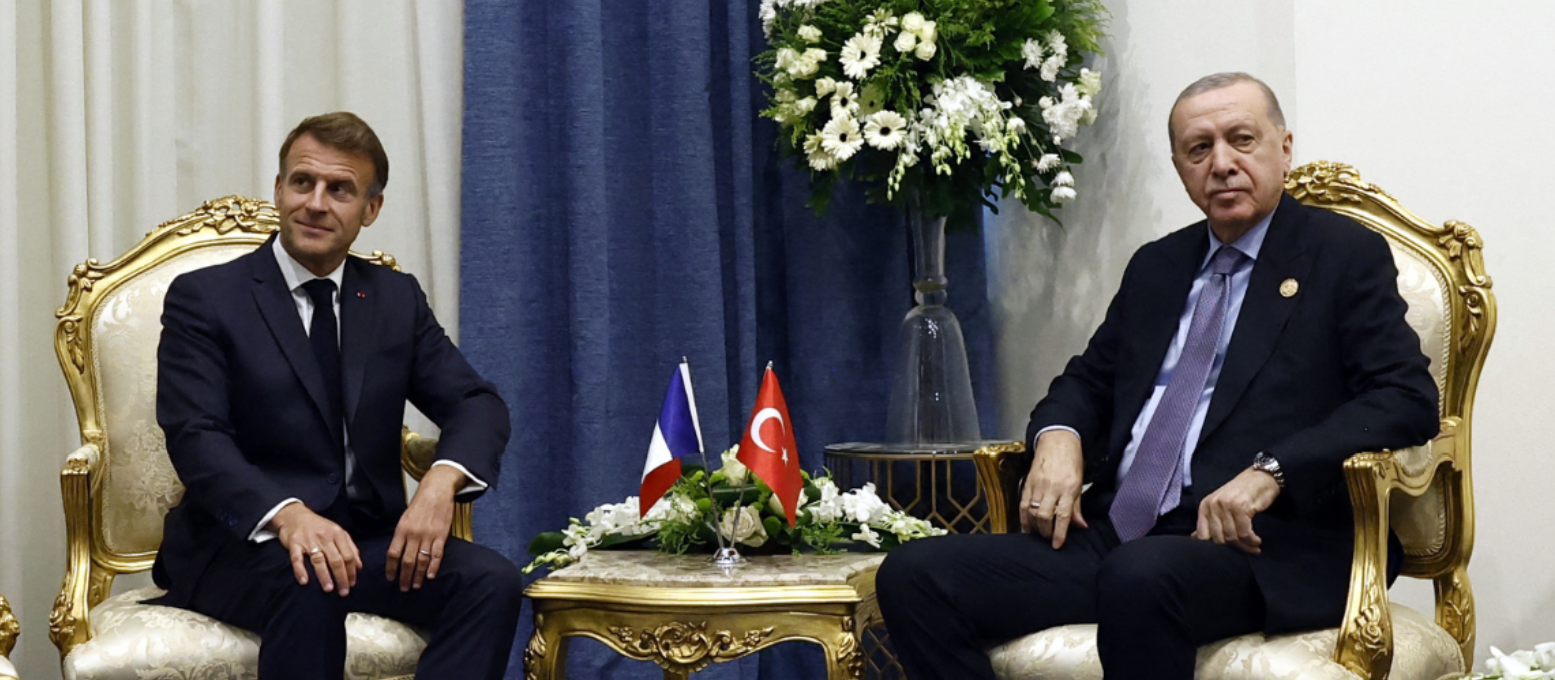
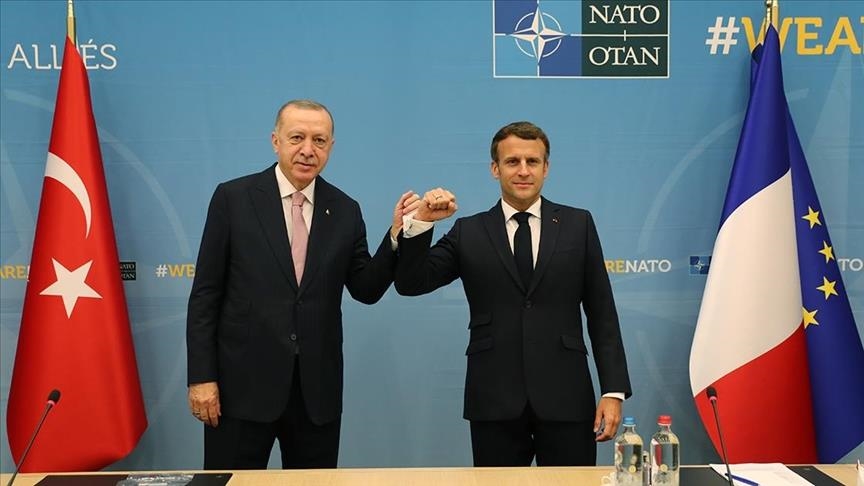
For much of the past decade, relations between France and Turkey have oscillated between uneasy pragmatism and open rivalry. Disputes in the Eastern Mediterranean, Libya, and across Europe’s wider neighborhood repeatedly exposed deep strategic divergences. The tense public dynamic between Emmanuel Macron and Recep Tayyip Erdoğan often transformed policy disagreements into personal friction, further complicating cooperation.
This dysfunction has carried a wider cost. Europe’s push for greater strategic cohesion and autonomy in an increasingly uncertain world has been undermined by the inability of two key security actors to align on priorities.
Ukraine and the Black Sea Change the Equation
Russia’s full-scale invasion of Ukraine in 2022 fundamentally altered the strategic environment for both Paris and Ankara. Europe’s eastern flank—centered on the Black Sea—has become an active war zone and a decisive hinge in the continent’s security architecture. At the same time, growing uncertainty over long-term U.S. commitments is forcing European states to design a more credible, self-reliant security framework.
This shift has produced an unusual outcome: France and Turkey now find their strategic thinking increasingly aligned, even as concrete cooperation remains limited. Given its leadership role in European security and its distinctive relationship with Ankara, France carries particular responsibility to initiate reengagement.
A reset does not require pretending that past differences have vanished. They have not. But a shared pursuit of strategic autonomy could provide a practical foundation—if both sides focus on a narrow set of common priorities.
A Historical Logic of Strategic Autonomy
The idea of Franco-Turkish strategic coordination is not new. In 1968, then–French President Charles de Gaulle visited Turkey and emphasized the importance of direct political relations between the two countries. His reasoning still resonates: both France and Turkey have long sought freedom of maneuver and the capacity to act beyond rigid alliance structures, privileging bilateral channels when core security interests are at stake.
Today, the war in Ukraine has once again turned this shared instinct into a strategic necessity.
Functional Overlap, Not Ideological Alignment
France frames Ukraine’s defense as a European project rooted in military capability, industrial sovereignty, technological depth, and credible deterrence. Turkey, by contrast, approaches the war as a question of regional stability in Eurasia—an interest shaped by NATO membership but pursued independently of it.
The overlap between the two is functional rather than ideological. Both countries have incentives to stabilize the Black Sea region, shape postwar security arrangements, and prevent renewed Russian aggression—particularly in a context of partial U.S. retrenchment.
A Less Combustible Regional Landscape
Several disputes that previously sharpened Franco-Turkish tensions have become less volatile since 2021.
In the Eastern Mediterranean, rivalry persists, but diplomatic channels between Greece and Turkey have partially reopened. Cyprus may also present an unexpected opportunity following the October 2025 election victory of Tufan Erhürman in the Turkish Cypriot presidential race, after a campaign centered on reviving reunification talks.
In the South Caucasus, the prospect of an Armenia–Azerbaijan peace agreement has created a more constructive regional dynamic. Armenia’s current government is actively seeking normalization with Turkey—an evolution France, as Yerevan’s closest European ally, is well positioned to support. Where interests overlap, Paris and Ankara could explore pragmatic trilateral coordination with Armenia.
Elsewhere, alignment remains selective. France’s recognition of Palestinian statehood overlaps with Turkish positions in the Middle East, while competition in Africa continues but has eased somewhat as Libya enters a less confrontational political phase.
Why the Black Sea Matters Most
The Black Sea stands out as a rare theater where neither Turkey nor the European Union can achieve its objectives alone.
Turkey’s posture is shaped by a long-standing doctrine of regional responsibility, combined with strategic hedging between Russia and the West. Since 2022, Erdoğan has played a distinctive role—brokering the Black Sea Grain Initiative, declining to align with EU sanctions on Russia, while facilitating early transfers of Turkish defense technology to Ukraine. Ankara also seeks a defined role in any postwar security architecture, with particular emphasis on maritime security.
France, meanwhile, has elevated the Black Sea to a long-term strategic priority through NATO posture, EU instruments, and reinforced bilateral partnerships. In 2024, Paris adopted an interministerial regional strategy, underscoring its ambition to expand its presence and influence.
Three Pillars for a Franco-Turkish Agenda
A realistic Franco-Turkish Black Sea strategy could rest on three concentric circles.
First, stabilizing bilateral relations through stronger trade ties and economic cooperation in sectors relevant to security and regional connectivity.
Second, strengthening minilateral formats with key Black Sea partners. Romania—France’s principal anchor in the region—can also serve as a bridge to Ankara, offering an operationally credible platform for pragmatic trilateral cooperation.
Third, advancing a mutually beneficial regional agenda in an area where EU–Turkey relations remain strained. Ankara remains skeptical of elements of the EU’s Black Sea strategy, and discussions over Turkey’s inclusion in mechanisms such as Security Action For Europe have stalled.
A critical priority is the modernization of Turkey’s customs union with the EU—both to align with Europe’s geoeconomic needs and to reinforce Turkey’s role as a strategic connector to Asia. As a major investor in Turkey and an influential EU voice, France is well placed to drive this effort.
A Narrow Window
The Black Sea’s rising importance has opened a window for Franco-Turkish reengagement. The challenge now is to convert strategic necessity into tangible results—before upcoming electoral cycles in both countries once again politicize the relationship and narrow the space for compromise.
Author: Romain Le Quiniou
Managing Director and Co-founder, Euro Créative; Co-founder, Iron Bridge Consultancy
PA Turkey intends to inform Turkey watchers with diverse views and opinions. Articles in our website may not necessarily represent the view of our editorial board or count as endorsement.
Follow our English YouTube channel (REAL TURKEY):
https://www.youtube.com/channel/UCKpFJB4GFiNkhmpVZQ_d9Rg
Twitter: @AtillaEng
Facebook: Real Turkey Channel: https://www.facebook.com/realturkeychannel/***
Related articles
Türkiye Opposes Greece’s Chevron Deal Offshore Crete Amidst Improving Relations
The Twilight of the Erdogan Era: A Legacy of Transformation and Turmoil
Turkish press: U.S. Senate Proposes 500% Tariff on Countries Importing Russian Energy — Turkey Included