Food Fraud in Türkiye: Are Offenders Going Unpunished?
 tahsisli gıda
Despite repeated public disclosures by authorities, food adulteration in Türkiye—particularly in the olive oil sector—appears to persist with limited deterrence. Experts and industry observers warn that weak enforcement, slow judicial processes, and the ease of rebranding are allowing systematic fraud to continue largely unchecked.
Repeat Offenders Expose Structural Weakness
Türkiye’s Ministry of Agriculture and Forestry регулярно publishes lists of companies found guilty of food adulteration, naming brands and exposing fraudulent practices. Yet the impact of these disclosures remains questionable.
A striking example frequently cited in public debate involves a producer allegedly linked to dozens of olive oil brands flagged for adulteration. According to reports, nearly 80 brands associated with the same network have appeared on official lists, with repeated violations spanning years.
Under current regulations, penalties escalate with repeat offenses:
- First violation: administrative fine
- Second violation: increased financial penalty
- Third violation: referral to prosecutors
However, critics argue that these measures have failed to prevent repeat offenses, with some actors continuing operations under new brand names.
From Isolated Violations to Systematic Fraud
Industry observers increasingly describe food adulteration not as isolated misconduct but as an organized and sustained practice.
The olive oil sector has become a focal point of concern. In several cases, products labeled as olive oil were found to contain lower-cost seed oils, raising both consumer protection and public health issues.
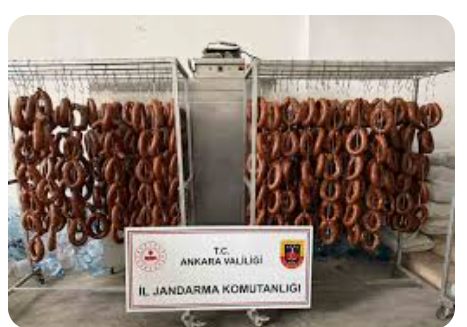
Recent enforcement actions illustrate the scale of the problem. Authorities reportedly seized thousands of tins of suspected adulterated olive oil prepared for distribution in western Türkiye, a region known for olive production but also increasingly associated with fraudulent activity.
Weak Deterrence and Legal Gaps
A central issue appears to be the limited deterrent effect of existing penalties.
While fines are imposed, authorities lack the power to permanently shut down businesses involved in repeated violations. Judicial processes are often slow, and criminal penalties are rarely enforced.
Additional challenges include:
- Companies operating under shell structures with unclear ownership
- Rapid rebranding after penalties are issued
- Limited traceability of production facilities
- Continued sales through e-commerce platforms
As a result, a penalized brand may disappear, only for the same product to reappear under a different name within days.
Consumer Awareness and Market Dynamics
Another factor contributing to the persistence of fraud is weak consumer memory and price sensitivity.
Despite public disclosures, previously flagged brands often re-enter the market and continue to attract buyers—particularly through online channels where oversight is limited.
Industry experts note that products priced far below market norms remain widely available, suggesting that fraudulent goods continue to circulate with minimal barriers.
Calls for Stronger Legal Classification
The scale and repetition of violations have led to growing calls for stricter legal classification of food fraud.
Critics argue that repeated adulteration—especially when it involves deliberate mislabeling—should be treated not merely as a regulatory violation but as a form of aggravated fraud.
Key proposals under discussion include:
- Imposing business bans for repeat offenders
- Classifying systematic adulteration as criminal fraud
- Expanding enforcement under existing penal code provisions related to unsafe food trade
- Strengthening oversight of online marketplaces
A Systemic Issue, Not Individual Cases
Multiple cases across the sector point to a broader structural problem rather than isolated misconduct.
Several producers and companies have reportedly appeared on adulteration lists dozens of times, often linked to different brands but similar practices. This pattern suggests the existence of a business model built around regulatory arbitrage and weak enforcement.
Food Prices Continue to Surge in March, before Supply Shocks Hit the Farm
The Need for Reform
Current enforcement mechanisms—primarily administrative fines under food safety regulations—appear insufficient to curb the practice.
Observers argue that without stronger sanctions, including criminal liability and operational bans, the cycle of fraud is unlikely to be broken.
The debate now centers on whether Türkiye will move toward a more punitive and preventive framework—one that treats repeated food adulteration not just as a violation of standards, but as a serious economic and public health crime.
By Gurkan Akgunes, T24.com.tr
PA Turkey intends to inform Turkey watchers with diverse views and opinions. Articles in our website may not necessarily represent the view of our editorial board or count as endorsement.
Follow our English YouTube channel (REAL TURKEY):
https://www.youtube.com/channel/UCKpFJB4GFiNkhmpVZQ_d9Rg
Twitter: @AtillaEng
Facebook: Real Turkey Channel: https://www.facebook.com/realturkeychannel/