Fitch Signals No Near-Term Rate Cuts in Türkiye as Risks Persist
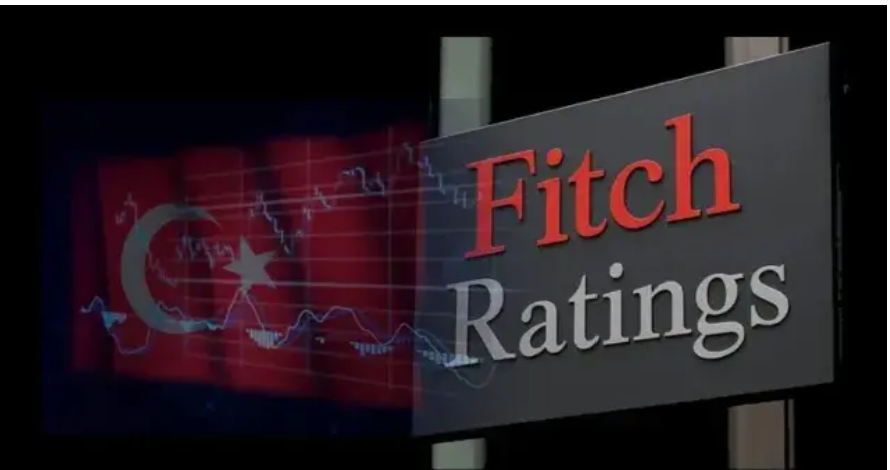 fitch tcmb
Fitch Ratings expects Türkiye’s central bank to maintain a cautious stance and delay interest rate cuts in the near term, citing persistent inflation risks and geopolitical uncertainty. While foreign reserves show signs of recovery, analysts warn that external shocks and structural pressures continue to constrain the policy outlook.
International credit rating agency Fitch Ratings has indicated that Türkiye’s central bank is unlikely to begin cutting interest rates in the immediate future, as economic risks remain elevated despite recent improvements in external balances.
Speaking in a recent interview, Fitch Senior Director Erich Arispe Morales outlined the agency’s latest assessment of Türkiye’s macroeconomic outlook, highlighting both progress and ongoing vulnerabilities.
March Budget: Fiscal Resilience Amidst Geopolitical Turbulence and Interest Pressure
Geopolitical Risks Continue to Shape Outlook
Morales emphasized that external developments—particularly the Iran conflict—have played a significant role in shaping Türkiye’s economic conditions.
During the initial phase of the conflict, Türkiye experienced a notable decline in foreign exchange reserves, driven by both central bank interventions and fluctuations in gold prices. These external shocks, he noted, were key factors behind recent adjustments in Fitch’s outlook.
Reserve Dynamics Show Improvement
Despite earlier pressure, Fitch now sees a more positive trend in reserve dynamics. Morales stated that stress on reserves has eased, with the possibility of a recovery in net reserve positions.
The agency expects Türkiye’s total reserves to reach approximately $164 billion by year-end, signaling a degree of stabilization in external accounts.
Current Account and External Debt
Fitch has revised its current account deficit forecast for Türkiye to around 2.5% of GDP for the year, a level Morales described as manageable.
However, he noted that Türkiye’s short-term external debt—estimated at roughly $239 billion—remains high relative to reserves. Even so, access to external financing has continued, which Fitch views as a key supporting factor.
According to Morales, both public and private sectors have maintained the ability to secure funding even during periods of heightened uncertainty.
Inflation Forecast Revised Upward
Fitch has raised its inflation expectations for Türkiye, projecting year-end inflation of around 27% in 2026.
Energy prices remain a central risk factor. Morales warned that persistently high oil prices could exert additional pressure on both inflation and the current account balance.
Under Fitch’s baseline scenario, oil prices are expected to stabilize around $70 per barrel, with peak levels likely in the second quarter.
No Immediate Rate Cuts Expected
On monetary policy, Fitch expects the Central Bank of the Republic of Türkiye to maintain a cautious approach.
“We do not expect a rate cut at the next meeting,” Morales said, adding that any easing cycle later in the year is likely to be more limited than previously anticipated.
Fitch’s policy rate projections stand at:
- 32.5% by end-2026
- Approximately 23% by end-2027
These forecasts suggest that tight monetary conditions may persist longer than markets had initially expected.
Policy Framework Tested by External Shocks
Morales acknowledged that Türkiye has adopted a more orthodox and consistent policy framework since 2023. However, he stressed that ongoing geopolitical shocks are complicating efforts to bring down inflation and rebuild policy credibility.
The current environment, he said, continues to test the authorities’ commitment to maintaining a disciplined economic approach.
IMF Also Lowers Growth Expectations
Meanwhile, the International Monetary Fund has revised down its growth forecasts for Türkiye, reflecting broader global uncertainties.
The IMF now expects the Turkish economy to grow:
- 3.4% in 2026
- 3.5% in 2027
Both figures are below earlier projections, highlighting the impact of external risks and tighter financial conditions.
The IMF also forecasts inflation at 28.6% by end-2026 and 21.4% in 2027, pointing to a gradual but incomplete disinflation process.
Conclusion: Caution Likely to Prevail
Fitch’s latest assessment suggests that while Türkiye has made progress in stabilizing key indicators such as reserves, significant challenges remain.
High inflation, elevated external financing needs, and geopolitical uncertainty continue to limit the central bank’s room for maneuver.
As a result, policymakers are expected to prioritize stability over rapid easing, keeping interest rates elevated in the near term.
PA Turkey intends to inform Turkey watchers with diverse views and opinions. Articles in our website may not necessarily represent the view of our editorial board or count as endorsement.
Follow our English YouTube channel (REAL TURKEY):
https://www.youtube.com/channel/UCKpFJB4GFiNkhmpVZQ_d9Rg
Twitter: @AtillaEng
Facebook: Real Turkey Channel: https://www.facebook.com/realturkeychannel/***
Related articles
Central Bank of Turkey poised to up its inflation forecasts
AKP adding insult to injury by mocking poverty

Türkiye’s Wage Earners Face Deepening Income Erosion as Living Costs Accelerate