



EU’s “Made in Europe” Push Sparks Alarm in Turkey’s Auto Industry
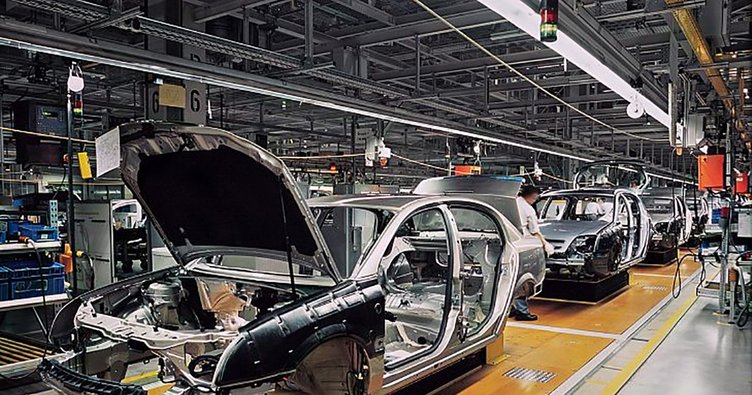 auto
auto
Turkey’s automotive sector is facing growing uncertainty after President Recep Tayyip Erdoğan sent a formal letter to the European Commission, warning against a draft regulation that would prioritize “Made in Europe” products in public procurement and potentially exclude Turkey from key supply chains. While diplomatic channels between Ankara and Brussels remain active, one of the most striking assessments came from Hakan Doğu, former CEO of Renault Group Turkey, who described the process as largely irreversible and deeply troubling for an industry that has been integrated with Europe for decades.
The European Union’s proposed regulation would give preference to products manufactured within the EU or the European Economic Area in public tenders, particularly in strategic sectors such as electric vehicles, batteries, solar panels, and wind energy components. Although the draft has not yet become law, its direction has raised serious concerns in Turkey, which fears being treated as a “third country” despite the long-standing Customs Union framework.
“Being Pushed Out of an Integrated Market Is Unacceptable, But This Is the Reality”
Hakan Doğu, a veteran executive with years of experience at the heart of Turkey’s automotive production, shared a blunt evaluation on social media. According to Doğu, the signals from Brussels have been clear for at least two years. In his view, the EU has already conveyed to Chinese manufacturers and other suppliers that automotive imports from Turkey are no longer desired.
A Shift in Europe’s Industrial Strategy
Since the pandemic, the EU automotive market has contracted by nearly two million units compared to pre-COVID levels. This contraction has intensified competition among producers while accelerating political support for industrial self-sufficiency. The emerging “Made in Europe” movement reflects not only economic concerns but also broader geopolitical shifts, including supply chain security and strategic autonomy.
From this perspective, Turkey’s exclusion appears less like a temporary diplomatic misunderstanding and more like a structural redefinition of Europe’s industrial borders. For Turkish manufacturers, the risk lies not only in reduced exports but also in losing access to public procurement tenders such as municipal transport fleets and government vehicle purchases.
“The Genie Is Out of the Bottle”
Doğu emphasized that although Turkey and the EU share overlapping interests in the new global geopolitical environment, economic realities are pushing Turkey to the margins. He warned that the sector can no longer rely solely on its historical integration with Europe and must develop a new strategic narrative. This call reflects a growing consensus among industry insiders that Turkey must rapidly expand its domestic automotive market and redirect production capacity toward internal demand to cushion potential export losses.
Erdoğan’s Letter to Brussels
President Erdoğan addressed these concerns directly in his letter to the European Commission on December 4. He highlighted the risks of excluding Turkey from European supply chains and warned that such a move would contradict the spirit of the Customs Union. The draft regulation, as currently framed, would require public procurement of green technologies—including electric vehicles and renewable energy components—to originate in the EU or EEA.
Turkish officials argue that if enacted without exemptions, the regulation would effectively downgrade Turkey’s status, undermining decades of industrial integration and cooperation.
$30 Billion in Automotive Exports at Risk
The stakes are substantial. According to 2025 data, Turkey’s automotive exports to the EU totaled approximately $30 billion, accounting for 72% of its total automotive exports. Any restriction on access to EU public procurement could significantly weaken Turkey-based manufacturers, many of which are deeply embedded in European production networks.
Industry experts caution that while the draft regulation is still under negotiation between the European Parliament and the Council, the process could take months. During this period, Turkish companies are urged to intensify lobbying efforts in Brussels and diversify export markets to reduce dependence on the EU.
A Defining Moment for Turkey’s Automotive Future
The unfolding debate over the “Made in Europe” policy marks a turning point for Turkey’s automotive industry. What began as a regulatory draft has evolved into a broader question about Turkey’s place in Europe’s future industrial architecture. Whether through diplomatic compromise, market diversification, or domestic expansion, the sector now faces the challenge of adapting to a rapidly changing environment where integration can no longer be taken for granted.