



Erdogan’s crusade against celebrities: Victims and causes
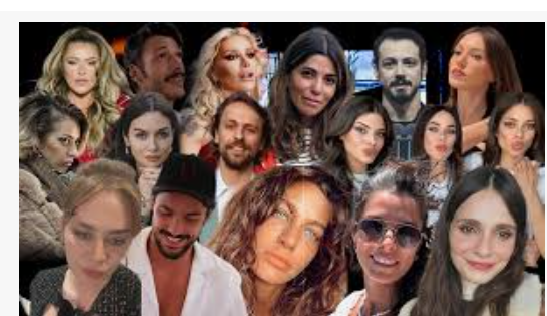 ünlüler
The “Social Defense” Shield: Why Turkey’s 2026 Celebrity Crackdown is More Than Just a Drug Raid
ISTANBUL — Over the past six months, the Turkish news cycle has been dominated by a relentless rhythm of dawn raids, flashing police lights, and high-profile mugshots. From chart-topping rappers to “mega-influencers” with millions of followers, the judiciary’s “Clean Sweep” has ensnared over 150 celebrities. But as the tally of detainees grows, analysts and social scientists are asking a critical question: Why now?
While the official narrative focuses on the “protection of youth” and “combating narcotic encouragement,” the timing and ferocity of the crackdown suggest a deeper, more calculated political strategy designed to manage a nation on the brink of domestic and regional exhaustion.
1. The “Warflation” Diversion
Turkey is currently navigating the most perilous geopolitical landscape since the end of the Cold War. With the U.S.-Iran conflict driving oil prices above $120 and “warflation” pushing the domestic inflation rate toward 30%, the average Turkish citizen is under immense psychological and financial strain.
Historically, governments facing “ugly” economic realities—such as the widening current account deficit and the looming 40% interest rate hike discussed in London last week—look for a “Social Villain.” By targeting celebrities who flaunt opulent lifestyles, the government effectively redirects public frustration. It shifts the narrative from “Why can’t I afford meat?” to “Look at the moral decay of these wealthy elites.” This “Social Defense” policy serves as a powerful populist tool, framing the state as the moral guardian of the traditional family against a “corrupt” modern culture.
Turkey Puts 11 LGBTQ+ Association Leaders on Trial Over ‘Obscenity’ Charges
2. The Weaponization of “Encouragement” (Article 190)
The legal backbone of this crackdown is Article 190 of the Turkish Penal Code, which criminalizes the “encouragement of narcotic use.” In 2026, the definition of “encouragement” has been broadened to unprecedented levels.
In music videos, a lyric mentioning a “cloud of smoke” or an Instagram story showing a luxury party where “unidentified substances” are present is now sufficient grounds for a 24-hour detention and a MASAK (Financial Crimes Investigation Board) probe. By focusing on the promotion of a lifestyle rather than the physical possession of drugs, the state exerts control over the cultural output of the nation. It sends a chilling message to the creative classes: your platform belongs to you, but your content must align with the “National Morality” (Milli Maneviyat).
3. The MASAK Link: Financial Liquidation
A unique feature of the 2026 crackdown is the immediate involvement of financial regulators. As soon as a celebrity is detained on narcotics charges, their assets are frequently frozen under the suspicion of “unexplained wealth.”
In a period where the Turkish Treasury is searching for “fiscal space” and domestic liquidity is tight, the aggressive investigation of influencer wealth serves two purposes. First, it satisfies a public desire for “wealth justice” in an era of soaring inequality. Second, it allows the state to scrutinize—and potentially seize—assets from a sector that has largely operated in a digital gray area of taxation. This is not just a drug raid; it is a financial audit of the “New Money” elite.
4. Dominating the 24-Hour News Cycle
In the age of “Hybrid Warfare” and “Information Gaps,” controlling the trending topics on social media is as important as controlling the borders. When the public begins to focus too heavily on the TurkStream sabotage attempts or the devastating airstrikes on Iranian infrastructure, a “Celebrity Wave” is often released.
The “Clean Sweep” operations are perfectly timed for the evening news bulletins. The visual of a famous actor being led into the Vatan Caddesi Police Headquarters provides a visceral, high-engagement story that pushes complex geopolitical risks off the front page. It provides a sense of “order” and “action” in a world that feels increasingly chaotic and out of the average citizen’s control.
5. Pre-empting the 2027 Election Narrative
With President Erdoğan’s “15-month roadmap” for a third term now in full swing, the government needs a consolidated social base. The crackdown on celebrities appeals directly to the conservative and nationalist core of the People’s Alliance (Cumhur İttifakı).
By framing the opposition as the “defenders of the decadent” and the ruling bloc as the “protectors of the children,” the government is building a moralistic campaign platform for the 2027 early election. The “Clean Sweep” is, in many ways, the opening act of the election season—a performance of strength designed to prove that while the world may be at war, the state is still the master of its own house.
Conclusion: The Cost of the Shield
The 151 celebrities caught in the net of the last six months are more than just legal statistics; they are the collateral damage of a grander political maneuver. As Turkey faces the “Hızlandırılmış Yağma” (Accelerated Pillage) and the “Warflation” of 2026, the celebrity crackdown serves as a psychological shock absorber.
However, critics warn that using the judiciary as a tool for narrative management carries a heavy price. When the “Social Defense” shield is used to mask economic failure and geopolitical risk, the line between justice and theater begins to vanish. For now, the raids continue, the mugshots circulate, and the public’s attention remains exactly where the government wants it: on the scandals of the stars, rather than the shadows of the war.
PA Turkey newsdesk