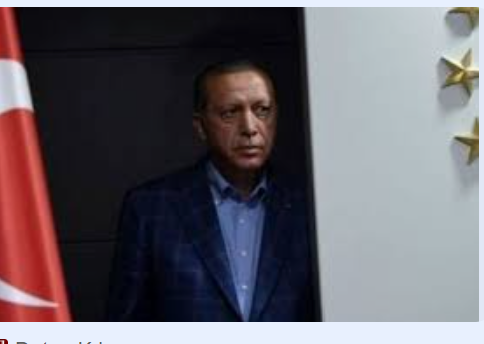
Erdoğan’s Appointment of Akın Gürlek: Pressure on the CHP Beyond an Early Election Scenario
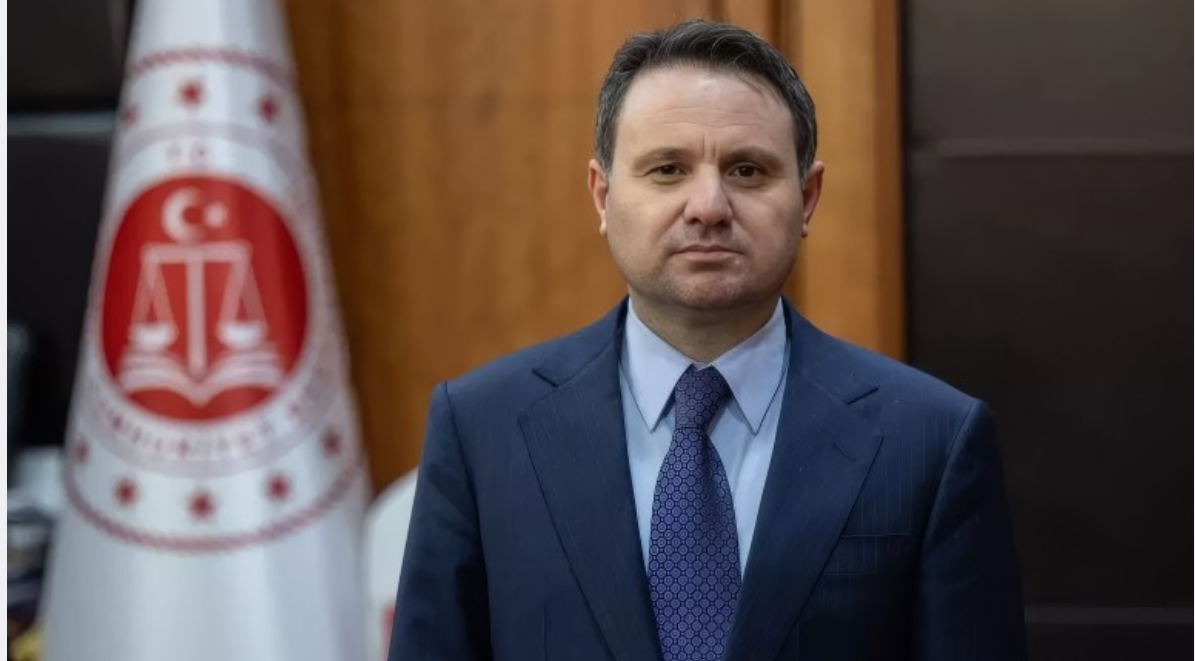 akın gürlek
President Recep Tayyip Erdoğan’s decision to appoint Akın Gürlek as justice minister signals more than a tactical move against the main opposition Republican People’s Party (CHP). The choice points to a broader restructuring of the judiciary and state institutions at a time of mounting political competition and speculation about early elections. Analysts say the implications extend well beyond ongoing cases against CHP municipalities and figures such as Ekrem İmamoğlu, suggesting a deeper recalibration of the balance between politics and the courts in Türkiye.
Author Murat Yetkin, Yetkin Report
A Controversial Appointment
President Recep Tayyip Erdoğan’s selection of Akın Gürlek as justice minister is widely seen as one of the most consequential judicial appointments in recent Turkish political history.
Gürlek, who most recently served as Istanbul’s chief public prosecutor, has overseen a series of high-profile investigations, including cases targeting CHP-run municipalities. His tenure coincided with legal proceedings that sidelined Ekrem İmamoğlu, widely regarded as a potential challenger to Erdoğan in a future presidential race.
Observers note that Erdoğan appears to place considerable trust in Gürlek — not only for his administrative record in Istanbul but also for his handling of politically sensitive cases during his earlier judicial career. In the past, Erdoğan’s reliance on members of the judiciary has proven controversial, most notably in the case of Zekeriya Öz, once a prominent prosecutor in the Ergenekon and Balyoz trials, who later fled the country and was accused of links to the Gülen movement.
While comparisons are being drawn, analysts caution that the political context today is markedly different.
CHP Under Pressure — But Not the Only Target
The appointment comes amid ongoing legal scrutiny of CHP municipalities and internal party disputes. In addition to cases involving İmamoğlu and local administrations, the CHP faces legal uncertainty over a pending case concerning the party leadership’s legitimacy — often referred to in political commentary as a “nullity” case.
Legal experts say scenarios ranging from leadership changes imposed by court ruling to the unlikely but frequently debated possibility of a party closure case have entered public discussion.
At the same time, members of the ruling Adalet ve Kalkınma Partisi (AK Party) have openly floated the possibility of early elections before the scheduled 2028 vote. Deputy party chair Mustafa Elitaş has publicly mentioned November 2027 as a potential date.
Some analysts suggest that Erdoğan could seek a snap election at a moment when the opposition appears divided or institutionally weakened. However, reducing Gürlek’s appointment solely to electoral calculations may oversimplify the broader institutional dimension of the move.
Expanded Authority, Not Marginalization
Claims that Gürlek has been “neutralized” by moving him from Istanbul to Ankara appear inconsistent with his new powers.
Upon assuming office on February 11, Gürlek convened the Hakimler ve Savcılar Kurulu (HSK) the following day. The HSK oversees the appointment, promotion and disciplinary procedures of judges and prosecutors across Türkiye — a central lever in the judicial system.
In his first days in office, Gürlek also reassigned responsibilities among deputy ministers, redistributing key portfolios including prison administration. Legal circles anticipate tighter regulations within correctional facilities, including stricter visitation conditions for detainees and lawyers.
Another notable decision was the appointment of Furkan Torlak as press adviser, despite his earlier resignation from a government communications role amid allegations linked to a narcotics investigation. Torlak has denied wrongdoing and said drug tests he voluntarily undertook returned negative results.
Toward a “National Prosecution” Model?
Beyond immediate political disputes, Gürlek’s appointment is seen by some analysts as part of a broader institutional restructuring.
Türkiye has witnessed similar transformations during past shifts in governance. The transition from the parliamentary to the presidential system involved a sweeping administrative overhaul under then–Deputy Prime Minister Fuat Oktay. Meanwhile, Hakan Fidan previously restructured the National Intelligence Organization and is now overseeing changes at the Foreign Ministry.
Some legal commentators argue that Gürlek could pursue the long-discussed concept of a more centralized “Türkiye Prosecution” model — consolidating prosecutorial authority nationwide in line with the executive’s governance priorities.
Erdoğan’s remarks to his parliamentary group and provincial party leaders on February 11–12 — “We are just getting started” — have been interpreted by supporters as signaling a new phase of political and institutional consolidation.
Political Realignment Ahead?
The appointment coincides with renewed speculation about Erdoğan’s long-term political plans, including unconfirmed claims that he may eventually step down as AK Party chairman, with his son Bilal Erdoğan mentioned in some media commentary as a possible successor.
Whether or not such speculation materializes, analysts agree that Türkiye is entering a period in which state institutions, party politics and judicial processes are likely to become even more intertwined.
For the CHP, resistance appears certain. Opposition figures argue that judicial pressure has historically failed to eliminate political movements in Türkiye, citing past party closures that ultimately reshaped rather than erased political actors.
The coming months will determine whether Gürlek’s tenure marks a recalibration of judicial independence, a strategic maneuver ahead of potential early elections, or a broader transformation of the Turkish political system.
Related articles
ANALYSIS: Turkey’s 2026 Budget: More Taxes, More Spending
CHP Munich Union Strongly Supports Signature Campaign for Ekrem İmamoğlu’s Release and Early Elections
Biden recognizing the Armenian genocide shows how far Turkey and Erdogan have fallen